Last updated November 21, 2026
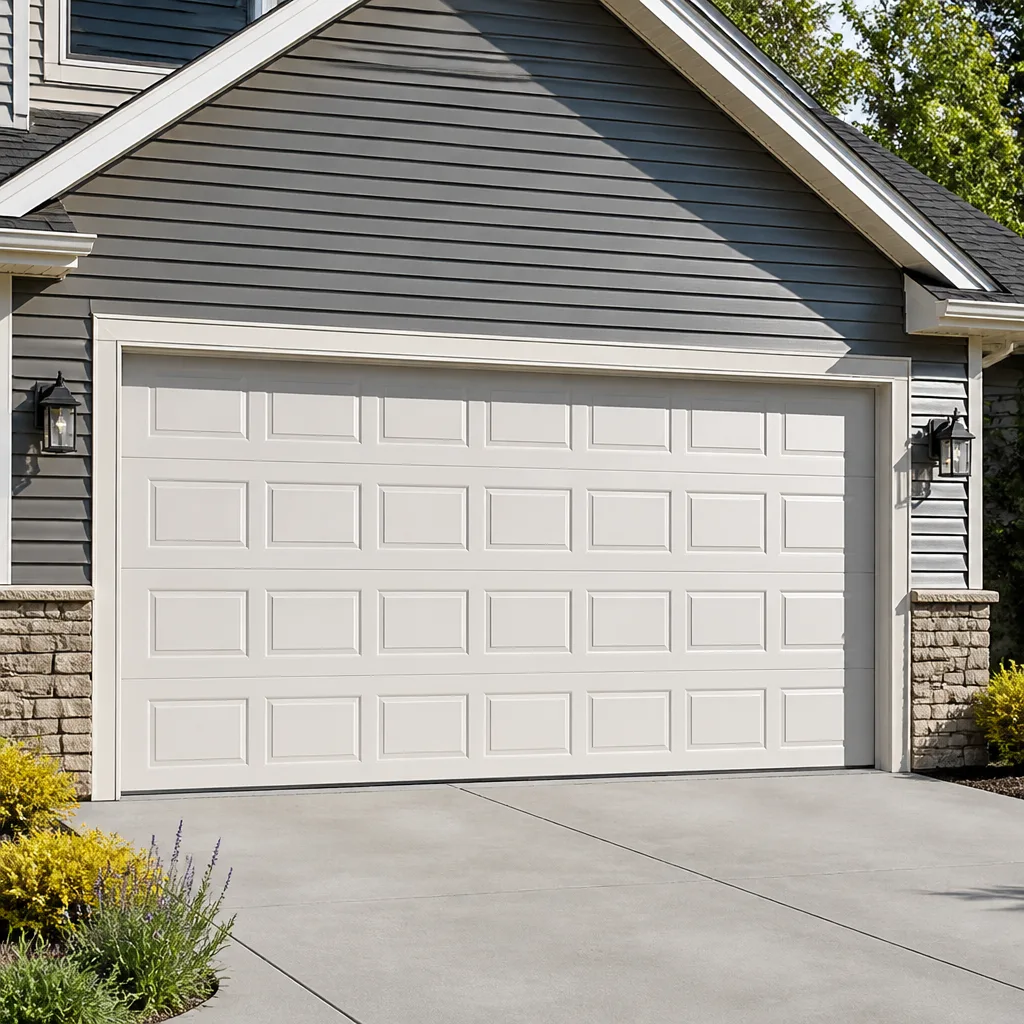 Raised-panel steel
 Carriage house
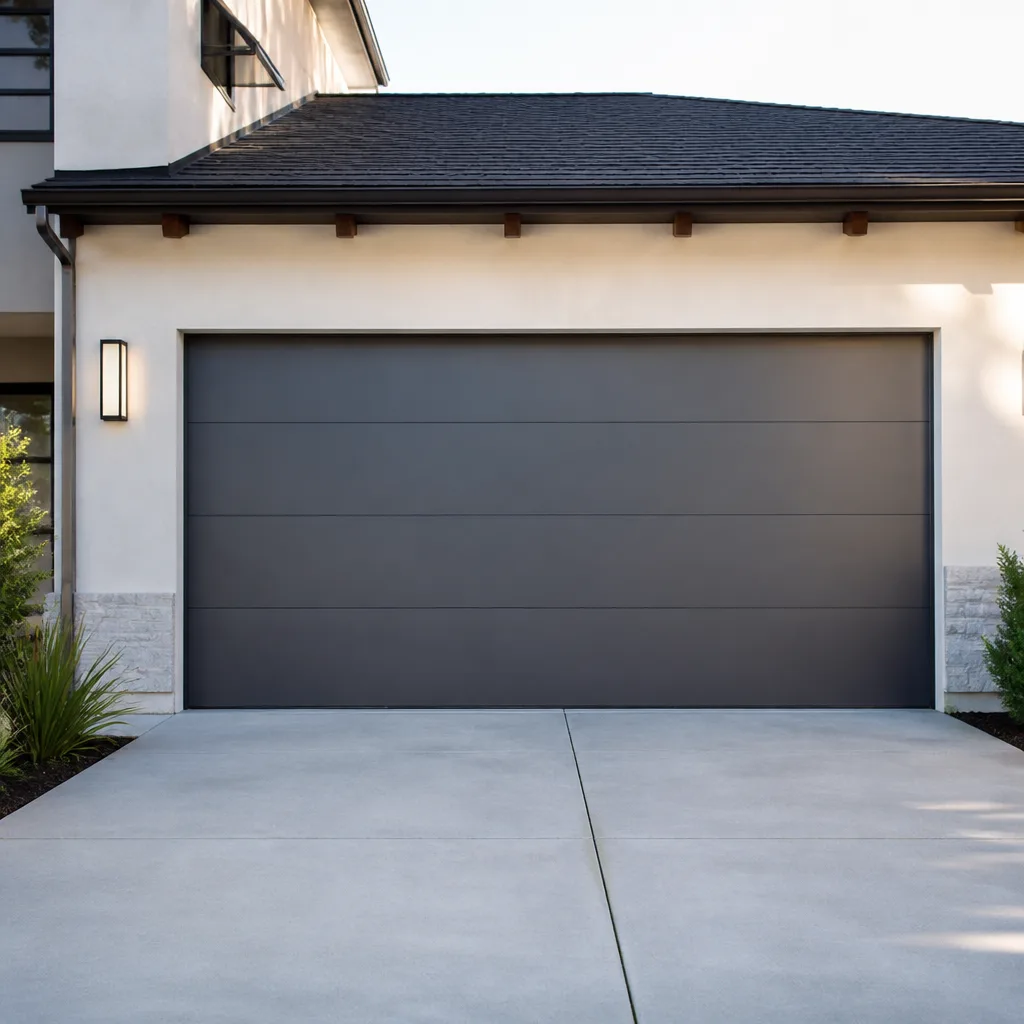 Modern flush
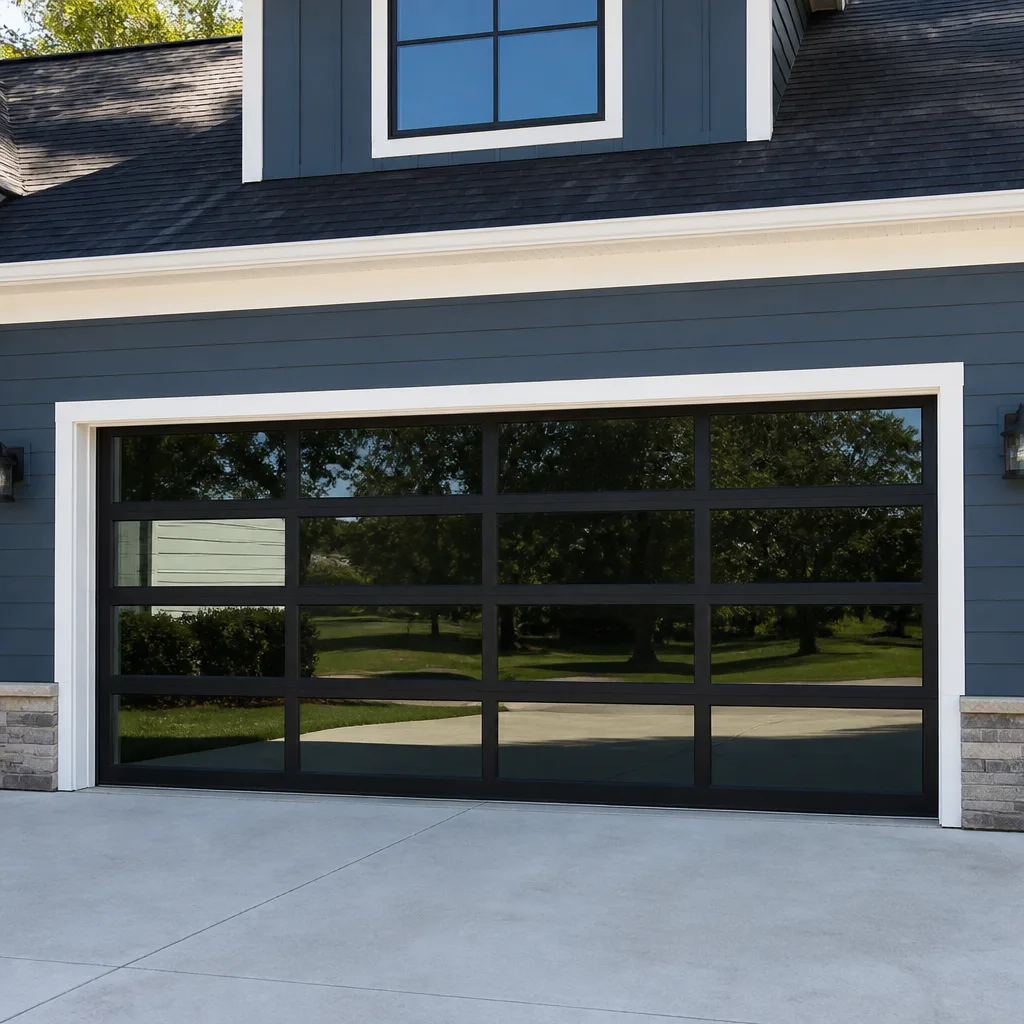 Full-view glass
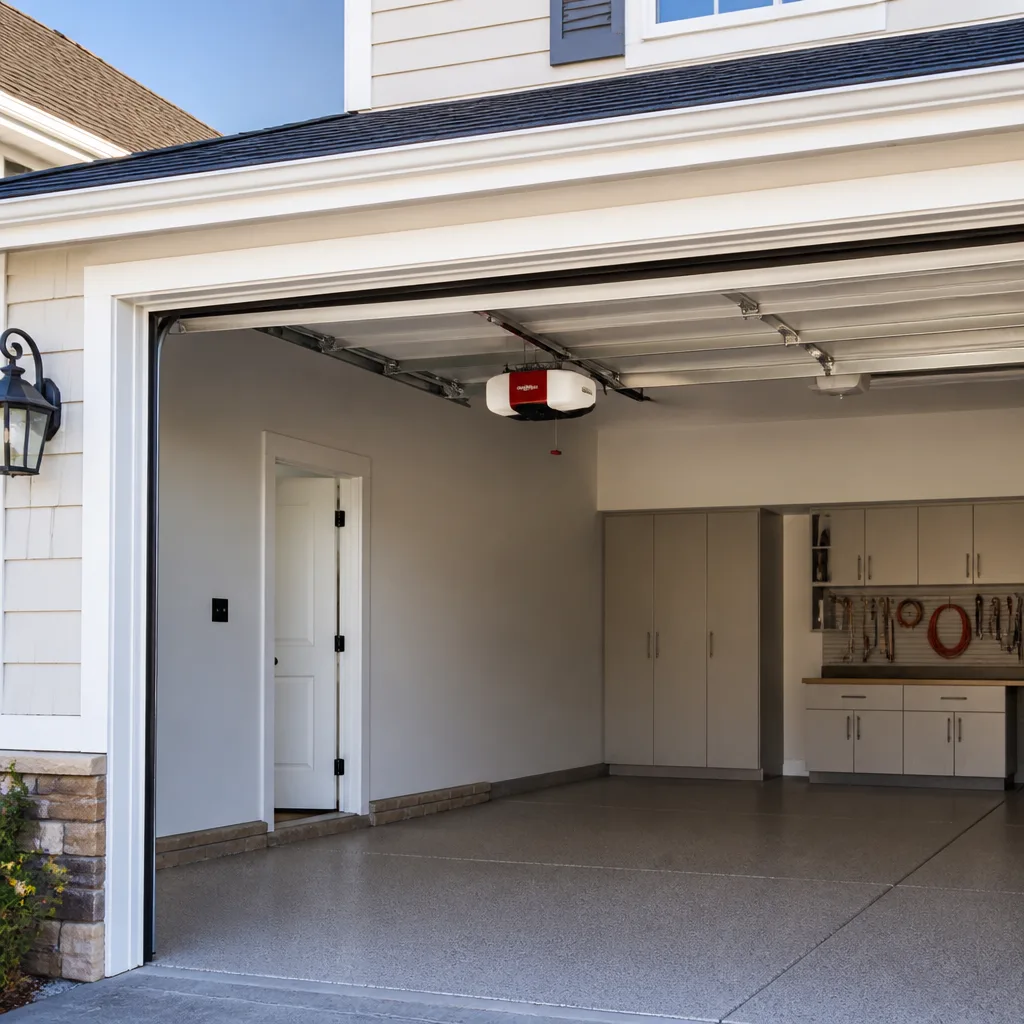 LiftMaster openers
 Chamberlain openers
Full 25-point door and opener safety check with every visit - springs, cables, rollers, tracks, and your LiftMaster or Chamberlain opener included
You get a price before we start. It does not change when the pro arrives.
Get your free estimateHow to Hire a Garage Door Contractor in Missouri City: A Step-by-Step Guide
Most homeowners hire a garage door contractor the same way they hire a locksmith: something breaks, they call the first number that answers, and the price is whatever shows up on the invoice. That works out about as often as you’d expect. The barrier to entry in this trade is nearly zero – anyone with a truck, a ladder, and a phone can print a business card and start taking calls in the Houston metro. That means Missouri City homeowners get pitched by handymen who’ve watched a few videos, crews driving in from three counties away who won’t be around if the door fails again next month, and quote operations built to sound cheap on the phone and expensive in person.
Here’s the part that surprises people: if a contractor can’t tell you on the phone whether your spring is a torsion or extension system and give you a ballpark based on that answer, that’s your first disqualifier. It’s a five-second question for anyone who actually works on doors all day. This guide walks you through the questions, the estimate, the warranty, and the red flags that separate a specialist from someone who’s guessing – so you can hire with confidence in Missouri City.
Quick Answer
To hire a garage door contractor in Missouri City, verify the trade-specific credentials that actually exist (there’s no statewide garage door license in Texas, so ask about insurance and manufacturer training instead), phone-screen them on three questions about spring type, opener brand, and diagnostic fees, get a written line-item estimate before anyone touches the door, and confirm a warranty that covers both parts and labor – not just the manufacturer’s part warranty. If a contractor can’t do all four, keep calling.
Styles & brands we work with
- Raised-panel steel
- Carriage house
- Modern flush
- Full-view glass
- LiftMaster openers
- Chamberlain openers
Table of Contents
- What Licensing Actually Means in Texas
- The Five Phone-Screen Questions That Separate Specialists From Generalists
- How to Read a Garage Door Estimate
- Why the Lowest Bid Fails on Garage Door Work
- Warranty Red Flags
- Missouri City Considerations: Climate, Housing, and Timing
- Red Flags and Green Lights: The Checklist
- Common Mistakes to Avoid
What Licensing Actually Means in Texas
Texas does not license garage door contractors. Read that again. There’s no statewide license you can look up, no required exam, no continuing education hours, and no division of the Texas Department of Licensing and Regulation dedicated to residential overhead doors. So when a contractor says “certified technician,” or a website puts a badge in the corner, that badge means whatever the contractor decided it means. Sometimes it’s genuine manufacturer training. Sometimes it’s a graphic.
What does actually exist and what you should verify:
- General liability insurance. This is the real credential. Ask for a certificate of insurance and confirm it’s current. If a door falls on your car or a track panels off and hits a window, general liability is what pays – not the homeowner’s policy.
- Workers’ compensation coverage. If a technician is injured at your home and the contractor doesn’t carry workers’ comp, the situation can come back on you. Ask.
- Manufacturer training programs. LiftMaster, Chamberlain, Genie, Clopay, Amarr, Wayne Dalton, Craftsman, and Raynor all run their own training and certification tracks. These are real and worth asking about, but they’re brand-specific, not a state license.
- A physical business address and a traceable business history. In Texas, you can register a proper business with the Secretary of State and there are public records. A quick lookup tells you whether the company exists as an entity or just as a phone number.
None of this is a knock on Texas. It’s just the reality of the market, and it’s exactly why the phone screen matters more here than it would in a state that requires a license. In Missouri City, the honest contractor and the fly-by-night operator are both technically “legal.” The only filters are the ones you build yourself.
The Five Phone-Screen Questions That Separate Specialists From Generalists
Before anyone comes to your driveway, run this list. A real garage door specialist – someone who works on doors and openers all day, not a handyman who takes any job – will answer all five without hesitation. If they stumble, that’s information you saved yourself a service call fee to learn.
- “Is my door torsion or extension spring?” Every homeowner can answer this with a few seconds’ description. Torsion springs are horizontal, mounted above the door on a shaft. Extension springs run along the horizontal tracks, one per side. A technician who has to guess or asks you to text a photo has limited experience, and you should hear that in the answer.
- “What brand of opener do I have, and can you work on it?” Tell them what’s in your garage – LiftMaster, Chamberlain, Genie, Craftsman, or something else. A specialist who works on the eight most widely installed brands will recognize the model family instantly and know whether it uses safety sensors, a travel module, or MyQ connectivity. If they say “we work on all openers” without asking what brand you have, that’s a red flag.
- “Can you quote a ballpark before you come out, and is there a diagnostic or trip fee?” This is the truth-teller. A genuinely experienced tech can ballpark a spring replacement, a broken cable, or an off-track door over the phone. A fair estimate has a transparent trip charge or none at all – and if a fee exists, it should be credited against the repair. If nobody will give you a number, you’re about to be quoted in person against no benchmark.
- “Who actually shows up? Your crew or a subcontractor?” In the Houston metro, it’s common for a company that advertises locally to subcontract work out to whoever’s available. That’s how you get a crew from outside Fort Bend County who doesn’t know the neighborhood and doesn’t come back for warranty work. An honest answer here tells you exactly how the job will go.
- “What’s your warranty on parts and labor?” Push for specifics. A dedicated garage door company with trained technicians will tell you exactly what’s covered and for how long. “Fully guaranteed” is not an answer.
If all five come back clean, you’ve narrowed the field considerably. Now you can invite someone out. For most repairs, a same-day visit is realistic; a professional operation can usually get a technician out quickly for a door that won’t close or a spring that snapped. For a full new door, the visit is a measure and quote, not a repair, and the timeline is scheduled from there.
How to Read a Garage Door Estimate
A fair estimate is a written document, not a verbal number. It should show parts and labor separately – or at least clearly itemized – and it should list the specific parts being installed. If you get a single lump sum scrawled on a carbon-copy slip, ask for a line-itemized version. That’s a reasonable request, and the answer tells you something about how the contractor runs their business.
What a well-written estimate should include:
- Part numbers or model designations. “Spring” is not a part. “Torsion spring, matched pair, sized to door height and weight” is. On a spring job, both springs in a matched pair are usually replaced together, which is why a pair costs roughly twice a single spring. Line items should reflect that.
- Labor, itemized separately. Some jobs are mostly parts. Some are mostly labor. Getting both numbers lets you compare apples to apples.
- Any additional items required for the job to be done safely. For example, if the rollers are plastic and worn, or the end bearing plates are cracked, those are included or noted as findings. Not every old part needs replacing – but the estimate should say so if it’s noted.
- Warranty terms in writing. Parts warranty, labor warranty, what voids it, and who performs the warranty work.
- Total in writing, with a signature line and a scheduled date.
What signals upselling:
- A “full tune-up” line item tagged onto a broken-spring call. Springs are springs. If a tune-up wasn’t part of your concern, question it.
- Recommending replacement of an opener when repair is not even offered as an option.
- Pushing a new door when the issue is a broken spring, a bad roller, or an opener that needs a small component. Doors rarely need replacing because of a single part.
- Any dollar figure you didn’t get on the phone being significantly higher in person with no explanation of what changed.
The price should be quoted and agreed before any work begins. That means no surprise after the door is working again. If a contractor isn’t willing to commit to the written number, that’s your cue to stop.
Why the Lowest Bid Fails on Garage Door Work
Taking the lowest bid makes sense for a lot of home services. Garage door work is one case where it’s often the wrong call, and the two clearest examples are springs and openers.
Springs. The spring that’s rated at 10,000 cycles and the spring rated at 25,000 cycles can look identical. Same color coding, same wire, same length. The difference is metallurgy and quality control – and the cost difference per spring is real, but small relative to the risk. If a low bid is built on a bargain-bin spring, you get a spring that fails in a fraction of the cycles the premium spring would last – and you pay the labor again when it goes. Also, and this is the important safety part: torsion springs are under enough tension to cause serious injury if handled with the wrong tools or by someone who hasn’t done it many times. There’s no homeowner-safe repair here. The low bid often isn’t extending the right lifespans or winding with proper bars – because doing it right costs money.
Openers. A low bid for opener installation often uses a discontinued or entry-level unit that meets a minimum spec and nothing else. It might not be MyQ-compatible or smart-home ready, it might have a shorter warranty, and it might have lower cycle limits on the motor. When it fails early, the warranty often covers only the replacement unit – not the labor to swap it. You end up paying a second install fee. For LiftMaster and Chamberlain MyQ systems, in particular, installing the right model the first time is cheaper than doing it twice.
The real logic here: garage door work isn’t a commodity. The brand of spring and the model of opener matter, and the labor is only as good as the person doing it. A specialist in Missouri City with trained technicians and specific part lines is doing work the low bid can’t, because the low bid can only exist by cutting something.
Warranty Red Flags
The single most common gap in the garage door industry is this: the manufacturer’s part warranty gets presented as though it’s a complete warranty. It isn’t. If a spring fails during its part warranty, the manufacturer will replace the spring. They will not pay the labor to install it, and nobody is obliged to show up at your door.
What a real parts-and-labor warranty covers:
- Both parts and labor for a defined period. The company stands behind the installation itself, not just the box the part came in.
- Clear terms in writing. What’s covered, for how long, and what voids it. “Lifetime warranty” should have an asterisk explaining what that means in practice.
- Who performs the warranty service. It should be the same company that did the install. If the fine print routes you to a national warranty hotline, you’ll be scheduling with whoever picks up the phone.
- Coverage for the labor portion. This is the one that costs real money when the part fails and nobody’s covering the install.
Ask directly: “If this spring fails inside the warranty period, what exactly happens?” The answer should be straightforward. If it involves a lot of caveats and won’t be put in writing, that warranty isn’t what you need it to be.
Missouri City Considerations: Climate, Housing, and Timing
Missouri City sits in Fort Bend County in the greater Houston metro, and the local climate puts real demands on a garage door system. It’s hot and humid most of the year, which affects lubricants, bearings, rollers, and the moving parts of an opener. Springs don’t last as long in the Houston heat as they do in milder climates, and the metal in tracks and hinges benefits from periodic lubrication that many homeowners never consider. In practice, that means maintaining the system matters, and replacing worn parts before they fail.
The housing stock matters too. Much of Missouri City’s residential development is newer construction – subdivisions built in waves from the 1990s onward. That means most doors in the area are 16-foot-wide, two-car steel doors on standard torsion systems, with openers from the major brands. LiftMaster and Chamberlain are especially common here, and Genie units are also widespread. If you’re hiring a contractor, “works on the major brands” should translate to names: LiftMaster, Chamberlain, Genie, Clopay, Amarr, Wayne Dalton, Craftsman, and Raynor. Those are the eight brands built into most of the doors in this area.
Timing-wise, there’s an observation from the Houston metro market that’s worth knowing. Summer heat is when spring failures spike, and that’s also when contractors are busiest. If a door fails on a Saturday, a solid contractor will still take the call and book you for Sunday. But if the job is a new door installation, it’s a scheduled measure-and-quote job – expect the timeline to be days, not hours, and don’t trust anyone who promises same-day installs on a custom door.
Red Flags and Green Lights: The Checklist
The fastest way to make this decision is to run the contractor against a red-flag list and a green-light list simultaneously. Here’s the comparison.
- Red flag: No local business address, and a phone number that traces to an answering service. Green light: A real business entity you can look up, and a crew you can call back.
- Red flag: Won’t quote a ballpark on the phone, or won’t quote it at all before arriving. Green light: Gives a range based on your description, and explains what could change it.
- Red flag: “We work on all brands” without naming a single one. Green light: Names the brands it’s trained on.
- Red flag: Tries to sell a whole new door when the symptom is a broken spring or a bad opener. Green light: Diagnoses the failing part and quotes the specific repair.
- Red flag: Word-of-mouth price quote, verbal, no papers until the invoice. Green light: A written line-item estimate with terms and a signature line.
- Red flag: Warranty covers manufacturer parts only, and warranty labor is “call the manufacturer.” Green light: Warranty covers parts and labor, backed by the company that installed it.
- Red flag: Says it does “everything” – roofing, plumbing, garage doors. Green light: Garage doors only.
The single-trade focus is a real signal. A specialist who works on doors and openers every day knows the brands, knows the springs, and knows the failure patterns. A generalist is learning on your door. For garage door repair, that difference shows up in the diagnosis and the warranty.
Common Mistakes to Avoid
- Hiring the first number that answers. “Available right now” is not the same as “qualified.” In Missouri City, that’s especially true since there’s no state license to check. Run the phone screen first.
- Accepting a verbal quote. A number you heard on the phone and a number written on an estimate are two different things. Get the written version before anyone starts.
- Trying the spring job yourself. We’re not being coy here – torsion springs are under high tension and have injured many, many homeowners. It is not a safe DIY repair. Call a trained technician.
- Skipping the warranty conversation until after the repair. By then, your leverage is gone. Ask before, get it in writing.
- Assuming the manufacturer’s warranty is enough. It covers the part, not the labor. For a spring that fails early, the part is cheap and the install is where you pay again.
- Letting the contractor pick the spring or opener brand “because it’s the same.” It isn’t the same. Ask what model or cycle rating is being installed, and why.
- Ignoring a door that won’t close. That’s a security issue, not a minor inconvenience. A door stuck open all night is an open invitation. Call the same day.
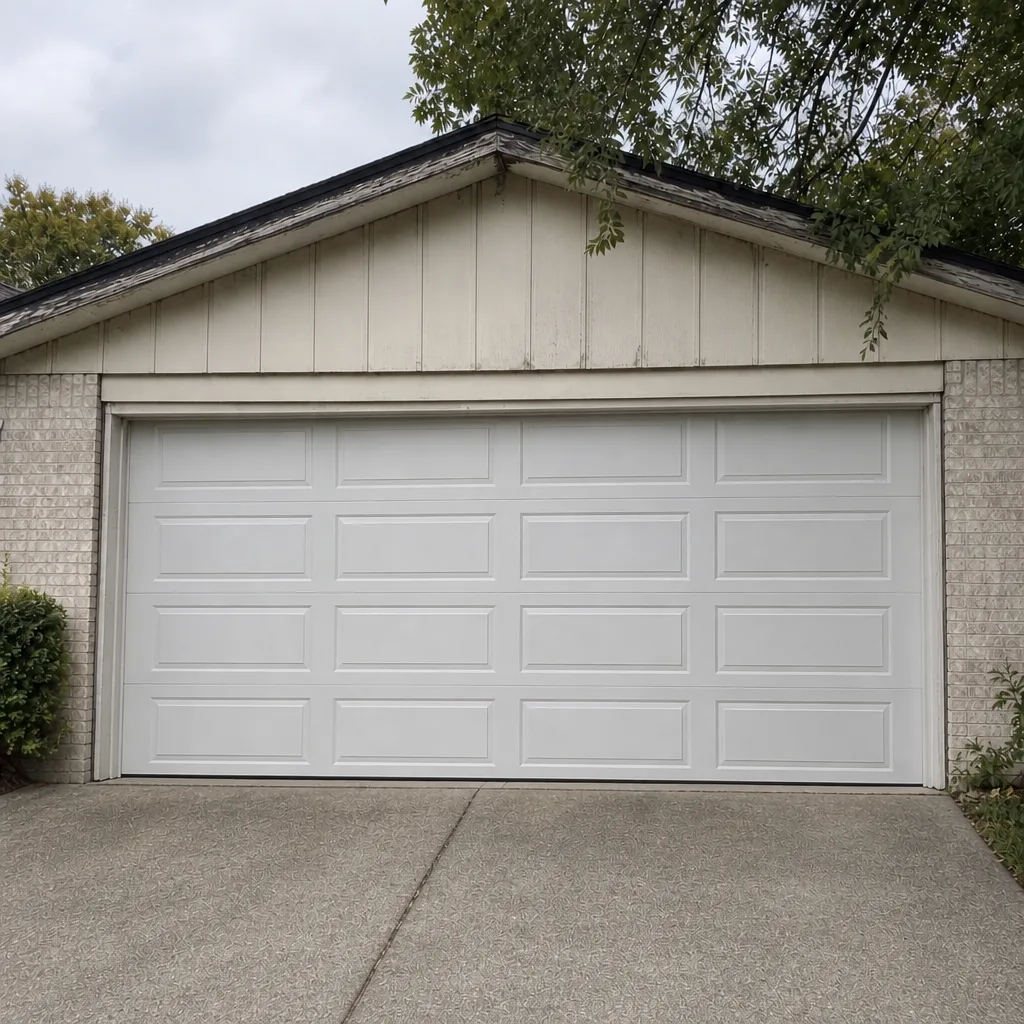
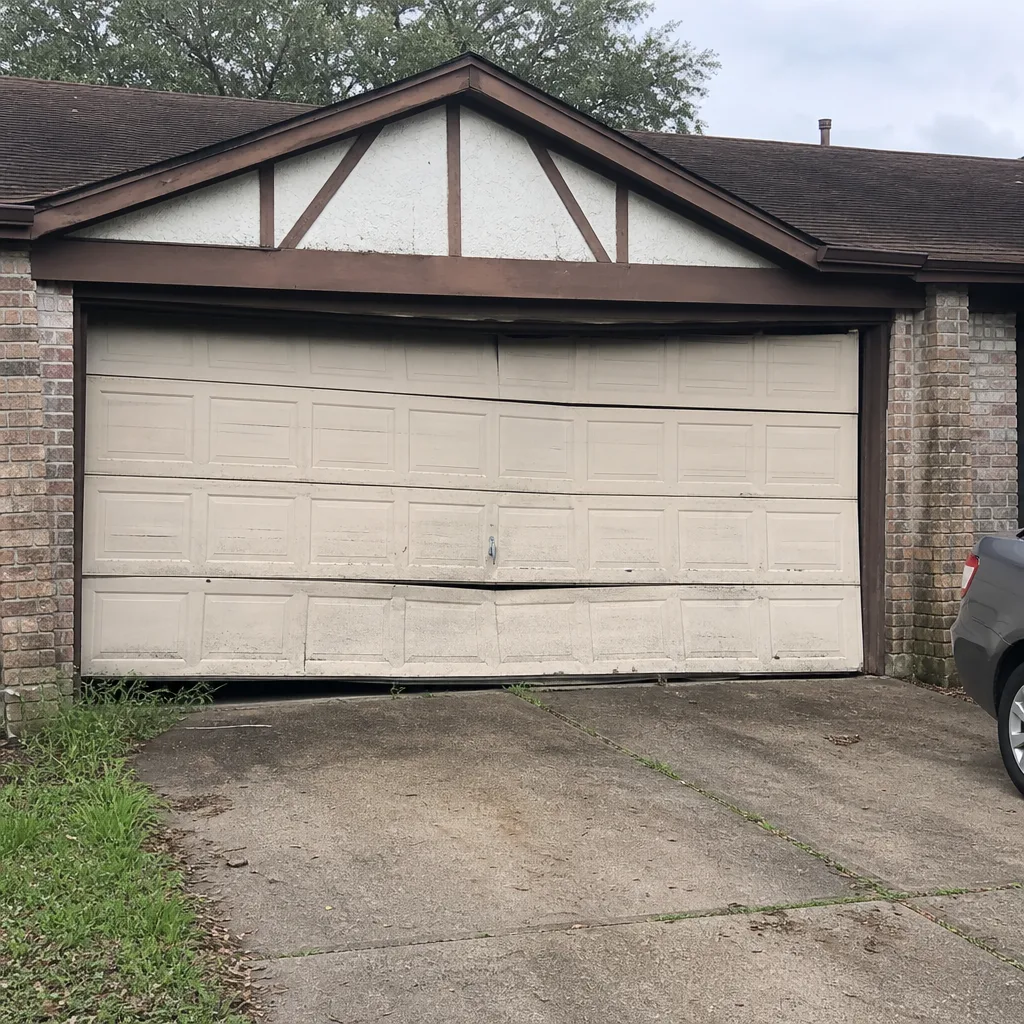
See the difference
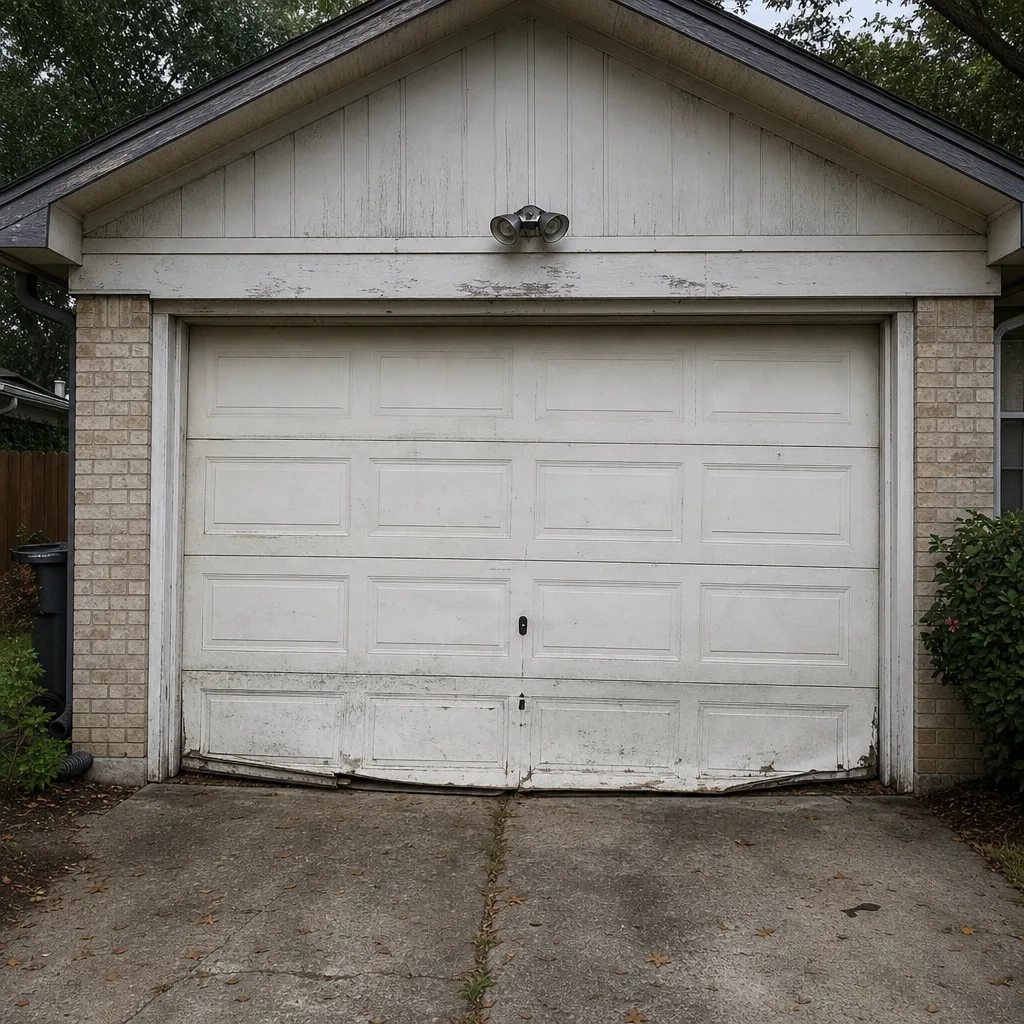 Before
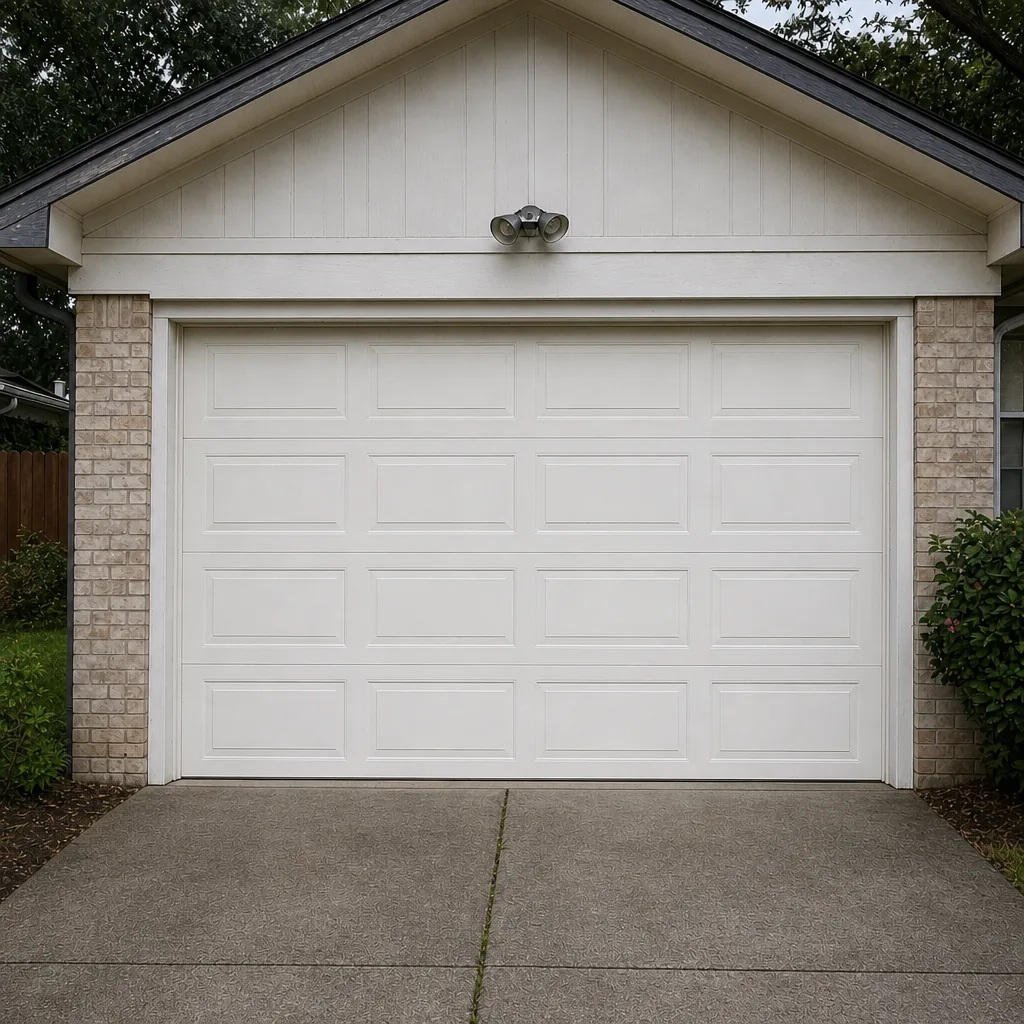 After
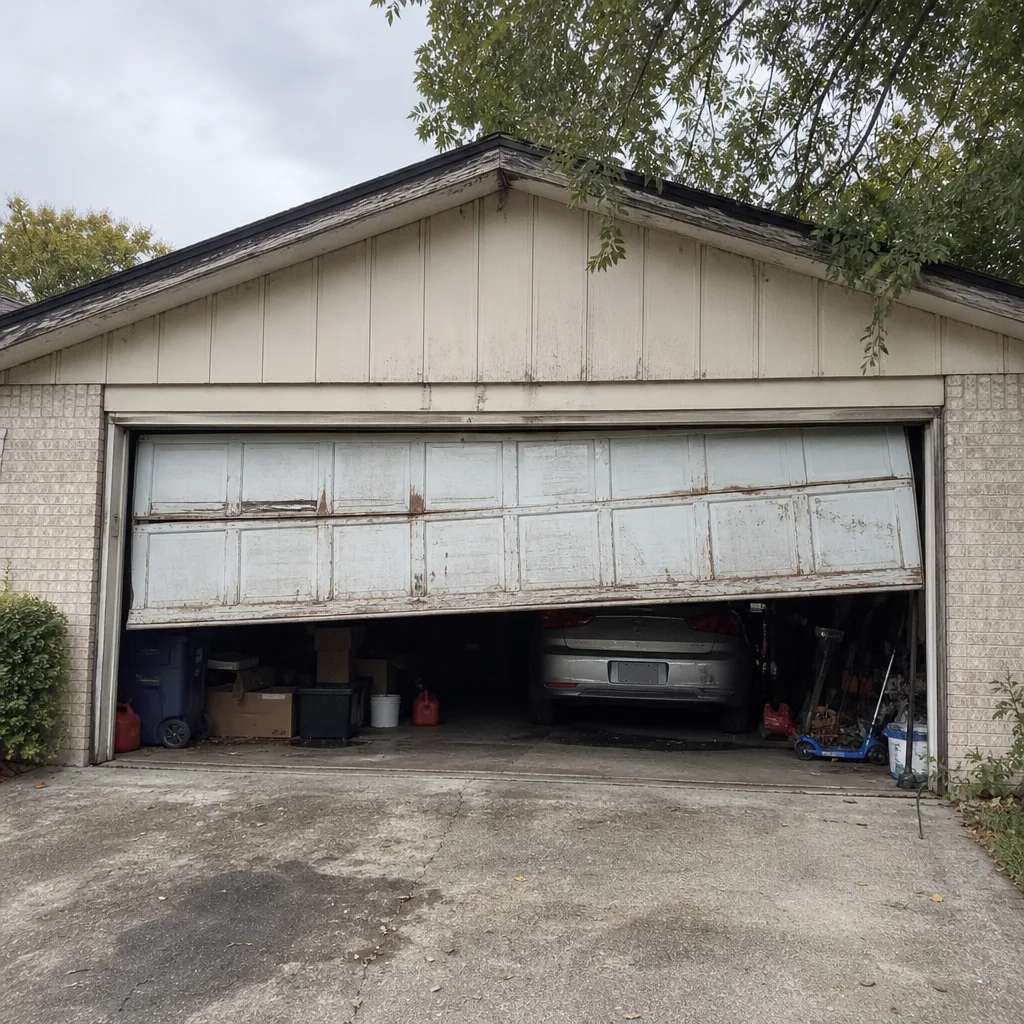 Before
 After
 Before
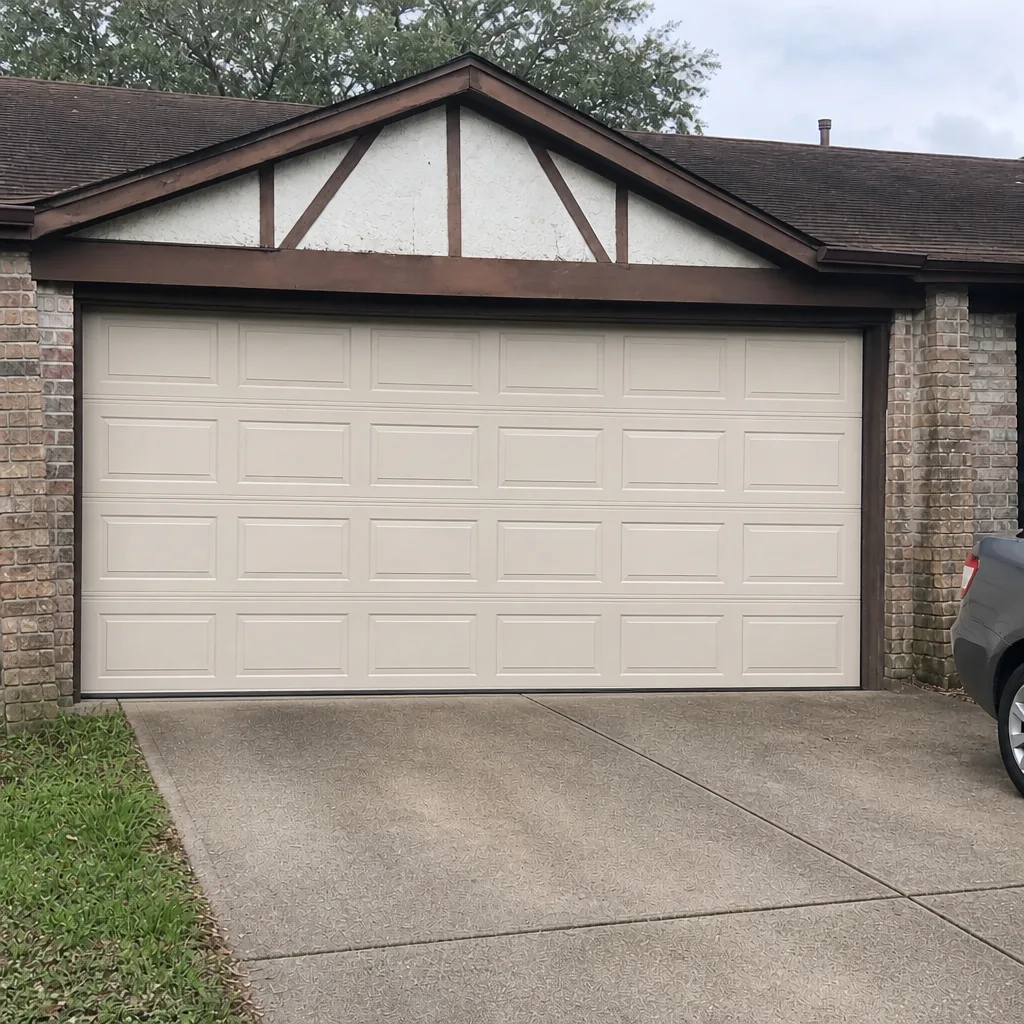 After
When to Call a Professional
Call a professional immediately for any of the following:
- A snapped torsion or extension spring.
- A door that’s off its track or crooked in the opening.
- A door that won’t close, won’t open, or is reversing unexpectedly.
- A door that closes unevenly, or one side that won’t come down all the way.
- Frayed cables, or a cable that’s come loose from the drum.
- An opener that’s humming but not moving the door, or that won’t respond at all.
- Safety sensors that are misaligned, or a door that reverses before it makes contact.
- A door that’s visibly sagging, with panels that look cracked or delaminating.
These are the scenarios where a specialist makes the difference. We’re a Missouri City garage door specialist, and we cover the whole door system – springs, openers, panels, tracks, and full installations. If you’re not sure whether your situation needs a repair or an emergency call, ask on the phone. We offer free estimates in Missouri City – call (855) 765-7303.
Frequently Asked Questions
No. Texas does not require a statewide license to install or repair residential garage doors. What you should verify instead is general liability insurance, workers’ compensation coverage, a traceable business entity, and manufacturer training on major brands. That’s the real credential set, and it’s on you to ask for it before hiring in Missouri City.
Spring replacement typically falls into a range based on the spring type and the door’s size and weight, and a matched pair costs roughly twice a single spring because both are usually replaced together. Every job is quoted in writing before the work starts, so there’s no surprise after the fact. Call (855) 765-7303 for an exact quote – estimates are free.
For most repairs – springs, cables, off-track doors, opener issues – same-day service is usually realistic, and we offer emergency service for doors that won’t close. When you call, we’ll tell you exactly what the timing looks like for your specific issue. New door installation is measured, ordered, and scheduled, so it doesn’t have the same same-day promise. Call (855) 765-7303 to talk through what your door is doing.
It shouldn’t. The price you agree to in the written estimate is the price you pay for that scope of work. If the inspection turns up something that wasn’t visible or wasn’t mentioned on the call – a cracked end plate, a broken cable in addition to the spring – we’ll tell you before any additional work begins, so you can decide. Nothing happens without your agreement.
We work on the eight brands most often installed in homes across the U.S.: LiftMaster, Chamberlain, Genie, Clopay, Amarr, Wayne Dalton, Craftsman, and Raynor. That includes legacy openers and modern smart-home systems with MyQ compatibility. If your door or opener is one of these names, we know it. If you’re not sure, tell us what’s on the label and we’ll tell you.
In most cases just repair it. A door failing because of a spring, a cable, an opener, or a track usually needs a specific component – not a new door. Whole-door replacement is the right call when the door itself is dented, cracked, delaminated, or genuinely worn out, and usually not before. An honest contractor will say which one you’re facing. Call (855) 765-7303 for a free estimate and we’ll walk you through the options.
The Bottom Line
Hiring a garage door contractor in Missouri City comes down to four filters. Verify insurance and business history, since Texas doesn’t license the trade. Phone-screen them on spring type, opener brand, ballpark pricing, who shows up, and warranty terms. Read the written estimate to see what’s itemized and what’s missing. And check the warranty language – parts plus labor is what you want, not manufacturer-only coverage. Everything else – the brand on the truck, the one-liner on the website, the “we work on all brands” promise – is only as good as those four filters allow. Get those right and you’ll hire well.
For garage door spring repair, garage door opener repair, new door installation, or any other issue with your garage door in Missouri City, our technicians have up to 8 years of experience and we work on the brands you already own. If you’d like a free estimate, call (855) 765-7303 for a free estimate. We can help you sort out whether your door needs a quick repair, a full replacement, or just a conversation about how to keep it working. Missouri City Garage Door Repair handles springs, openers, panels, tracks, and complete installations as a single-trade specialist.
Written by the team at Missouri City Garage Door Repair.