Last updated November 21, 2026
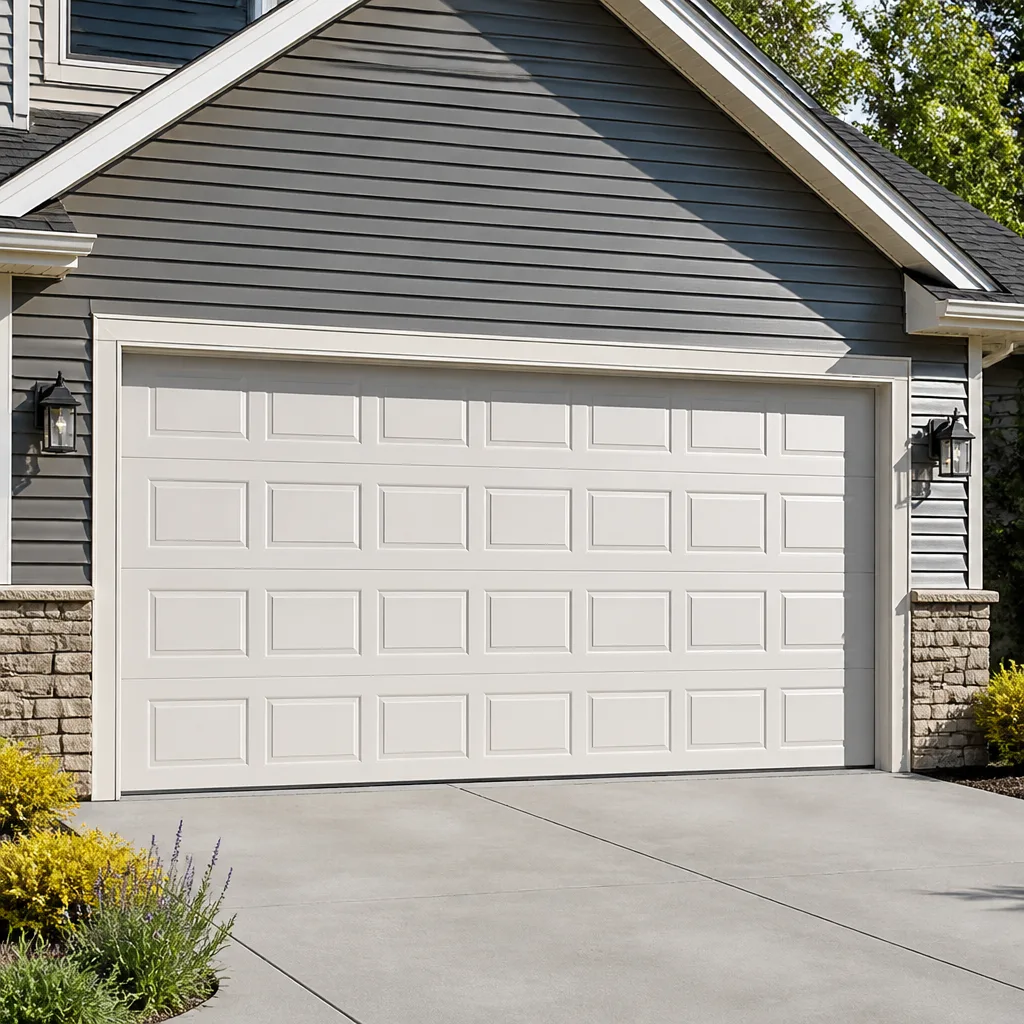 Raised-panel steel
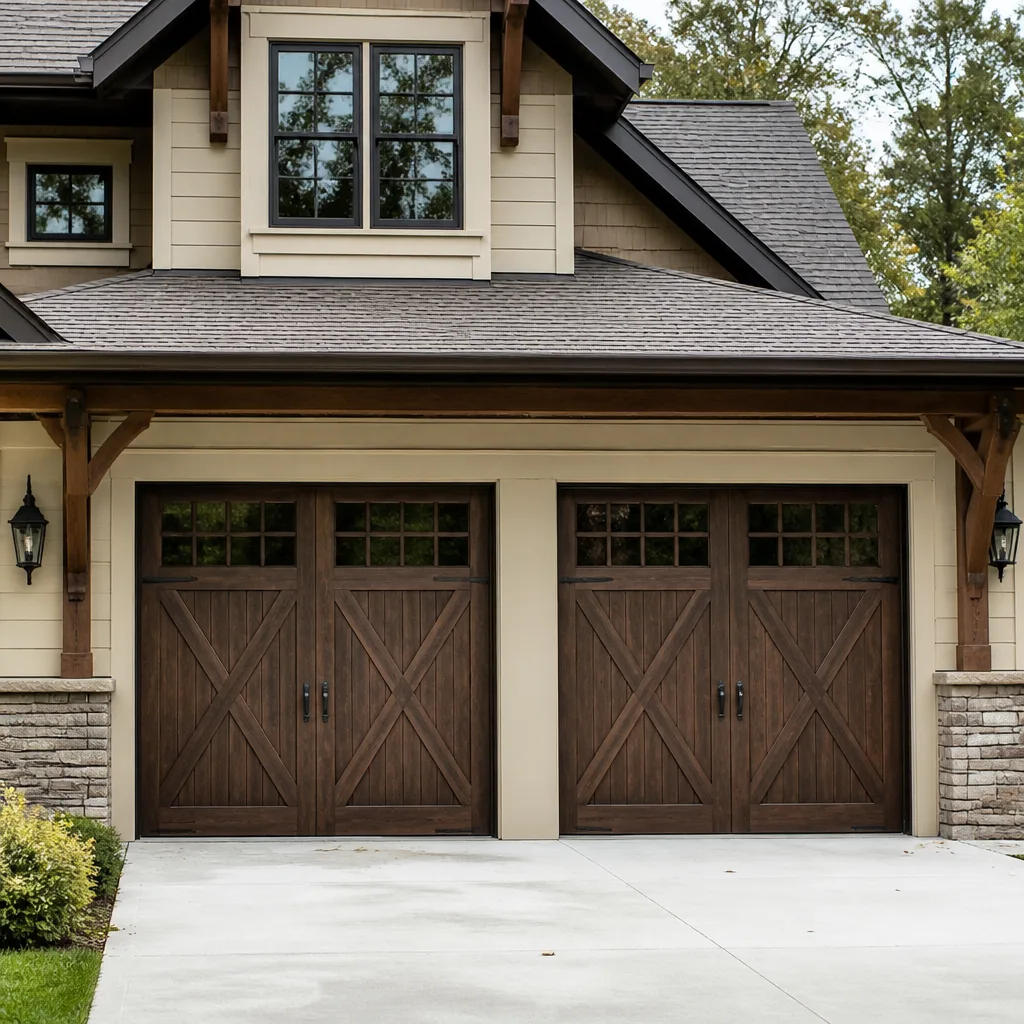 Carriage house
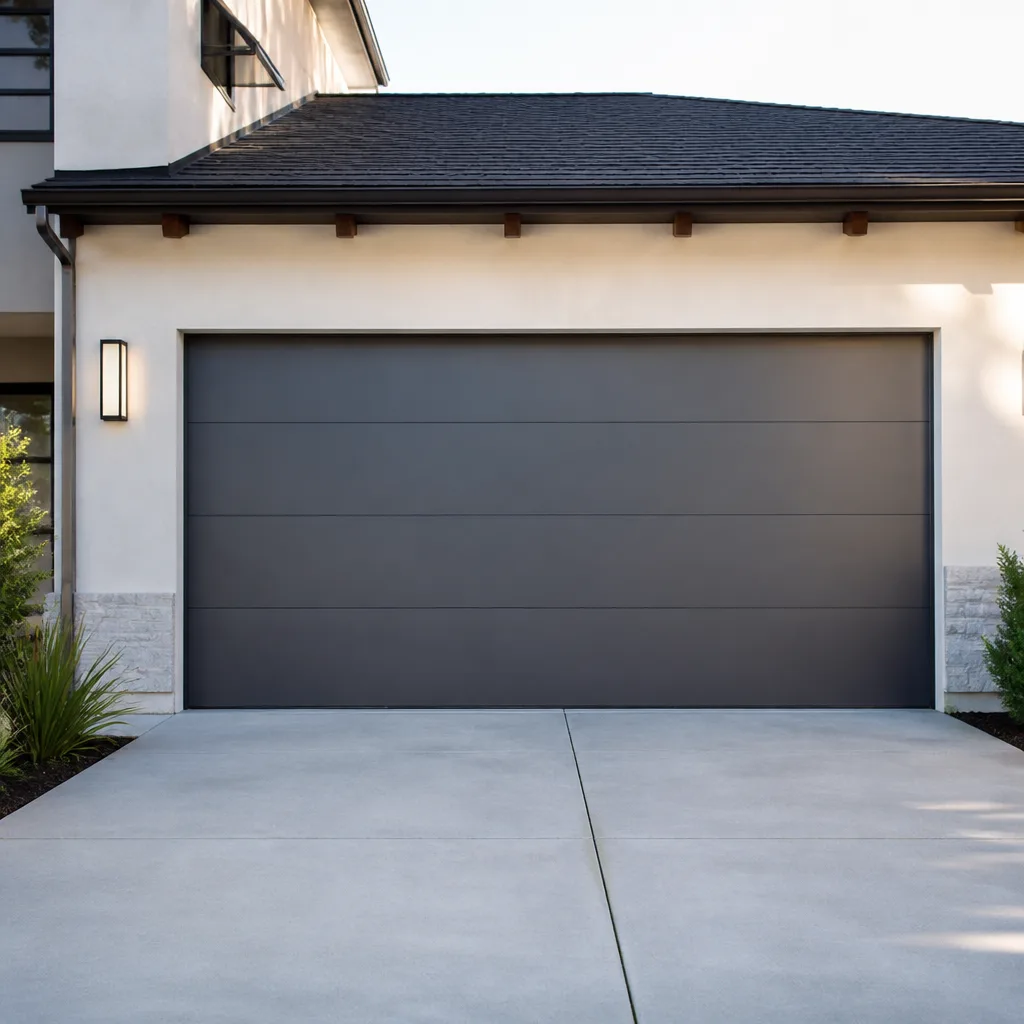 Modern flush
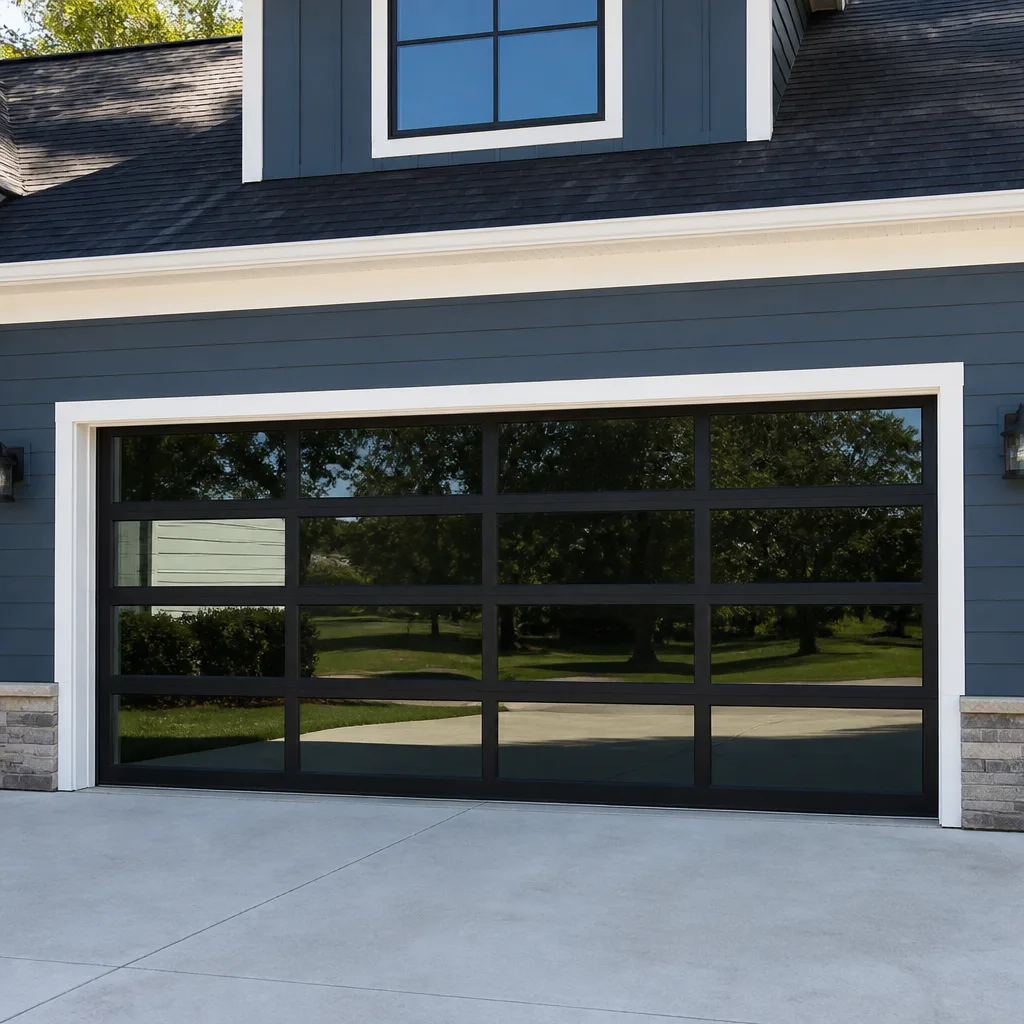 Full-view glass
 LiftMaster openers
 Chamberlain openers
Full 25-point door and opener safety check with every visit - springs, cables, rollers, tracks, and your LiftMaster or Chamberlain opener included
You get a price before we start. It does not change when the pro arrives.
Get your free estimateGarage Door Warning Signs: A Missouri City Homeowner’s Reference Guide
Most garage doors don’t fail without warning. They grumble about it for weeks first. The trouble is that a grinding noise during the last six inches of closing means something very different from a grinding noise halfway up, and without a diagnostic key, both sound like “the door is just being loud.” So the warning gets filed away as background noise until a spring snaps or a door drops off its track. This guide teaches you to read your door the way a technician does – mapping sounds, movements, and visual cues to what they actually mean – so a symptom becomes an action item instead of a surprise bill. Everything here is written from our experience servicing doors across Missouri City.
Quick Answer
The most reliable garage door warning signs are grinding or squealing at a specific point in travel, popping or snapping sounds, a door that reverses before it touches the ground, visible cable fraying, bent tracks, and a door that no longer passes the balance test. Cosmetic rust or worn weatherstrip can wait; a snapped spring, a hanging door, or a frayed cable means stop using the door and call a professional. In Missouri City’s humid climate, corrosion and seal wear show up earlier than most homeowners expect, which makes routine visual checks worth the two minutes they take.
Styles & brands we work with
- Raised-panel steel
- Carriage house
- Modern flush
- Full-view glass
- LiftMaster openers
- Chamberlain openers
Table of Contents
- Sound Diagnostics: What Each Noise Tells You
- Visual Warning Signs You’re Probably Missing
- The Balance Test and the Disconnect Test
- Cosmetic Wear vs. Structural Warning Signs
- Emergency vs. Same-Week: Reading the Urgency
- Opener Warning Signs and Smart-Home Clues
- Seasonal Checks for Missouri City Homes
- Common Mistakes to Avoid
Sound Diagnostics: What Each Noise Tells You
The location of a noise matters as much as the noise itself. A grinding sound during the final few inches of closing usually points to a problem with the door’s travel limits or the bottom seal dragging against an uneven slab. A grinding sound at the same spot mid-travel almost always traces back to a roller that’s seized or a track that’s bent at that point. Same sound, two different repairs. Learning to place the noise is half the diagnostic work.
Here’s how we map the most common sounds to their likely mechanical sources:
- Grinding during the last six inches: Travel limits set wrong on the opener, a collapsed bottom seal, or a slab that has shifted and is catching the door. Sometimes all three at once on older Missouri City homes with settled driveways.
- Grinding mid-travel: A seized steel roller, a bent track section, or a hinge that has lost its lubrication. Often comes on gradually over weeks.
- Squealing or high-pitched whining: Dry rollers, dry hinges, or a torsion spring that’s starting to bind. Grease quiets the rollers; a spring that squeals needs attention from a technician.
- Popping or snapping sounds: A torsion spring slipping on its shaft or, in the worst case, a winding cone that’s backing off. This is a stop-using-the-door sound – high-tension parts are involved.
- Rattling during travel: Loose hinge bolts, panel fasteners, or the door’s own hardware vibrating. Often the simplest and cheapest fix, but rattling can also indicate a loose torsion bar bolt on a LiftMaster or Chamberlain opener install.
- Banging when the door opens: Travel limits on the opener set too far, letting the door slam into the header. On a Genie or LiftMaster unit this is usually a quick adjustment, but leaving it slamming for months will damage the door itself.
Note the direction of travel too. A sound that only appears on closing suggests the down-force or travel limits, while a sound that only appears on opening suggests spring tension or a dragging seal. Write down when it happens and where – a “grinds for the last 9 inches on closing” description saves diagnostic time on the service call. If you’re hearing any of these in a Missouri City home, our team can walk through garage door repair options that match what you’re describing.
Visual Warning Signs You’re Probably Missing
Walk to the door before you open it. Stand on one side, close to the track, and look up. Most of what a technician checks first is visible from this angle if you know what you’re looking at.
- Cable condition: Look where the cables run along the side of each track near the bottom corner. The cable should be steel-gray and uniform. Frayed, twisted, or rust-orange cable means the strands are breaking – stop using the door.
- Rust patterns: Light surface rust on the paint is cosmetic. Rust bleeding from hinge points, panel seams, or the bottom roller pocket is structural. Steel doors in older Missouri City subdivisions, especially those with west-facing garages, rust faster than most owners expect because afternoon sun cooks the door’s finish and leaves the metal vulnerable to the humidity.
- Track alignment: Kneel and sight down the track as you would a fence line. Any visible kink, bend, or gap between the vertical and horizontal track sections means the door’s rollers are loading unevenly.
- Panel alignment: With the door closed, look across the panels horizontally. Sagging or a visible gap between panels indicates a bent hinge or a warped panel; on a steel Clopay door this is usually visible at the seam before it becomes a functional problem.
- Weatherstrip: The rubber seal along the bottom should touch the slab evenly. A gap at one end means the door is coming down on an angle, which shifts load onto one spring and shortens its life.
- Hardware: Bolts and lag screws backing out of hinges or the track brackets. A single loose lag is easy to tighten; three loose lags mean something has moved.
The most commonly missed sign is a small pool of rust-colored dust at the base of the door or on the slab under the track. That’s cable dust, and it’s a warning the cable is actively shedding strands. Ignore it long enough and you’re calling for a door that’s come down unevenly, which turns a cable repair into a full rebuild. Our Missouri City garage door repair page covers the most common cable and track calls if you want to see what we handle.
The Balance Test and the Disconnect Test
Two simple checks reveal a lot about spring and opener health, and neither requires touching a high-tension component. Do both safely with the door closed and the power off.
The Balance Test (spring health)
- Disconnect the opener from the door using the manual release cord. This detaches the arm so the door moves freely.
- Lift the door by hand, about halfway up, until it reaches a comfortable working height.
- Let go gently mid-travel. A healthy door stays where you left it, or drifts only an inch or two.
- A door that sags to the floor or shoots up has a spring problem. Sags mean the spring has lost tension; shoots up means the spring is overpowered or an improper spring was installed.
- Reconnect the door before turning the power back on.
Never reach into the spring area. Torsion springs hold hundreds of pounds of tension and cause some of the most serious injuries in household maintenance. The test above is the only diagnostic we recommend a homeowner perform on the spring side of the system – everything past that point belongs to a trained technician with the right winding bars. Our garage door spring repair page explains what spring work involves.
The Disconnect Test (opener health)
With the door disconnected and moving freely by hand, run the rails test: does the door open and close smoothly with only moderate pressure? If it does, the door itself is in reasonable shape and any problems are likely in the opener. If it takes real effort to push up, or the door grabs at a spot, that’s a door-side problem the opener can’t fix. Most garage door openers fail trying to compensate for a door that isn’t moving correctly – a LiftMaster or Genie unit that “burned out” often traced back to a binding door it had been fighting for months.
Cosmetic Wear vs. Structural Warning Signs
Not every mark on a door is a repair signal. Missouri City homeowners with steel doors, which is most of us, tend to over-worry about dents on panels and under-worry about what’s happening underneath the paint. The split comes down to whether the wear affects how the door moves.
Cosmetic wear you can note and live with:
- Surface rust on the face of a panel that hasn’t started pitting
- A small dent from a bicycle handlebar with no buckling at the seams
- Faded paint or chalky finish on a sun-exposed door
- Weatherstrip with a small tear that still seals against the slab
- Scuffs on the bottom edge from normal contact
Structural warning signs that need attention:
- Rust coming out of hinge pockets or panel seams (the door’s skeleton is corroding)
- Dents that have buckled a panel so the door no longer sits flush
- A bow at the top section where the opener arm attaches (over-stressed panel)
- Weatherstrip that’s pulled away from the door or crumbling (seal failure is real, not cosmetic)
- Any sag visible across a line of panels when the door is closed
The tricky middle ground is rust on the bottom edge of the door, common on steel doors in older Missouri City subdivisions where morning humidity lingers longer because of the tree cover. If the edge is just discolored, it’s cosmetic. If it feels soft when you press it, or if the bottom weatherstrip pulls off easily and reveals a rotted metal channel, the door’s structural bottom is compromised and needs to be assessed.
Emergency vs. Same-Week: Reading the Urgency
Not every warning sign justifies dropping everything. But some genuinely do, and knowing the line saves you both a needless panic and a costly delay.
Emergencies – stop using the door now and call for immediate help:
- A snapped torsion spring (loud bang, door too heavy to lift by hand, opener won’t even try)
- A door hanging off one track, tilted, or partially off the rollers
- A frayed cable with visible broken strands, or cable dust on the floor
- A door that reverses instantly on closing or won’t close at all and leaves the home exposed
- A door that drops suddenly or free-falls on opening
A garage door that won’t close is a security gap, not a minor inconvenience. Our emergency service exists for these situations – not a next-day appointment window, a genuine dispatch. A quick note: our week is not seven days. We’re closed Saturdays, but if a door fails on a Saturday you can call and we’ll book you for Sunday. Early mornings and Sundays are when we handle urgent calls outside normal hours.
Same-week service – book now, avoid using the door unnecessarily until you’re seen:
- Grinding that’s appeared in the last few days and is getting worse
- Opener that hesitates, reverses mid-travel, or fails to respond to the remote
- Bent track that still allows the door to travel but with visible wobble
- One spring intact and one spring clearly weakening (they should be replaced together anyway)
Plan within a few weeks – monitor and note:
- Weatherstrip seal failure
- Surface rust that hasn’t spread
- Minor dents that don’t affect travel
- Occasional squeaks that oil quiets temporarily
Opener Warning Signs and Smart-Home Clues
The opener is often blamed for problems that live in the door, but it does have its own failure signals. Listen to the motor’s sound and watch the safety sensors.
- Motor runs but door doesn’t move: Stripped gear in the opener, broken drive belt or chain, or the door arm’s cotter pin has sheared. Common on older LiftMaster and Chamberlain units.
- Door reverses immediately on closing: Safety sensors misaligned, dirty lens, or a sun beam hitting the sensor. Also worth checking the travel limits are still set right after any mechanical work on the door.
- Opener strains audibly: Door is binding, opener is being asked to do more work than it should. Do not keep pressing the button – this is the setup for a burned-out motor.
- Remote or wall button responds intermittently: Antenna wire, logic board, or on a Genie unit, a failing battery in the remote is the simplest first check.
- Smart-home disconnects: MyQ-compatible LiftMaster and Chamberlain openers on Wi-Fi dropping repeatedly usually point to a firmware update or a router swap rather than hardware failure. Sometimes the “opener problem” is a scheduling fix.
We service the brands most homes already own. If you’re using a LiftMaster, Chamberlain, Genie, Clopay, Amarr, Wayne Dalton, Craftsman, or Raynor system, the technician on the call knows the quirks of that specific unit. Opener-specific work falls under our garage door opener repair service, and our technicians have up to 8 years of experience diagnosing exactly these symptoms.
Seasonal Checks for Missouri City Homes
Missouri City’s climate is hard on doors in a specific way. The long humid stretch from spring through fall keeps humidity high enough that steel components hold moisture longer than they do in drier parts of Texas, and the summer heat bakes doors that face west or southwest. Mild winters mean the door doesn’t get a “reset” from cold weather drying everything out. So the main enemies are cumulative humidity and sun load, not freeze events.
What that means in practice:
- Check weatherstrip more often than you’d think. High humidity plus heat degrade rubber seals faster here. Look at the bottom seal and the side seals at the start of summer and again in fall.
- Wipe down and inspect hinges and bottom fixtures. A dry cloth through the hinge points and a visual check for rust blushing is two minutes well spent.
- Clear the track of grit. Blown-in dust from dry stretches collects in the track, turning into a grinding sound that isn’t structural – just dirt. Clean it out before assuming a repair.
- Test the balance each season. A spring that’s weakening shows up in the balance test long before it snaps.
- Check the safety sensors after any landscaping. A hedge or shrub that’s grown into the sensor path is a common cause of “door won’t close” calls in Missouri City during growing season.
Common Mistakes to Avoid
- Assuming every grind is expensive. A grinding door often just needs a roller replaced or the track cleaned. The mistake is not the concern – it’s the delay while the door gets worse. Get it looked at early and it stays a small repair.
- Greasing a torsion spring. People do this because it’s the loudest component. It doesn’t fix anything, and it can hide the bind that’s actually the cause. Springs are handled by technicians, not homeowner grease.
- Ignoring the second spring. When one spring on a two-spring door snaps, the second one is on the same wear cycle. Replacing only the broken one means a second service call in the near future and a door that pulls unevenly in the meantime. Matched pairs should always be replaced together.
- Force-opening a door that’s pulled off track. This bends panels and can drop the door. If the door isn’t sitting on both tracks, stop and call.
- Blaming the opener first. Most “opener problems” in Missouri City are really door problems the opener has been fighting. Diagnose the door before ordering an opener.
- Skipping the post-rain check. After heavy rain, the bottom seal is the first thing to lose contact with a slab that’s been splashed. A two-minute check after a heavy storm catches seal problems before they turn into water intrusion.
- Letting a small dent stay unfixed on a steel door. Dents that crease a panel seam give moisture a starting point. In this climate, that rust spreads inward fast.
When to Call a Professional
Call us when the door involves a torsion spring, a cable, or a panel that’s moved. Those are the parts where a homeowner diagnosis has real risk – high-tension springs and cables cause some of the most serious household injuries, and a door coming off track can drop without warning. Call us on same-day and emergency timelines when the door won’t close, won’t open, has snapped a spring, or has pulled off the track. Book a same-week appointment for grinding that’s getting worse, an opener reversing mid-travel, or a bent track that still works but wobbles. Plan for cosmetic-only work (weatherstrip, minor surface rust, small dents) whenever it’s convenient. Missouri City Garage Door Repair offers free estimates in Missouri City – call (855) 765-7303 and we’ll talk through what you’re hearing and seeing. Pricing is quoted and agreed before any work starts, so there’s no moving target once we’re on-site.
See the difference
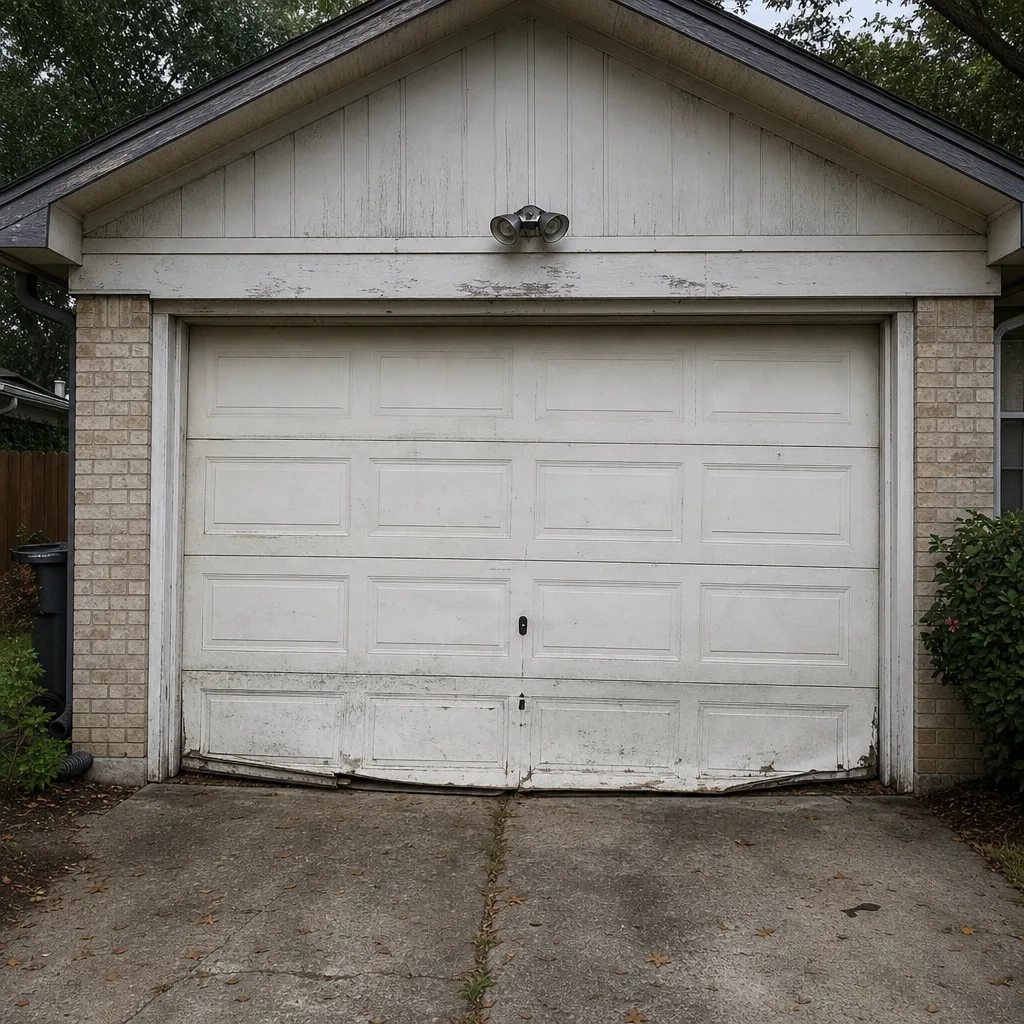 Before
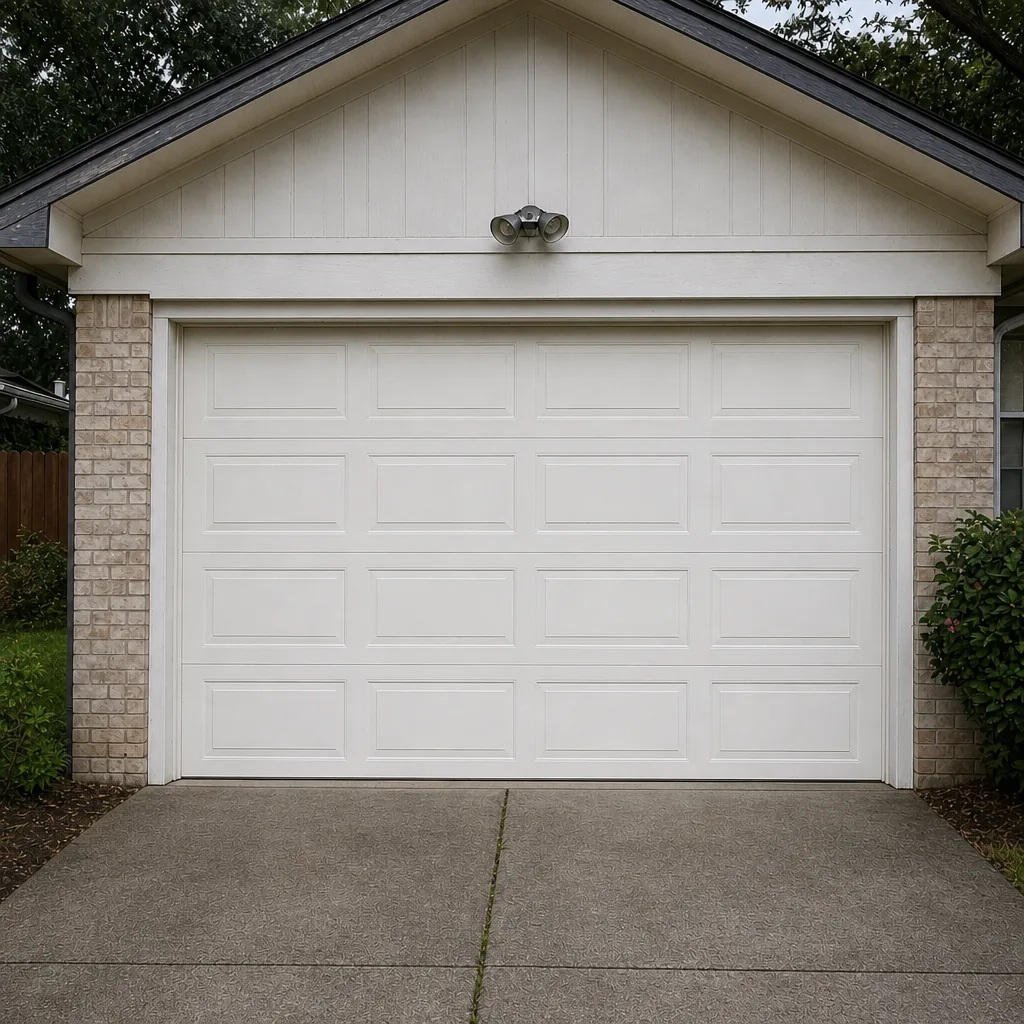 After
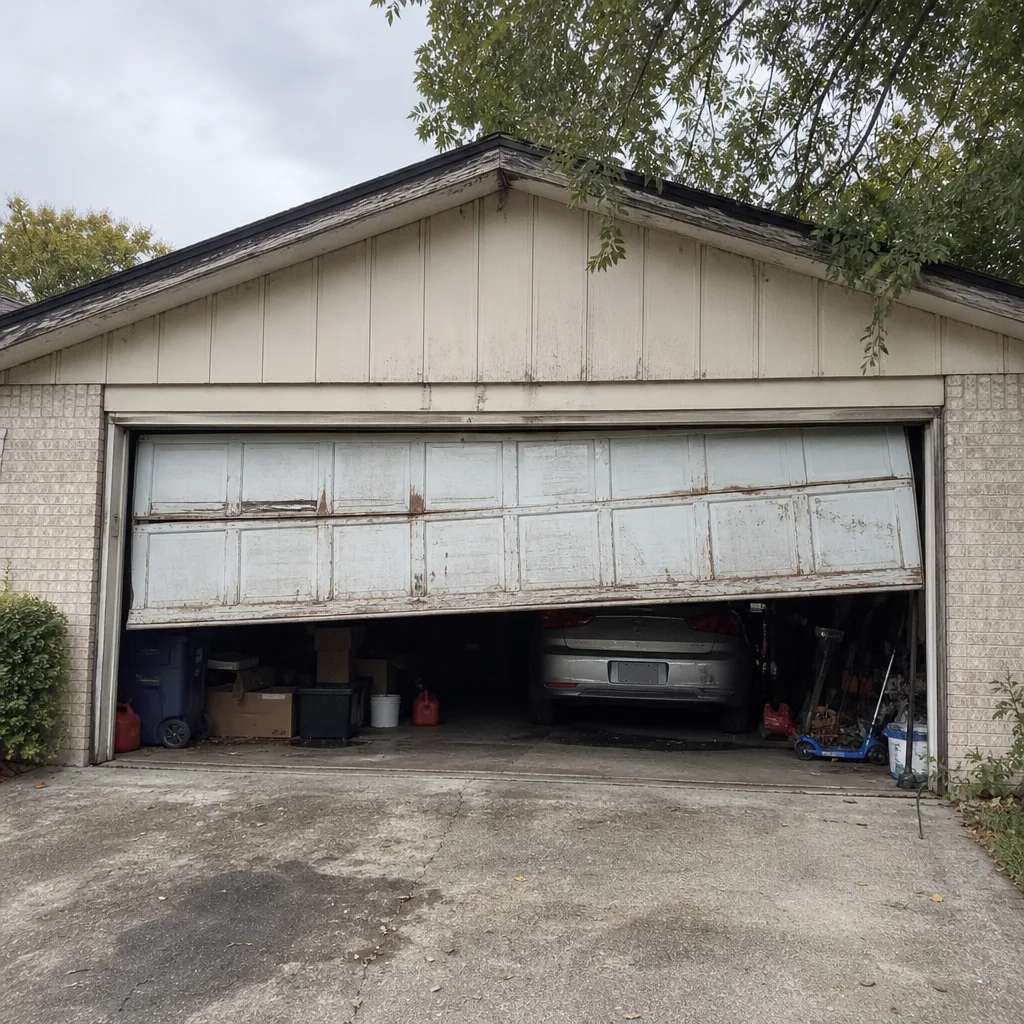 Before
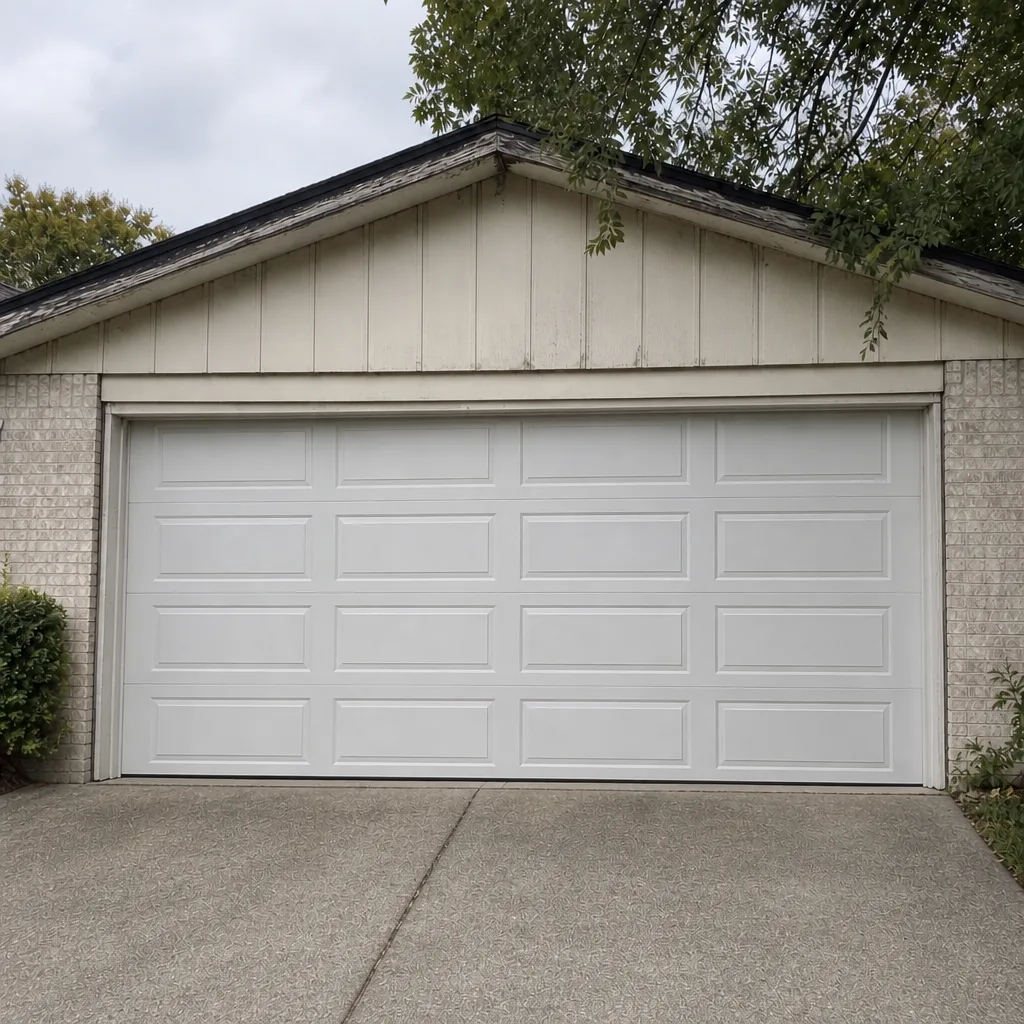 After
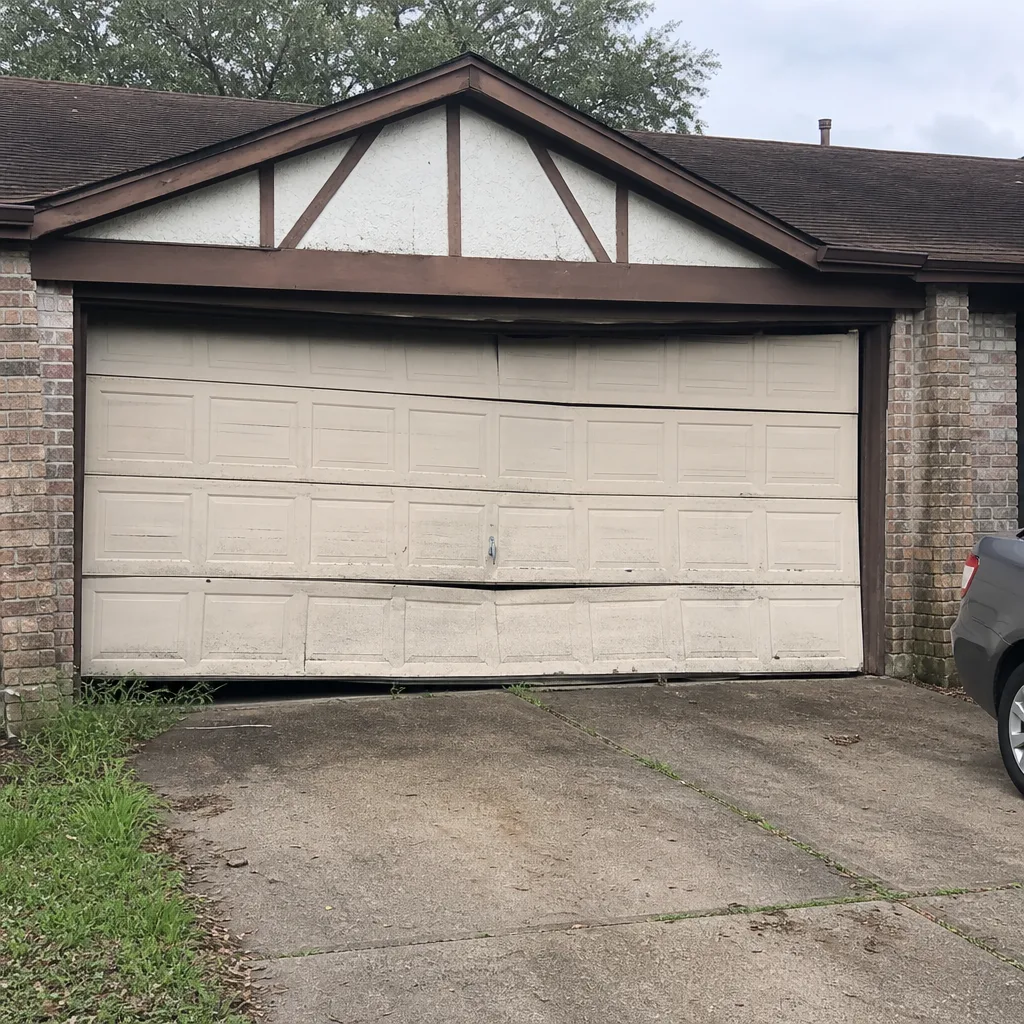 Before
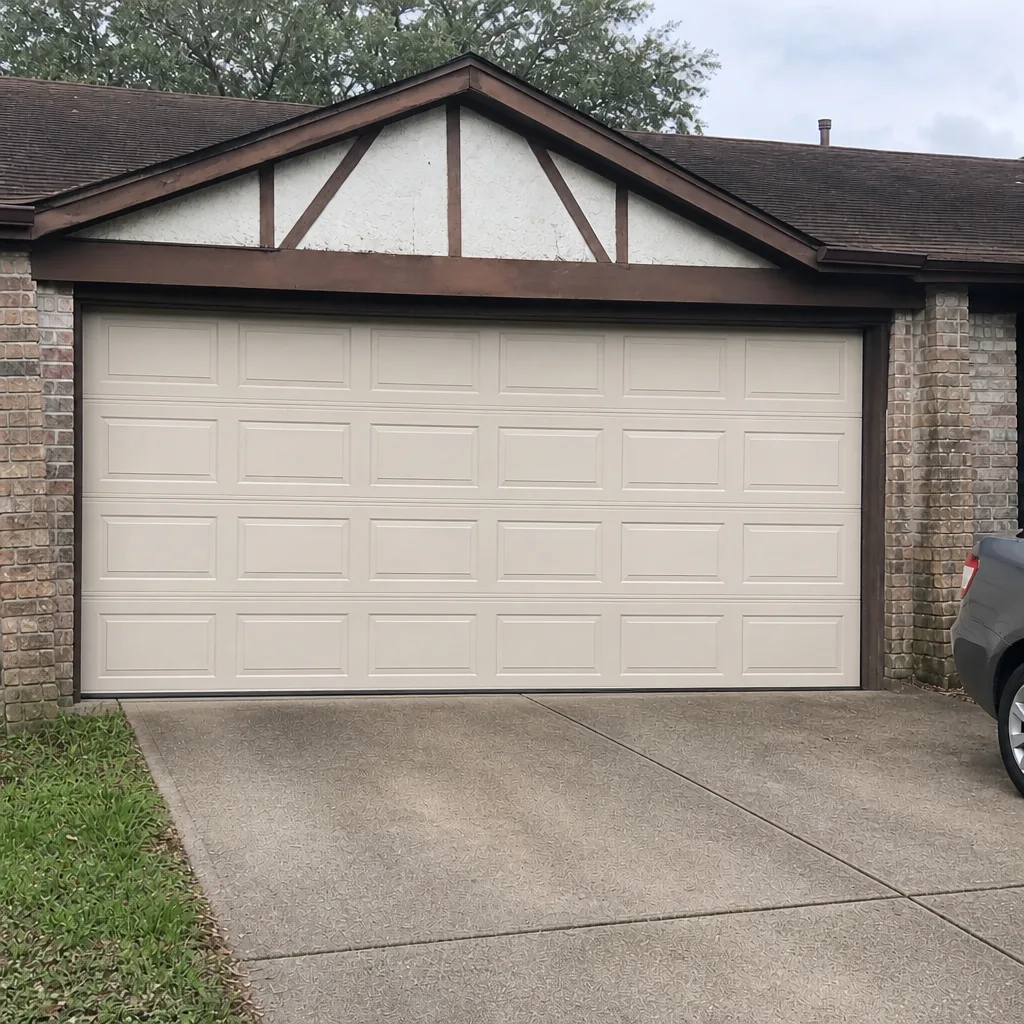 After
Frequently Asked Questions
The most common garage door warning signs are grinding at any point in travel, squealing from rollers or springs, a door that no longer passes the balance test, visible rust at hinge points or panel seams, frayed cables, or an opener that reverses on closing. Any one of those is worth a call, and more than one together means stop using the door. Call (855) 765-7303 for an exact quote – estimates are free.
Garage door repair in Missouri City depends entirely on which component has failed, so a specific range only makes sense after a technician has looked at the door and confirmed the cause. Roller and track adjustments sit at the low end; spring and cable work runs higher, and one spring and a matched pair are priced differently because a pair costs about twice as much as a single spring. The written estimate you receive sets the final price. Call (855) 765-7303 for an exact quote – we don’t bill against a range.
Yes, and often is. Grit in the track produces a grinding sound identical to a roller problem, and a sunbeam across the safety sensor can make a working door reverse as if the mechanism failed. Cleaning the track and checking sensor alignment first rules out both before you commit to a service call. If the symptom persists after those two checks, it’s real. Call (855) 765-7303 – we’ll help you decide whether it needs a visit.
Spring life depends on cycles (open and close counts) more than calendar time, but Missouri City’s humidity and temperature swings shorten the practical life compared to drier climates because the coils corrode slightly and the bearings inside the spring cone lose lubrication faster. A door used a few times a day gives springs several years of service; a door used heavily will wear them out sooner. The balance test is your best early indicator that a spring is on its way out.
Yes. A garage door that won’t close leaves the home open to weather, pests, and break-ins, and it’s a security issue rather than a minor inconvenience. Our emergency service exists for exactly this – a real dispatch, not a next-day appointment window. Call (855) 765-7303 and we’ll route the call to emergency service.
Our technicians are trained on LiftMaster, Chamberlain, Genie, Clopay, Amarr, Wayne Dalton, Craftsman, and Raynor – which means the brand on your opener or door is one we work on routinely, not one we’re guessing at. That covers most of the systems already installed in Missouri City homes. Call (855) 765-7303 to confirm we can help with your specific unit.
The Bottom Line
Garage door failures are rarely sudden. They announce themselves in a grinding last six inches, a squeal that wasn’t there last month, a hinge point rusting from the inside out, or a door that no longer holds its balance. Read those signs early and you turn a snapped-spring emergency into a planned repair. The balance test and the visual walk-around are two minutes of homeowner work worth the trouble, and anything involving springs or cables belongs to a technician. Cosmetic wear can wait; structural signs and opener failures can’t. Keep the list handy, check the door seasonally, and call when the door is telling you something.
Contact
If you’re hearing something you can’t place, or the door isn’t moving the way it should, call Missouri City Garage Door Repair at (855) 765-7303 for a free estimate. We work on the brand you already own, cover springs, openers, panels, tracks and full installs, and treat emergency calls as real emergency calls. Call today and we’ll help you figure out whether it’s a fix you can schedule or something that needs attention right now.
Written by the team at Missouri City Garage Door Repair.