Top Signs You Need Garage Door Service – Don’t Ignore These
The top signs you need garage door service are grinding or squealing on the way up, a door that reverses before it closes, gaps at one corner of the bottom seal, rust streaks on the track, and an opener that has gotten noticeably slower. Each one is a mechanical warning with its own timeline, and most show up weeks before something actually breaks. If you’d rather not climb a ladder to diagnose it yourself, call (855) 765-7303 and we’ll take a look.
Here’s the part most homeowners miss: a garage door almost never fails out of nowhere. It tells you first.
What Your Garage Door Is Trying to Tell You
That grinding noise on the way up has a lifespan. It isn’t just the weather. It’s usually a roller bearing that’s seized, and in a Texas summer the heat shortens the trip from “annoying” to “door off track” considerably. We’re not trying to be dramatic about it. We just see the same sequence over and over in Missouri City, and the homeowners who catch the noise early spend a lot less than the ones who wait for the loud bang.
Most garage door failures follow a predictable order: a small noise, then a movement change, then a visual symptom, then a breakdown. The trick is learning which stage you’re in and how much runway you have left. This thermostat-and-hinge machine runs several times a day, every day, and every component has a different failure timeline.
- Rollers give you weeks of warning before they bind.
- Springs are silent right up until they aren’t, though they show wear in other ways.
- Hinges loosen gradually and let the door sag at the joints.
- The opener drive strains for a while before it gives up.
Knowing which category you’re hearing changes what you do next.
The Sound-to-Problem Decoder: What Each Noise Means
Different sounds point to different parts, and they come with different urgency. Here’s how we sort them out on a typical service call in Missouri City.
- Grinding. Usually metal-on-metal at the rollers or the track. A seized roller can grind for several weeks, but the friction wears the track and eventually drags the door out of alignment. Think weeks, not months.
- Squealing. Often dry hinges or a roller that’s lost its lubrication. This one is more forgiving, but if it’s paired with any jerking movement, treat it as urgent.
- Popping. Frequently a cable jumping its drum or a hinge that’s come loose and is catching on a section joint. Popping that started suddenly deserves a close look now.
- Thumping or rattling. Often the opener’s drive gear or a worn trolley. This one can hide for a long time and then fail all at once, so a slow thump is worth a professional inspection before it strands the door.
The pattern matters too. A single squeal on one trip is very different from a grinding sound you’ve now heard three mornings in a row. When it repeats, it’s mechanical, not bad luck.
Visual Signs Homeowners Dismiss as Cosmetic
Garage doors tell you things visually before they make a sound, and Missouri City homeowners routinely shrug these off as “just how it looks.” They aren’t cosmetic. Each one points at a specific part that’s already under strain.
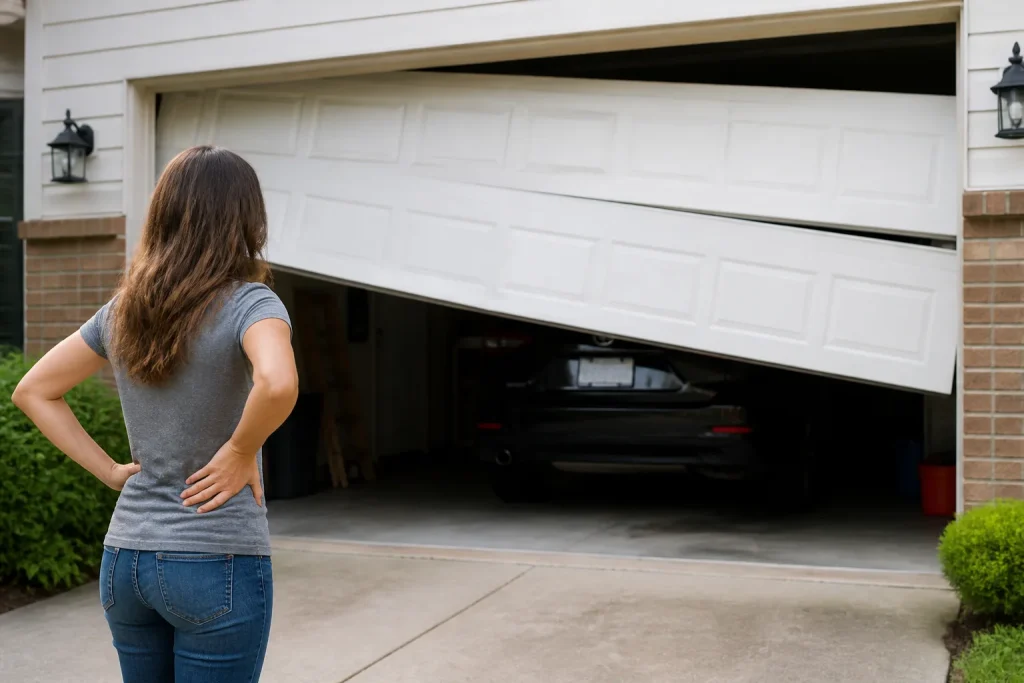
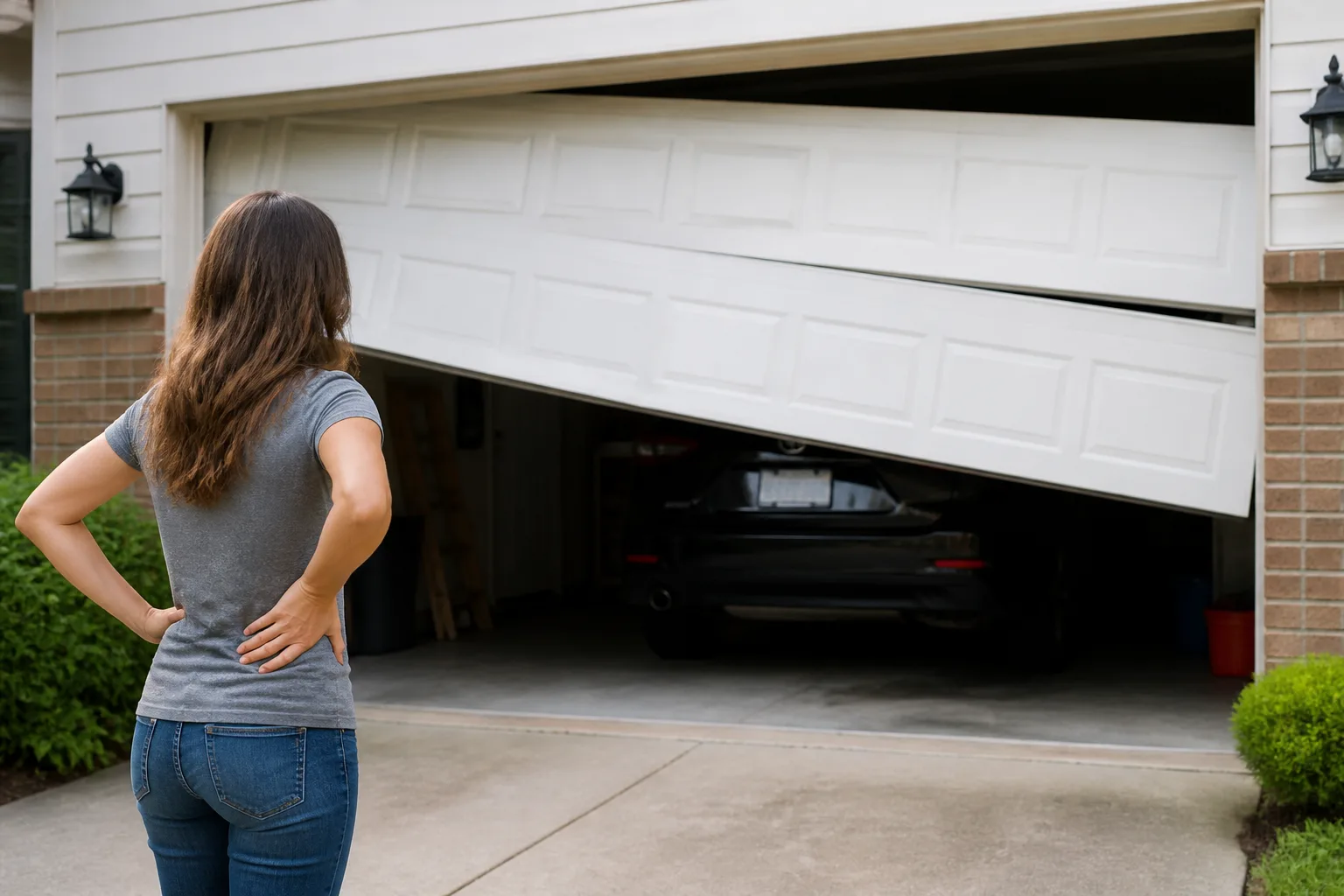
- A gap at the bottom seal on one side. A door that doesn’t seal evenly usually has a cable tension imbalance. If you can see daylight under one corner while the other sits flush, the lift cables aren’t working as a matched pair anymore.
- Rust streaks on the track. Rust on the rails over a worn spot is often the first sign a roller is failing and starting to drag. By the time you hear it, the track has been taking the load.
- Door sections that bow outward. Panels don’t curve for no reason. Bowed sections usually mean stress near the point of failure, often at the hinge line between sections, and a bowed door puts extra strain on the springs every time it moves.
- Worn or frayed cables. Frayed strands on a cable are not something to inspect closely and then ignore. Call a trained technician for cables and springs; these parts are under high tension and are among the most injury-prone repairs a homeowner can attempt.
Walk around the door once a month with a flashlight. Two minutes of looking saves a lot of time later.
The 30-Second Balance Test Every Missouri City Homeowner Should Do Twice a Year
This is the single most useful check you can run yourself, and it reveals spring wear before it turns into a failure. You’ll need the door closed and the opener disconnected.
- Pull the release cord to disconnect the opener from the door.
- Lift the door by hand to about halfway, then let go and step back.
- Watch whether it holds or drifts.
Pass: The door stays put, or drifts only a little before settling. The springs are carrying the door’s weight properly.
Fail: The door drops faster than you’d expect, feels unusually heavy lifting it by hand, or keeps sinking when you let go. All three point to weak springs, and a door that won’t hold halfway is letting the opener drag it up with brute force.
Run this test twice a year, and it becomes an early-warning system. A door that just barely passed in the fall is the one you’ll be calling about in January, which is exactly why we think fall is the right time to do it in Missouri City. It takes 30 seconds and saves the panic of a door that won’t lift at all.
Why a Slow Opener Is Almost Never the Opener’s Fault
When the door lags on the way up, most people blame the opener. In our experience it’s usually the door. A slow, laboring opener is often straining against weak springs and door weight it was never designed to compensate for. The motor is fine. It’s just working twice as hard as it should.
Left alone, that extra strain wears the drive gear, the trolley, and eventually the motor on your LiftMaster, Chamberlain, or Craftsman unit. Before long the door isn’t slow, it’s stuck. If the opener reverses for no obvious reason or the safety sensors are clear and it still won’t close, that’s the point to stop trusting it. A door that won’t close is a security gap, not a small annoyance.
When you do need a pro, this is that moment. We work on the brand you already own, and we’d rather diagnose a strained drive on a well-known opener than replace a motor that’s doing exactly what the door is asking of it.
Why Missouri City’s Fall Window Matters
Winters here are mild, which sounds like good news for a garage door. But our climate still shapes the timeline. The summer heat works against every bearing, cable, and roller, and by fall those parts are already tired. Then demand spikes every January and February when weak springs finally give out in the cold.
That’s the seasonal service window. Catching the grinding, the seal gap, or a failing balance test in fall, before temperatures drop, keeps you out of the January rush. It also means any worn parts get replaced on a planned visit instead of an emergency one when your car is trapped inside.
The signs are the same in Missouri City year-round. The difference is whether you act on them in October or wait for the loud bang in February. Fall inspection is the quietest, most sensible time to get ahead of it.
The Bottom Line
Garage doors fail slowly, then all at once. Grinding, squealing, popping, and thumping each point at a different part with a different clock running. The visual signs (a gap at one corner, rust streaks, bowed sections) are structural warnings, not cosmetic quirks. And the 30-second balance test you run twice a year will tell you more about your springs than any noise will.
Our technicians have up to 8 years of experience, and we service LiftMaster, Chamberlain, Craftsman, Raynor, and the rest of the brands most Missouri City homes already have. If you’re in Missouri City and want help, Missouri City Garage Door Repair offers free estimates and same-day and emergency service for doors that can’t wait. Call (855) 765-7303.
Related services in Missouri City: garage door spring repair, garage door opener repair, and full garage door repair for panels, tracks, and cables. You can also start at our Missouri City Garage Door Repair home page.
Frequently Asked Questions
Grinding or squealing on the way up, a door that reverses before it closes, a gap at one corner of the bottom seal, and a noticeably slower opener are the most common first signs. Any one of them is worth a professional look. Call (855) 765-7303 for a free estimate.
You can lubricate hinges and rollers, but anything involving springs or cables should go to a trained technician. High-tension springs are among the most injury-prone repairs in home maintenance. Call us for the parts that carry the load. Estimates are free.
Not long. A grinding roller can wear your track and pull the door out of alignment within weeks, and summer heat speeds that up. Treat repeat grinding as a same-week problem, not a someday one. Call (855) 765-7303 and we’ll take a look.
A door that feels heavy by hand usually has weak or worn springs that are no longer carrying its weight. That’s a spring issue, not an opener issue, and it should be checked before it fails completely. Call (855) 765-7303 for a free estimate, and we’ll confirm what’s actually worn.
Written by the team at Missouri City Garage Door Repair.
Need Garage Door Help?
Call Missouri City Garage Door Repair - the local pro we connect you with is licensed and insured, here with fast after-hours help in Missouri City.
(855) 765-7303