Last updated November 21, 2026
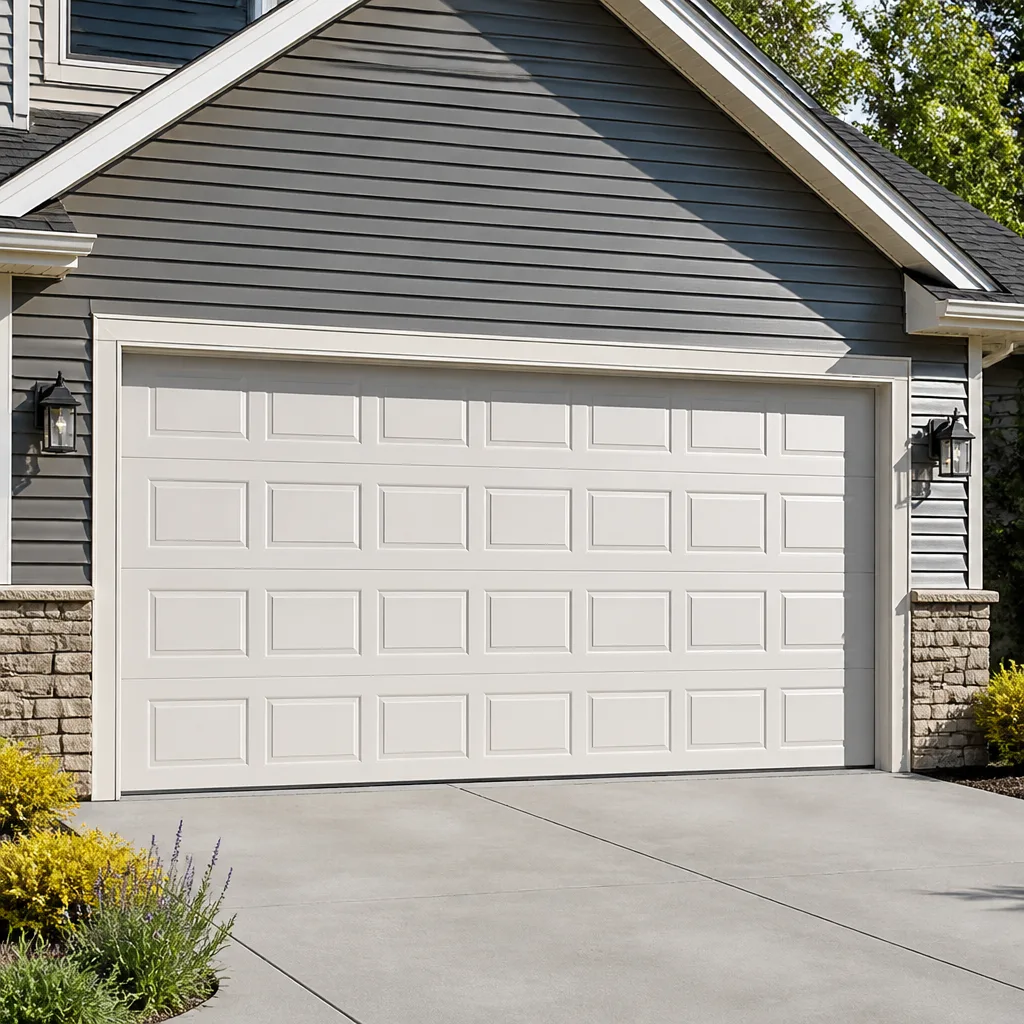 Raised-panel steel
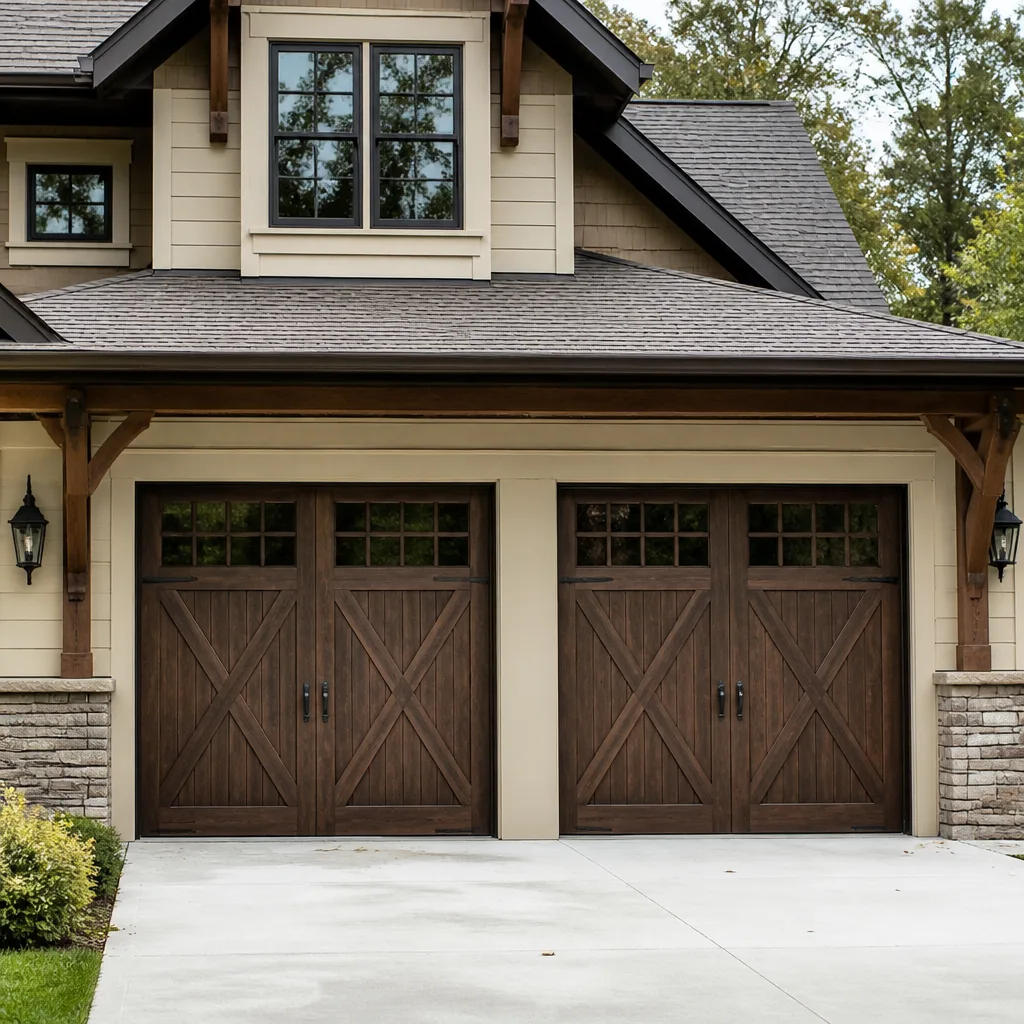 Carriage house
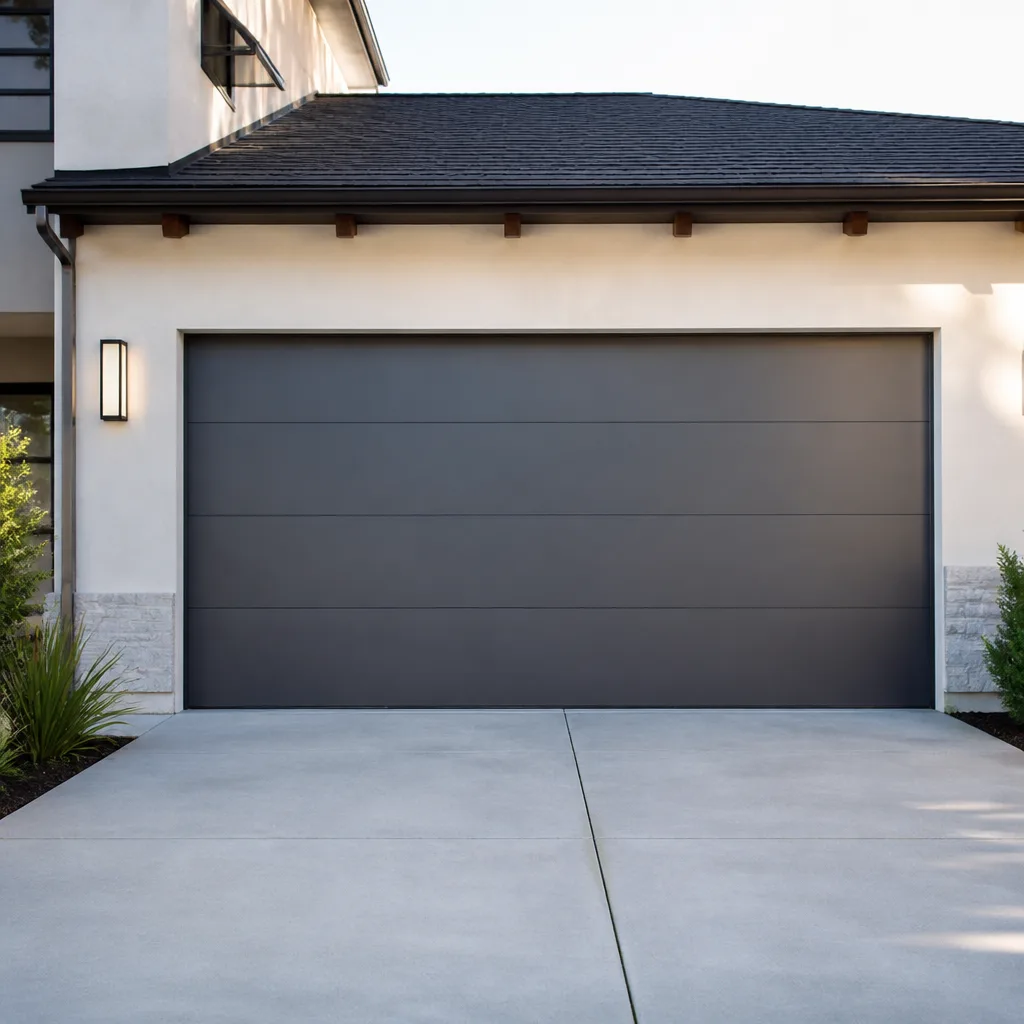 Modern flush
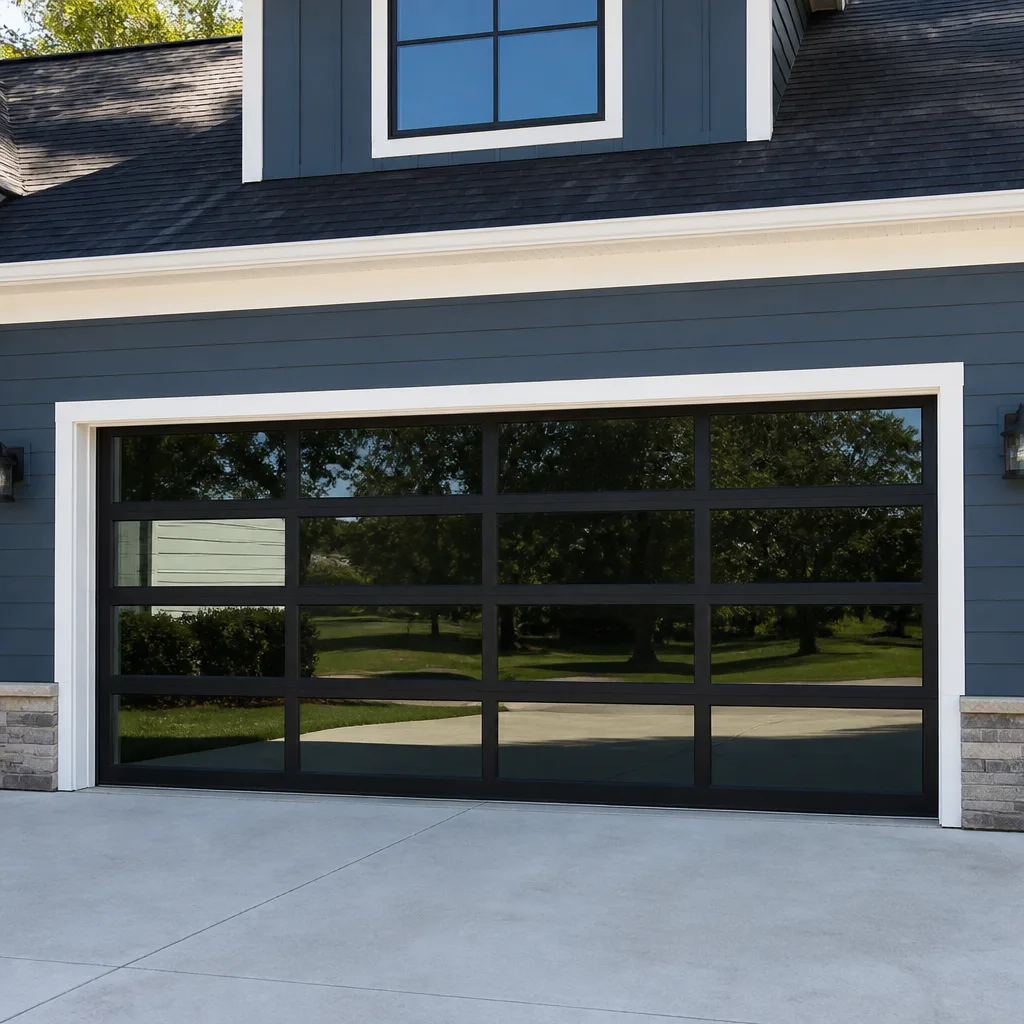 Full-view glass
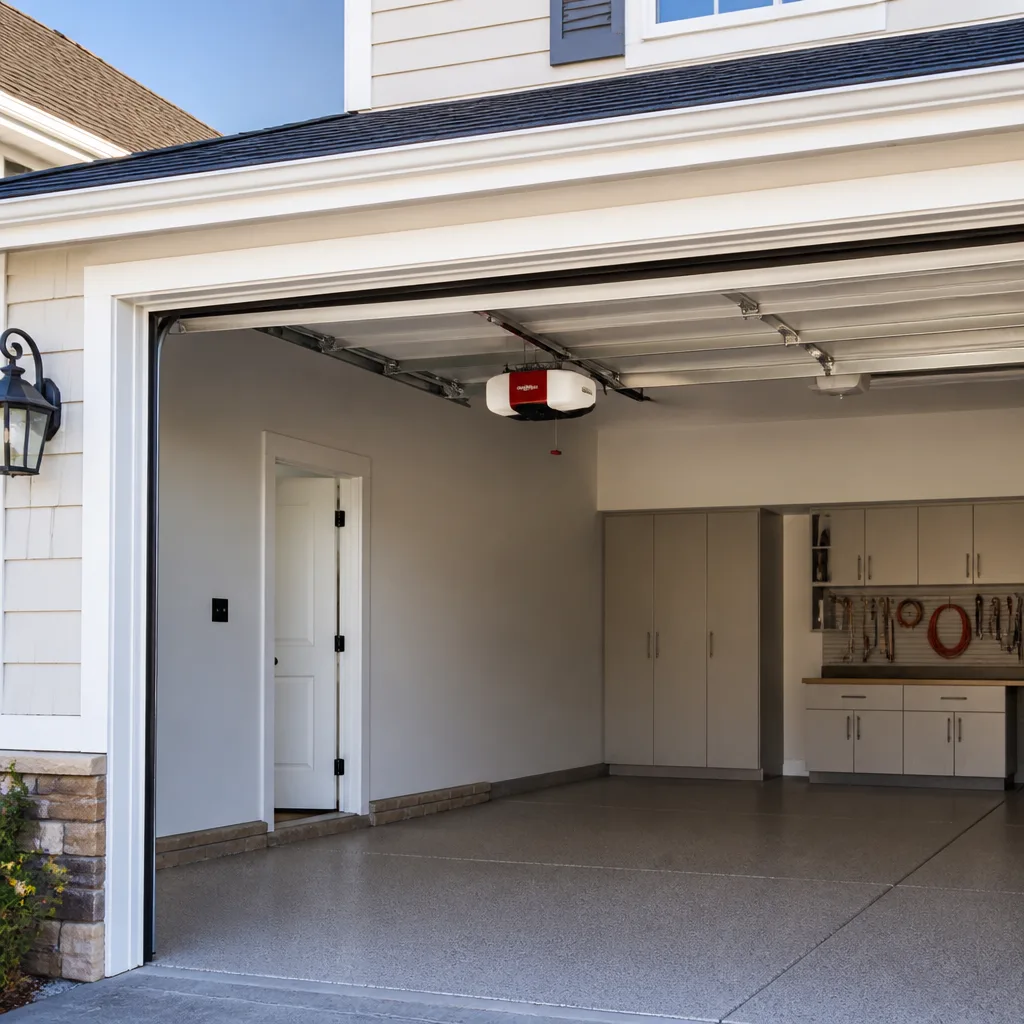 LiftMaster openers
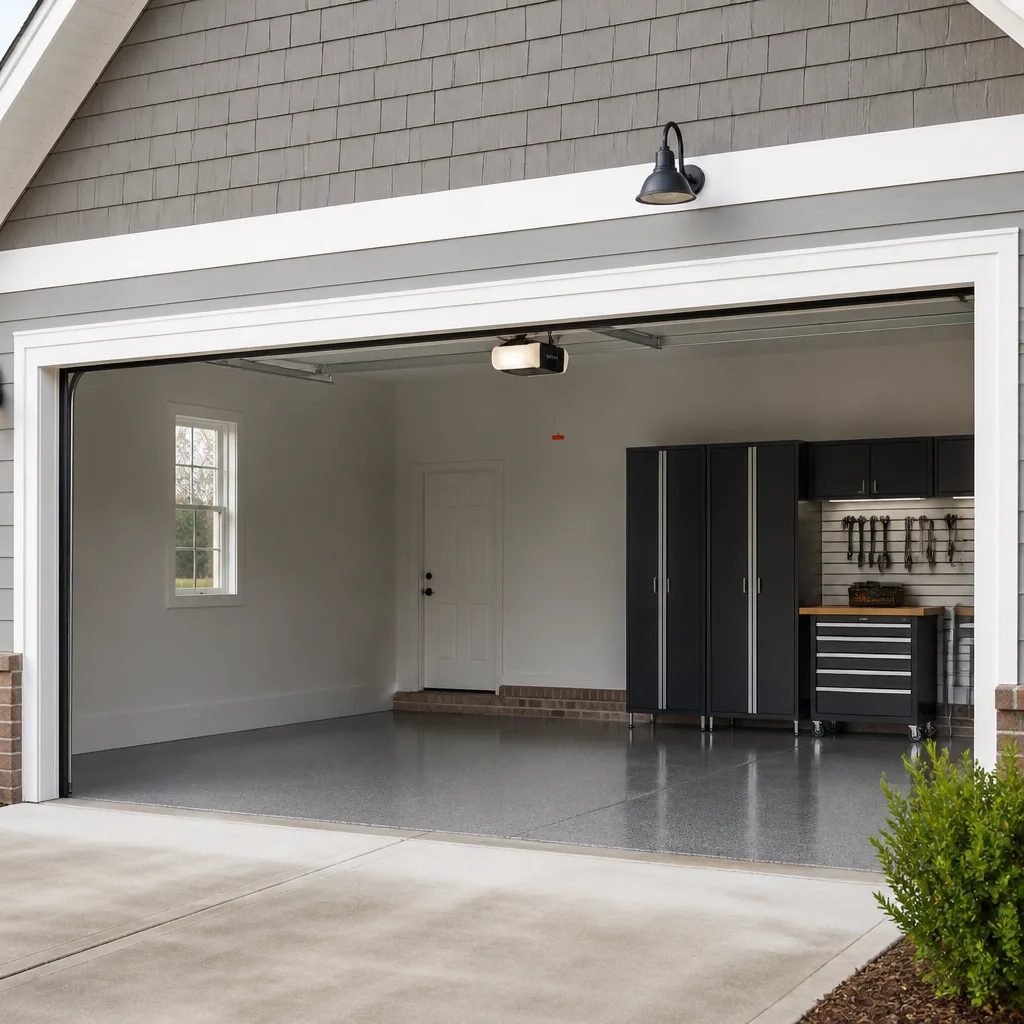 Chamberlain openers
Full 25-point door and opener safety check with every visit - springs, cables, rollers, tracks, and your LiftMaster or Chamberlain opener included
You get a price before we start. It does not change when the pro arrives.
Get your free estimateThe Complete Guide to Garage Doors in Missouri City
Most garage door advice you’ll find online was written for a national audience and it shows. It talks about snow load, road salt, and frost heave. None of that happens here. What does happen in Missouri City is relentless humidity, long hot summers, and HOA boards that care deeply about what your door looks like from the street. A garage door that survives fifteen years in Phoenix may show rust and warped panels in half that time along the Fort Bend County line. This guide covers the parts other guides skip: how our climate actually wears out steel, wood, and fiberglass doors, what Sienna, Riverstone, and Quail Valley homeowners typically inherit from their builder, when a repair stops making financial sense, and how your door shapes resale in one of the Houston area’s most competitive housing markets.
Quick Answer
A Missouri City garage door is best understood as a long-term infrastructure decision, not a one-time purchase. Given the humidity and heat cycles along the Gulf Coast prairie, a builder-grade steel door usually needs real service somewhere between year eight and year twelve, and matching a replacement to your HOA’s color and panel rules matters as much as the door’s insulation value. Repair is usually the right call for springs, openers, rollers, and single damaged panels; full replacement makes more sense when the door structure, hardware, and opener are all near end of life at once.
Styles & brands we work with
- Raised-panel steel
- Carriage house
- Modern flush
- Full-view glass
- LiftMaster openers
- Chamberlain openers
Table of Contents
- How Fort Bend County Humidity and Heat Affect Garage Doors
- Steel vs. Wood vs. Fiberglass: What Lasts in Missouri City
- HOA Rules in Sienna, Riverstone, and Quail Valley
- Builder-Grade vs. Upgrade Doors: What Homeowners Inherit
- Repair vs. Replace: Finding the Tipping Point
- Opener Systems and Smart Garage Technology
- Your Garage Door as a Resale Asset in Fort Bend County
- Seasonal Maintenance for Missouri City Homeowners
How Fort Bend County Humidity and Heat Affect Garage Doors
Fort Bend County issues thousands of residential permits in a typical year, and most of those homes arrive with a builder-grade garage door. That door was likely engineered for a general American climate, not for a place where the average afternoon humidity sits high for months and the summer heat pushes a closed garage well past the outdoor temperature. The result is that doors in Missouri City age differently than doors in drier parts of Texas.
Heat and moisture work on a garage door in ways you can’t always see. The steel skins expand and contract daily. Paint films lose adhesion at the panel edges first. Wood sections take on moisture at the joints and start to cup or split. Even fiberglass, which handles moisture well, can chalk and fade under sustained UV. None of this is dramatic on any given day, but over years it changes which repair is worth doing and when replacement starts to make sense.
There are three specific things we see more of in this climate:
- Rust at the bottom section. Humidity plus a slab that stays damp after rain accelerates corrosion along the bottom panel and the bottom brackets, where moisture lingers longest. A single rusted bottom panel doesn’t mean the door is finished, but it needs attention before the rust spreads to the stiles.
- Warping and binding on wood doors. Wood absorbs and releases moisture unevenly across panels. That can bow a section so the door drags on the tracks, which then loads the opener and the springs.
- Fastener and hinge wear. Repeated heat cycling loosens screws and stiffens hinges. A door that squeaks and shudders in August is usually telling you about humidity-driven wear, not just a lack of lubrication.
None of this means a Missouri City door can’t last. It means the maintenance interval is shorter than a national guide would suggest, and it means you should look at the bottom of the door and the hinges as carefully as the opener. Our garage door repair work here starts with that inspection, because what we find at the bottom of the door usually tells us more than anything else.
Steel vs. Wood vs. Fiberglass: What Lasts in Missouri City
Material choice is the single biggest factor in how a garage door holds up along the Fort Bend County line. Here’s how each common option behaves in our specific conditions.
Steel
Steel is what most Missouri City homes already have, and for good reason: it’s strong, affordable, and available in a wide range of finishes. The weak point is the finish itself. A quality factory-applied finish resists humidity well. A cheap or damaged finish doesn’t, and once moisture gets under the paint at the panel seams, rust starts. Steel doors fare better here when the bottom section is kept clean and dry and any scratch or chip is touched up quickly. Insulated steel is the practical pick for most homeowners, since a garage that faces the afternoon sun gets hot fast.
Wood
Wood doors are beautiful and they’re a genuine maintenance commitment in this climate. The same humidity that accelerates steel corrosion makes wood swell, shrink, and cup. A wood door needs a durable finish and regular re-coating to keep moisture out, and even then, sections can warp enough to bind. If you want wood in Missouri City, go in expecting to maintain it, and budget for periodic refinishing as a real cost of ownership, not an optional add-on.
Fiberglass
Fiberglass handles moisture better than wood and won’t rust like steel, which makes it a reasonable choice for a humid market. The tradeoffs are appearance and UV exposure. Cheaper fiberglass can chalk and fade in strong sun, and it doesn’t insulate as well as an insulated steel door unless it’s built with a core. Fiberglass works well when the door is on a shaded elevation or when appearance is the priority over thermal performance.
A quick comparison
- Best all-around for our climate: insulated steel. It resists humidity well, insulates against heat, and holds its finish when maintained.
- Best appearance, highest upkeep: wood. Beautiful, but expect ongoing refinishing and watch for warping.
- Best moisture resistance: fiberglass. Won’t rust, but watch for chalking and lower insulation value.
Whichever material you choose, the brand matters too. We work on the doors homeowners already own, including Clopay and Amarr models that are common in newer Missouri City subdivisions, so we can tell you honestly whether your existing door is worth maintaining or whether a different material would cost less over time.
HOA Rules in Sienna, Riverstone, and Quail Valley
In Missouri City, your HOA has a real say in what your garage door looks like. Sienna, Riverstone, and Quail Valley each carry architectural review requirements, and those requirements commonly touch color, panel style, and window configuration. Replacing a door without checking can mean redoing the work, so this step comes before you buy anything.
Here’s what to check before you order a new door:
- Request the current architectural guidelines. Rules change, and the copy in your closing packet may be out of date. Get the current version from the HOA or management company.
- Confirm the approved color palette. Many Missouri City communities specify a narrow set of colors. A door in the wrong shade can be flagged even if it’s the same style.
- Check panel and window restrictions. Some subdivisions restrict raised-panel profiles, carriage-house styles, or windows on street-facing doors. Get the approved profile in writing if you’re unsure.
- Submit the architectural request. Most HOAs require approval before installation. Ask what the review timeline looks like so you can plan your install date around it.
- Get the approval in writing. Keep the approved request with your door paperwork. It protects you if a future board asks questions.
The good news is that most HOAs here want the same thing you want: a door that looks right on the street and holds up. If you’re matching an existing door, we can help you identify the model and confirm whether an approved replacement is available. If your goal is a full upgrade, start with the guidelines and work backward to the door, not the other way around.
Builder-Grade vs. Upgrade Doors: What Homeowners Inherit
Most Missouri City homes were built with a builder-grade garage door, and it’s worth understanding what that means. Builder-grade doors are usually uninsulated or lightly insulated steel, with basic hardware, a standard opener, and a finish that’s adequate for the first several years. They’re selected to meet a price point, not to last a generation in a humid climate.
So the realistic timeline for a builder-grade door in Missouri City looks something like this:
- Years 1-5: The door is generally trouble-free. Lubricate moving parts, keep the bottom section clean, and watch for any rust starting at seams.
- Years 5-10: Springs begin to wear from daily cycles. Rollers and hinges stiffen. The opener may start to strain. Some doors show finish wear or minor rust at the bottom.
- Years 10-15: Panel damage, rust, warping, or a second spring failure often triggers the repair-or-replace decision. An uninsulated door also starts to feel like a heat problem in summer.
An upgrade door typically brings thicker insulation, better steel gauge, a stronger finish, and quieter hardware. In this climate, the practical improvements are insulation against heat and a finish that resists humidity longer. That doesn’t mean every homeowner needs to upgrade. It means the decision should be made with eyes open: fixing a builder-grade door is often smart through its middle years, but once the springs, opener, and panels are all near failure, replacement frequently costs less over the next decade than piecemeal repairs.
Repair vs. Replace: Finding the Tipping Point
This is the question we answer most often for Missouri City homeowners, and there’s no single formula. The honest answer depends on the age and condition of the whole door system, not one part. A door that needs a spring is usually worth fixing. A door that needs a spring, an opener, and two panels is a different conversation.
Here’s how we think about it:
- Count the failing systems. Springs, opener, panels, tracks, and hardware are separate systems. If one is failing, repair usually wins. If three or more are near end of life, replacement usually wins.
- Look at the door structure. Rust that has eaten into the panel structure, warped wood sections that bind, or bent tracks are signs the door itself is compromised. Cosmetic scratches and single-panel damage are not.
- Consider the opener’s age. If the door is twenty years old and the opener is the original builder unit, replacing the door without the opener often means replacing the opener soon after. Sometimes it’s smarter to do both.
- Weigh insulation. An uninsulated door on a hot garage is a comfort problem. If you’re already replacing, upgrading to insulated steel is usually worth the difference.
- Factor in HOA approval. If you’re replacing anyway, get the guidelines first. A pre-approved upgrade avoids surprises.
Our technicians have up to 8 years of experience and can give you a straight answer on which path costs less over time. When the springs are the issue, our garage door spring repair is handled by trained technicians with the right tools, since high-tension springs are one of the most dangerous repairs a homeowner can attempt.
Opener Systems and Smart Garage Technology
Your opener is the brain of the system, and in Missouri City’s heat it works in conditions that shorten the life of older units. An opener that struggles to lift the door, reverses unexpectedly, or loses its programming is telling you something. Sometimes it’s the opener. Sometimes it’s the door binding on its tracks and loading the opener beyond its rating. Diagnosing which one is the difference between a real fix and a new opener on a door that still needs work.
Most homes here have one of the widely installed opener brands, including LiftMaster, Chamberlain, and Genie. Newer units in the LiftMaster and Chamberlain MyQ family add smart features: app control, open/close alerts, and compatibility with home automation. That’s genuinely useful for a Missouri City homeowner who wants to know the door is closed, but the smart features only matter if the mechanical side is healthy. We diagnose the whole system, not just the app.
Common opener issues we handle:
- Door reverses before closing or stops partway up.
- Remote or keypad no longer works, or works intermittently.
- Motor runs but the door doesn’t move or moves with strain.
- Loud grinding, clicking, or rattling from the drive system.
- Smart features lose connection or fail to report door status.
For opener diagnostics and repair, our garage door opener repair covers both legacy and modern smart-compatible systems. If your opener is failing on a door that also needs spring work, we can address both in one visit.
Your Garage Door as a Resale Asset in Fort Bend County
The garage door is the largest moving object on most homes and one of the first things a buyer sees from the street. In Fort Bend County’s competitive housing market, that matters. Missouri City neighborhoods like Sienna and Riverstone are full of homes that look similar from the curb, and a well-maintained, correctly styled garage door is one of the fastest ways to stand out without a full remodel.
The value here isn’t just cosmetic. A buyer walking up the driveway notices:
- Quiet, smooth operation. A door that rattles and shudders signals deferred maintenance on everything else.
- Clean, matched finish. A faded or rusted door reads as a project, even when it’s a minor fix.
- Correct HOA compliance. A door that’s out of spec is a problem the buyer inherits, and they know it.
- Insulation and smart features. An insulated door and a modern opener are selling points a buyer can actually feel.
If you’re preparing to sell, the highest-value fixes are usually spring and opener service, a clean finish, and quiet hardware. None of these require a full replacement. And because your HOA guidelines govern what a buyer could change later, confirming that your door is in compliance is worth the phone call. For a closer look at repair options that keep a door looking and working its best, see Missouri City Garage Door Repair.
Seasonal Maintenance for Missouri City Homeowners
A little routine care goes a long way here because the climate works against the door year-round. Humidity doesn’t take a season off. The practical approach is to check the door at intervals that match the wear cycle, not a generic calendar from a national guide.
Here’s a simple maintenance routine that fits Missouri City:
- Monthly: Look at the bottom section and bottom brackets for rust or moisture. Wipe down any dirt and touch up chips in the finish.
- Monthly: Listen to the door. New squeaks, grinding, or rattles mean something is loosening or wearing.
- Every few months: Lubricate hinges, rollers, and the tracks with a garage-door-appropriate lubricant. Keep the tracks clear of debris.
- Before summer heat peaks: Check that the opener lifts the door smoothly. A door that’s binding or getting heavy will strain the opener in high heat.
- After heavy rain or storm season: Check the tracks for rust and the bottom section for water intrusion at the weather seal.
Do not adjust springs, cables, or the torsion assembly yourself. Those components are under high tension and can cause serious injury. A trained technician with the right tools should handle anything beyond visual inspection and basic lubrication. For routine service, call (855) 765-7303.
Common Mistakes to Avoid
- Buying a new door before checking HOA rules. In Sienna, Riverstone, and Quail Valley, the wrong color or panel style can mean redoing the install. Get architectural approval first, every time.
- Attempting spring repair yourself. High-tension springs are among the most injury-prone DIY repairs in home maintenance. This is a job for trained technicians with proper tools.
- Ignoring rust at the bottom section. Humidity-driven corrosion spreads. Touching up a chip is cheap; replacing a rusted bottom panel after it spreads is not.
- Replacing the opener when the door is the problem. A binding door loads the opener and mimics an opener failure. Diagnose the whole system before spending on electronics.
- Choosing a wood door without a maintenance plan. Wood looks great in this climate but needs regular refinishing to survive the humidity. Go in knowing the upkeep.
- Letting a door stop closing and waiting it out. A door that won’t close is a security gap, not a next-week problem. Call for emergency service if the door leaves your garage open.
- Piecemeal repairs on a door that’s clearly done. Spring, opener, and panel failures together often add up to more than a new door. Get an honest repair-vs-replace comparison before committing.
See the difference
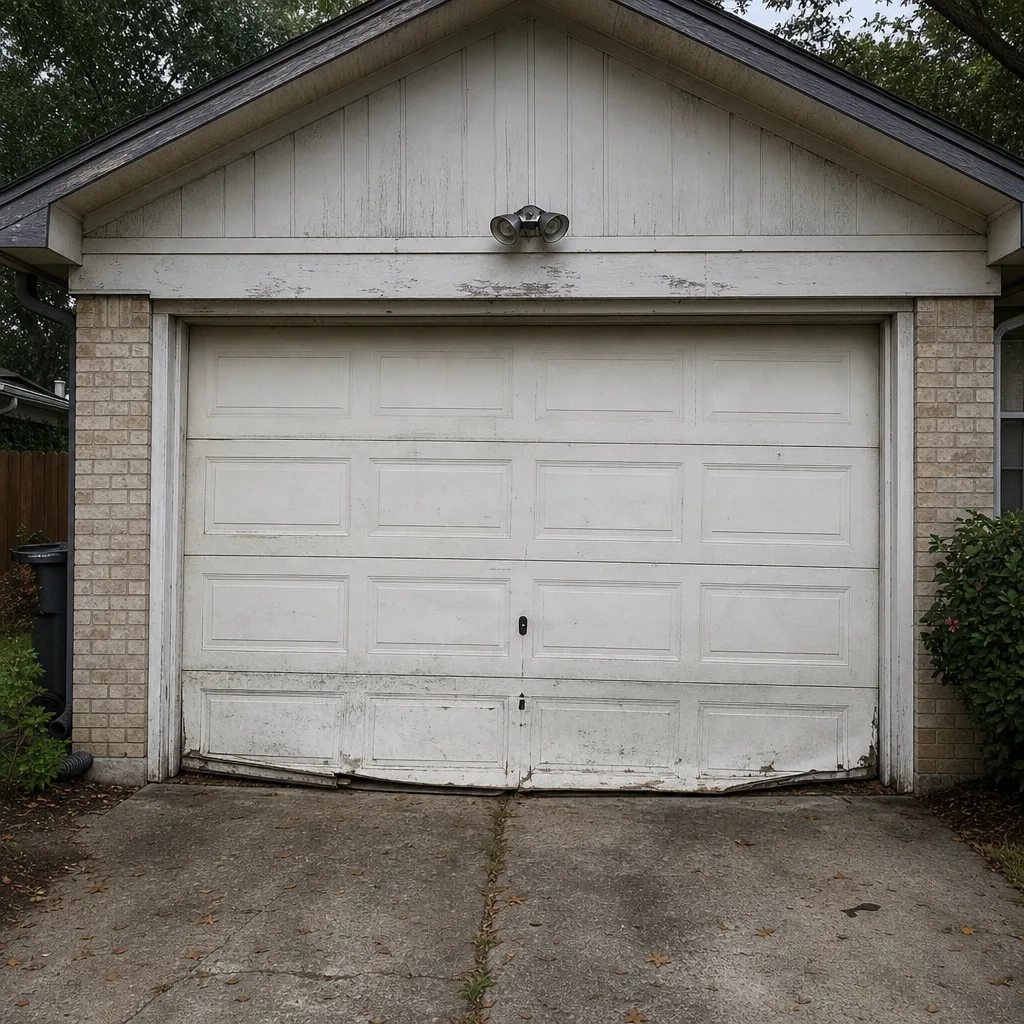 Before
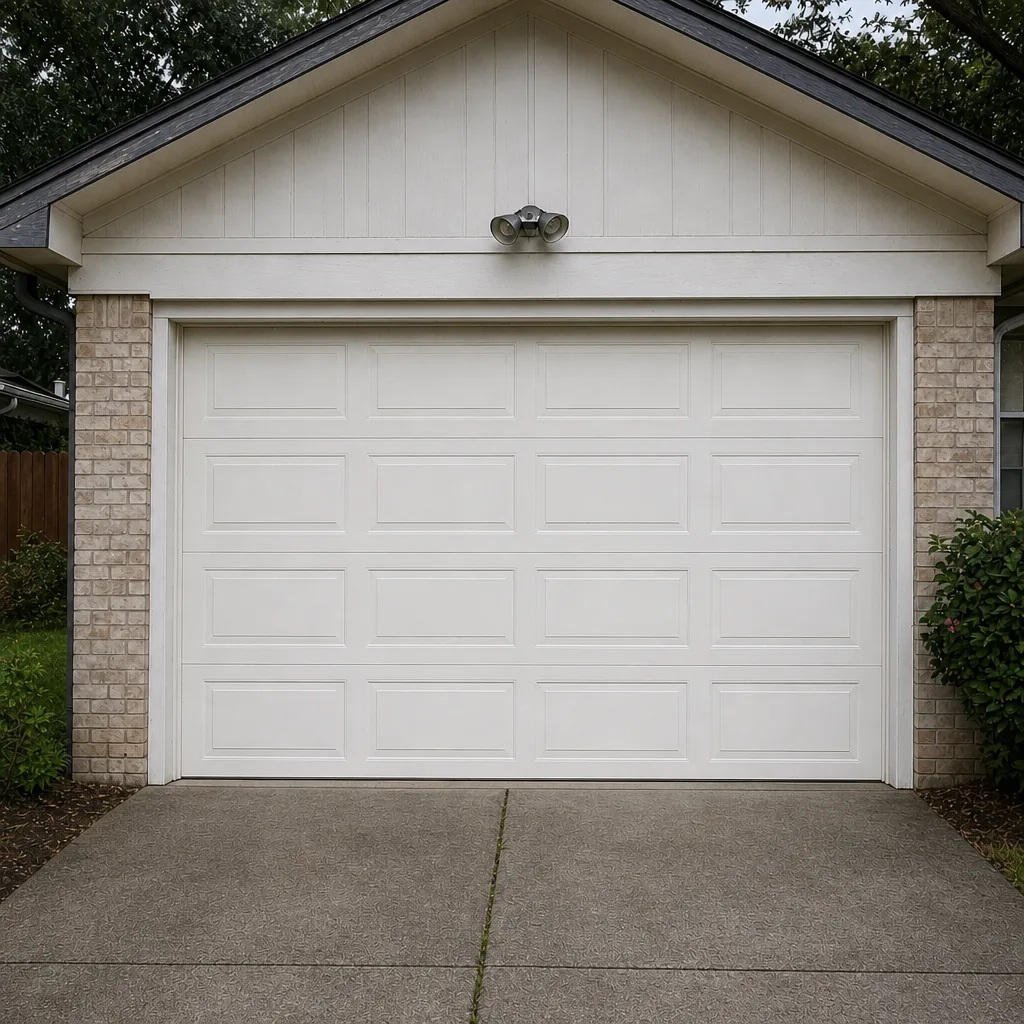 After
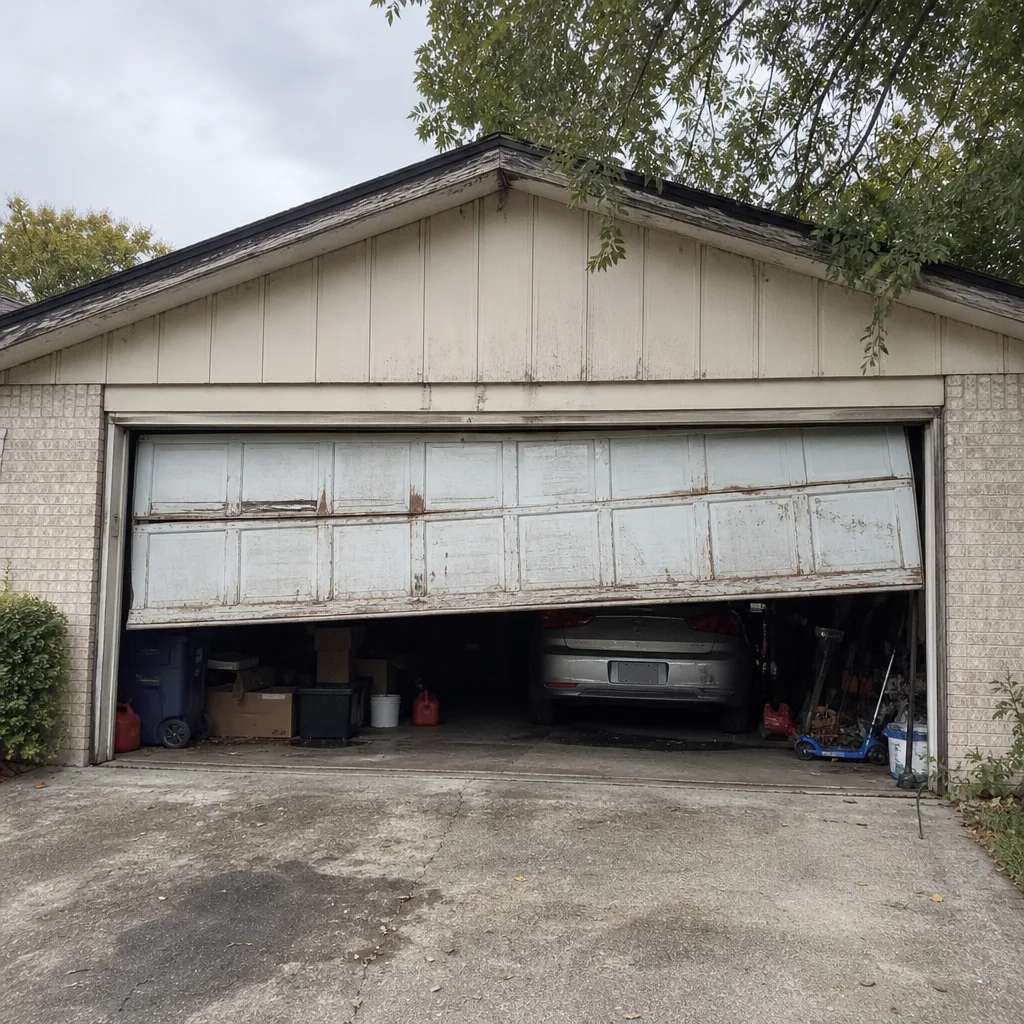 Before
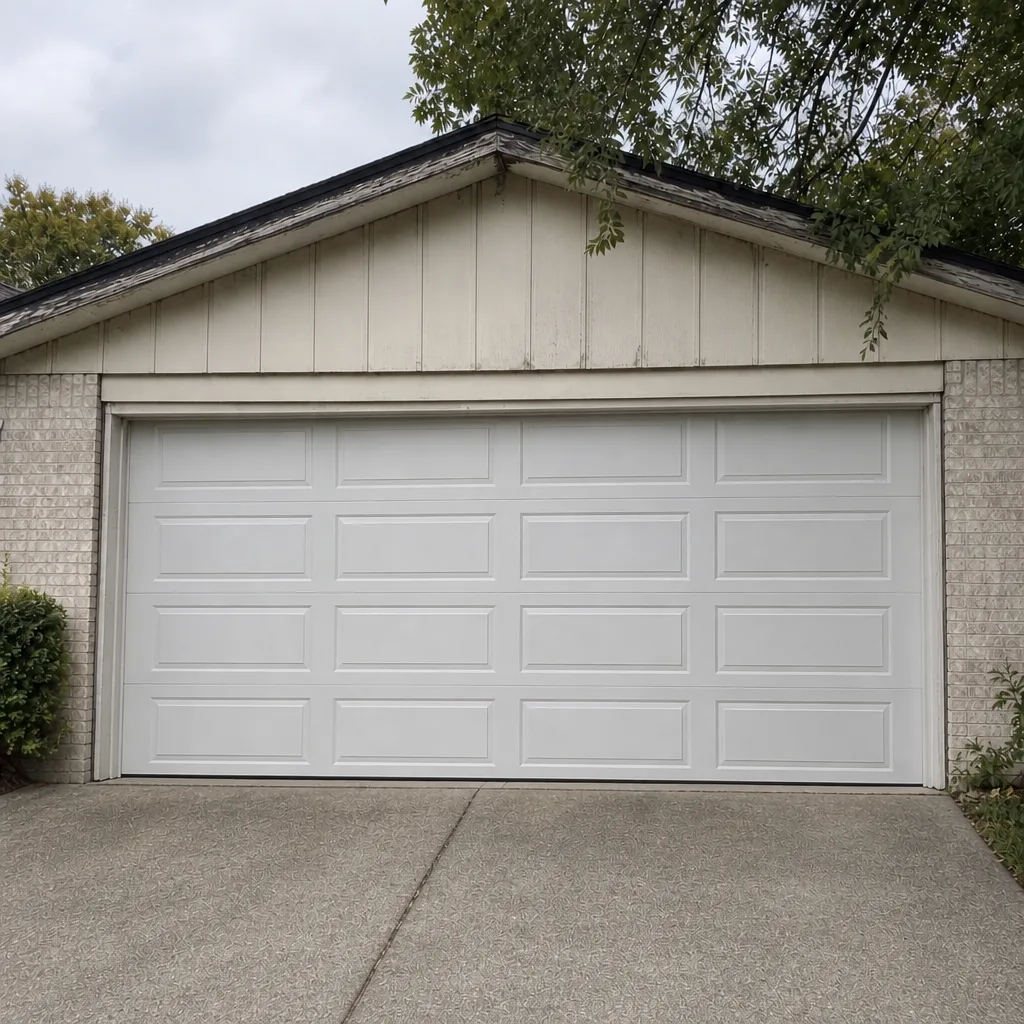 After
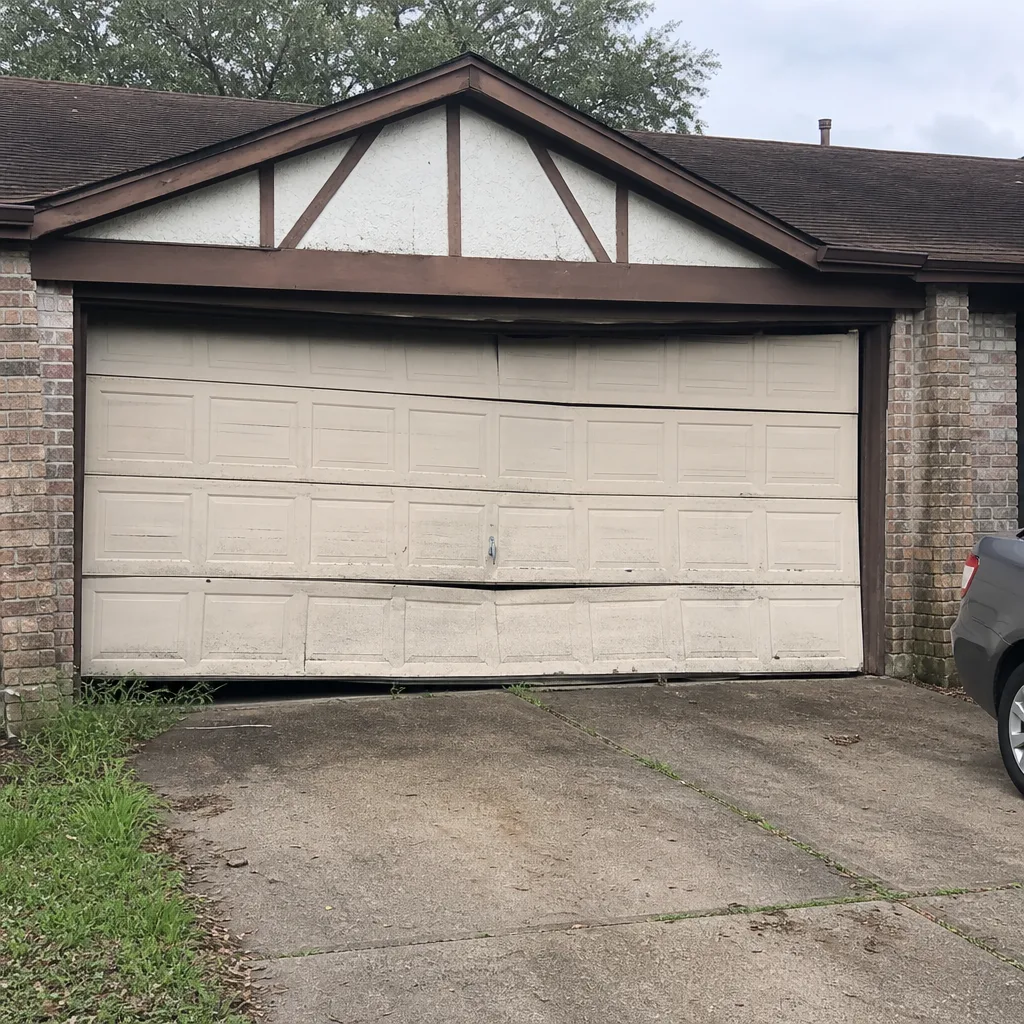 Before
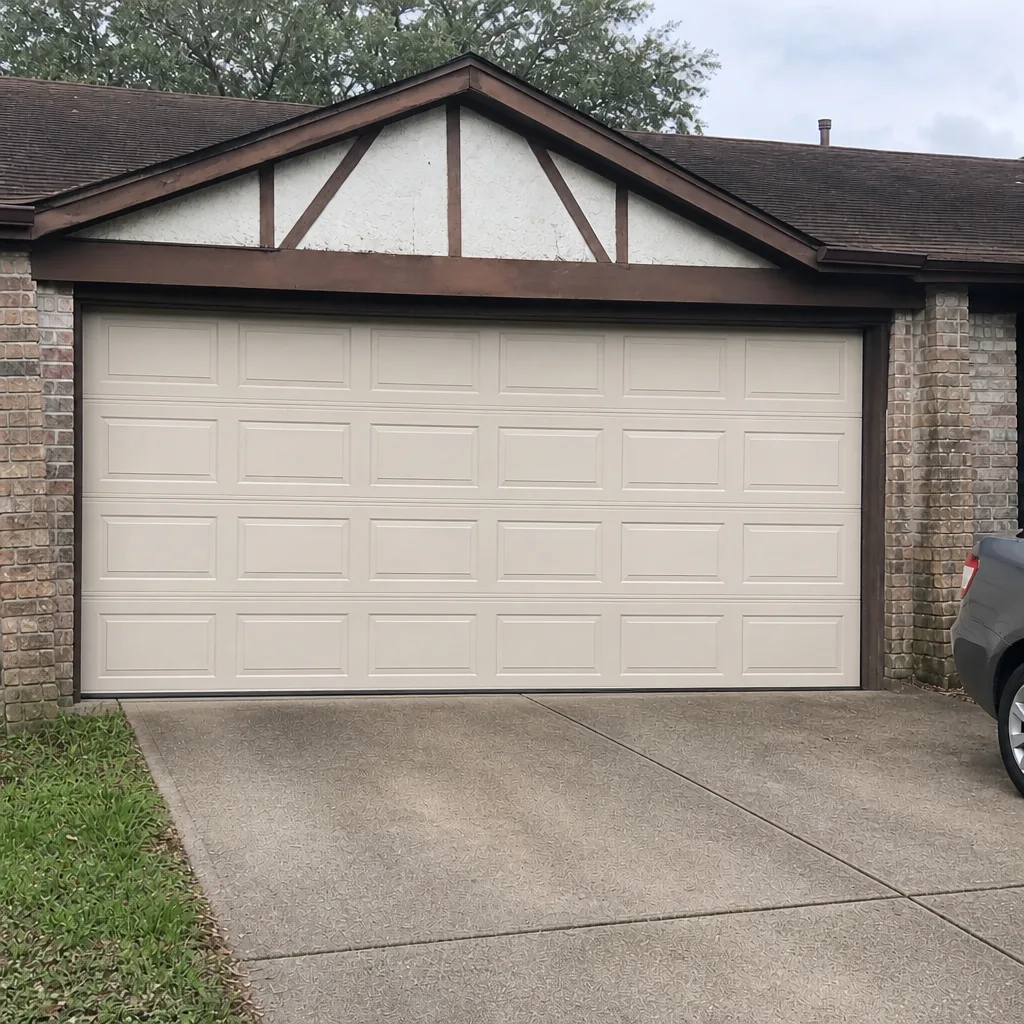 After
When to Call a Professional
Most garage door problems fall into one of a few categories, and some don’t wait. Call a professional if a spring snaps, the door comes off its track, a panel is damaged so the door won’t close, or the door reverses unexpectedly and leaves the garage open. Those are safety and security issues, and our emergency service is designed for them. Call a professional before a repair if you suspect spring, cable, or opener motor trouble, since those involve high tension or electrical work best left to technicians. And call before you buy if you’re planning a replacement and want the door matched to your HOA rules and your home’s insulation needs. Missouri City Garage Door Repair offers free estimates in Missouri City, and the price is quoted and agreed before any work starts, so you’re not surprised by the invoice. Call (855) 765-7303.
Frequently Asked Questions
A builder-grade garage door in this climate typically needs meaningful service somewhere between year eight and year twelve, with replacement usually considered by year fifteen depending on maintenance and material. The humidity and heat cycles here wear finishes and hardware faster than in drier parts of Texas, so budget for spring and opener service in the middle years. If your door is past that window and needs several repairs at once, it’s worth getting a repair-vs-replace estimate. Call (855) 765-7303 for a free estimate.
Yes, in most cases we can identify your existing door model and help you confirm whether a compliant replacement is available. In Sienna, Riverstone, and Quail Valley, the key steps are getting the current architectural guidelines and confirming color and panel restrictions before ordering. We can help you match the style, and you should get the HOA’s approval in writing. Call us for a free estimate and we’ll walk through it with you.
Insulated steel is generally the practical choice here because it resists humidity well and holds up to heat. Wood is beautiful but needs regular refinishing and can warp in sustained humidity, so it’s a higher-maintenance option. Fiberglass is a good middle ground for moisture resistance but can chalk in strong sun. The right pick depends on your elevation, your budget, and your HOA’s rules. Call (855) 765-7303 to talk through your options.
Repair is usually the right call when one system is failing, such as a spring, opener, or single panel. Replacement makes more sense when three or more systems, including the door structure, are near end of life at the same time. The honest way to decide is a full inspection of springs, opener, panels, tracks, and hardware. We’ll give you a straight comparison so you can see which path costs less over time. Call for a free estimate.
Yes, emergency garage door service is part of what we offer for situations that can’t wait. A door that won’t close is a security gap, not a next-week problem, so if your door is open, off its track, or stuck, call and we’ll work to get you scheduled quickly. We handle springs, openers, panels, tracks, and structural issues. Call (855) 765-7303.
We service the brands most homes here already have, including LiftMaster, Chamberlain, Genie, Clopay, Amarr, Wayne Dalton, Craftsman, and Raynor. That covers both legacy openers and modern smart systems like Chamberlain MyQ. If you’re unsure of your model, we can identify it during the estimate. Call for a free estimate.
The Bottom Line
A garage door in Missouri City is a local infrastructure decision shaped by humidity, heat cycles, HOA rules, and subdivision construction. Insulated steel generally holds up best here, wood needs real maintenance, and fiberglass is a reasonable middle option. Builder-grade doors usually need meaningful service between year eight and year twelve, and the repair-vs-replace tipping point is reached when several systems fail together. Check your HOA guidelines before any replacement, and treat a door that won’t close as a security problem, not a nuisance. Maintenance and a little attention to the bottom section go a long way. When you need help, we’re one call away.
Whether your door is stuck, your opener is failing, or you’re ready for a new door that fits your Missouri City home and HOA, we’re here. Free estimates are available, the price is quoted and agreed before any work starts, and we service the brands you already own. Call (855) 765-7303 today.
Written by the team at Missouri City Garage Door Repair.