Last updated November 21, 2026
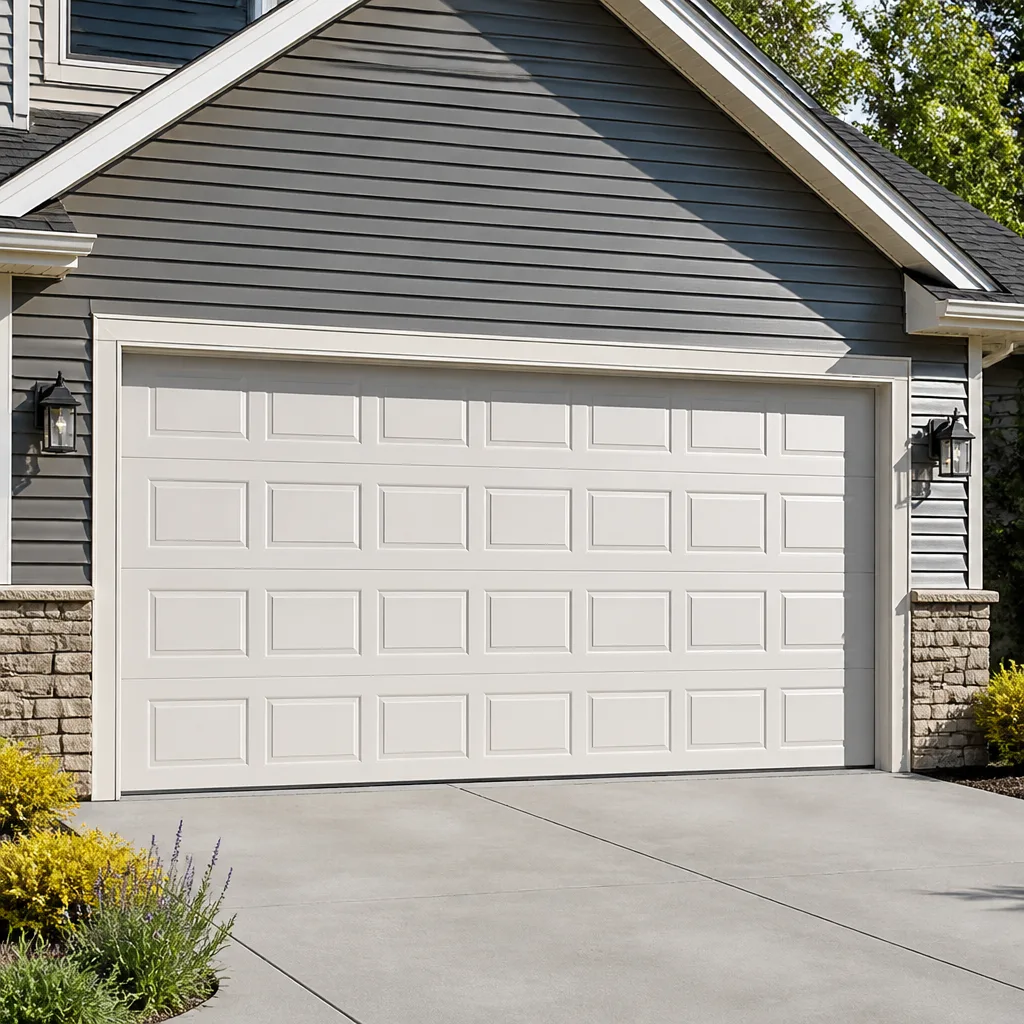 Raised-panel steel
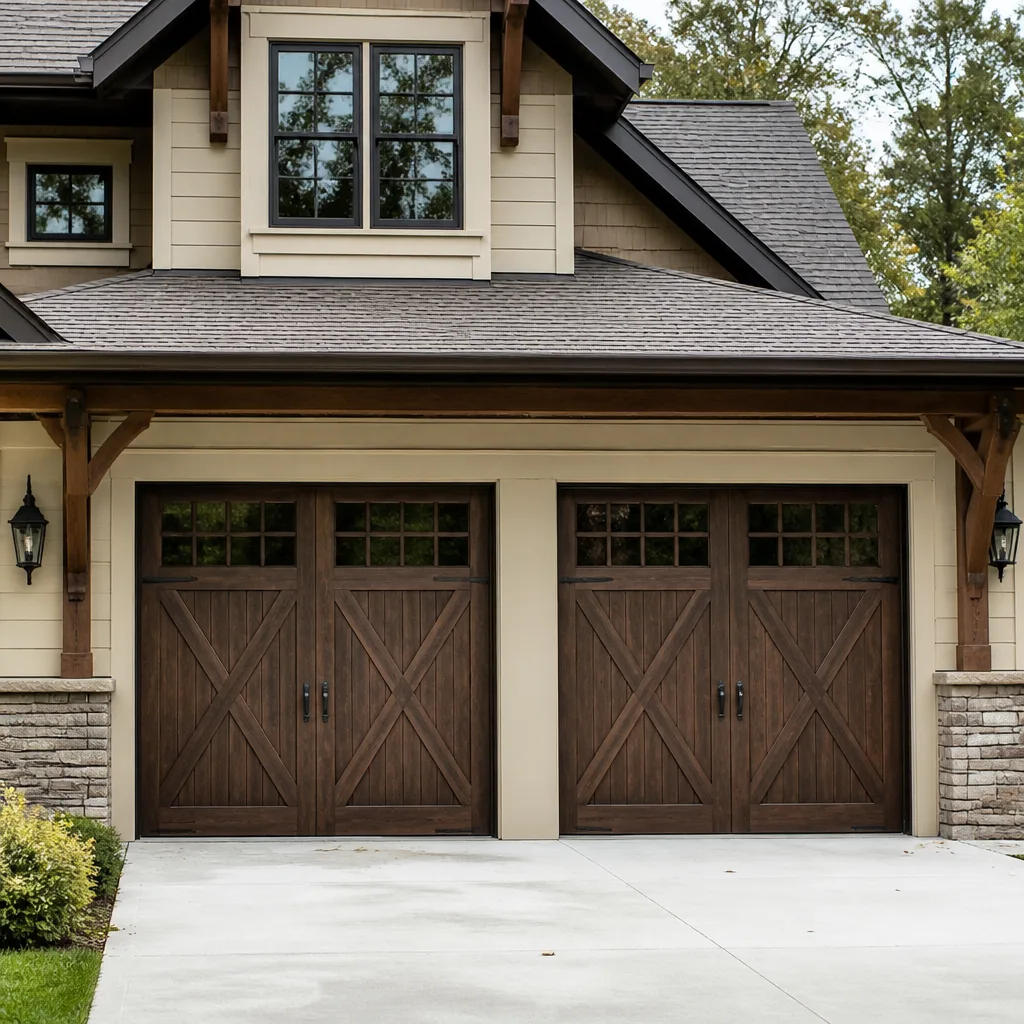 Carriage house
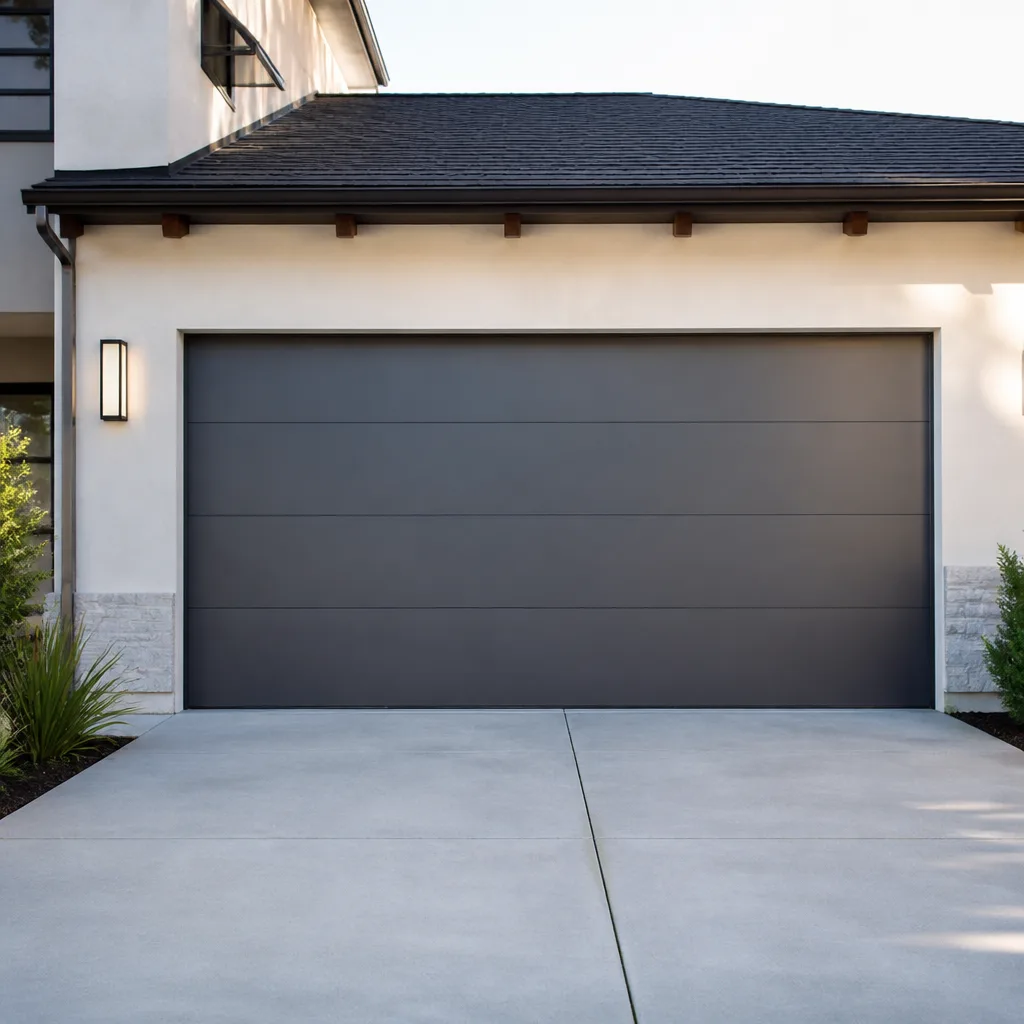 Modern flush
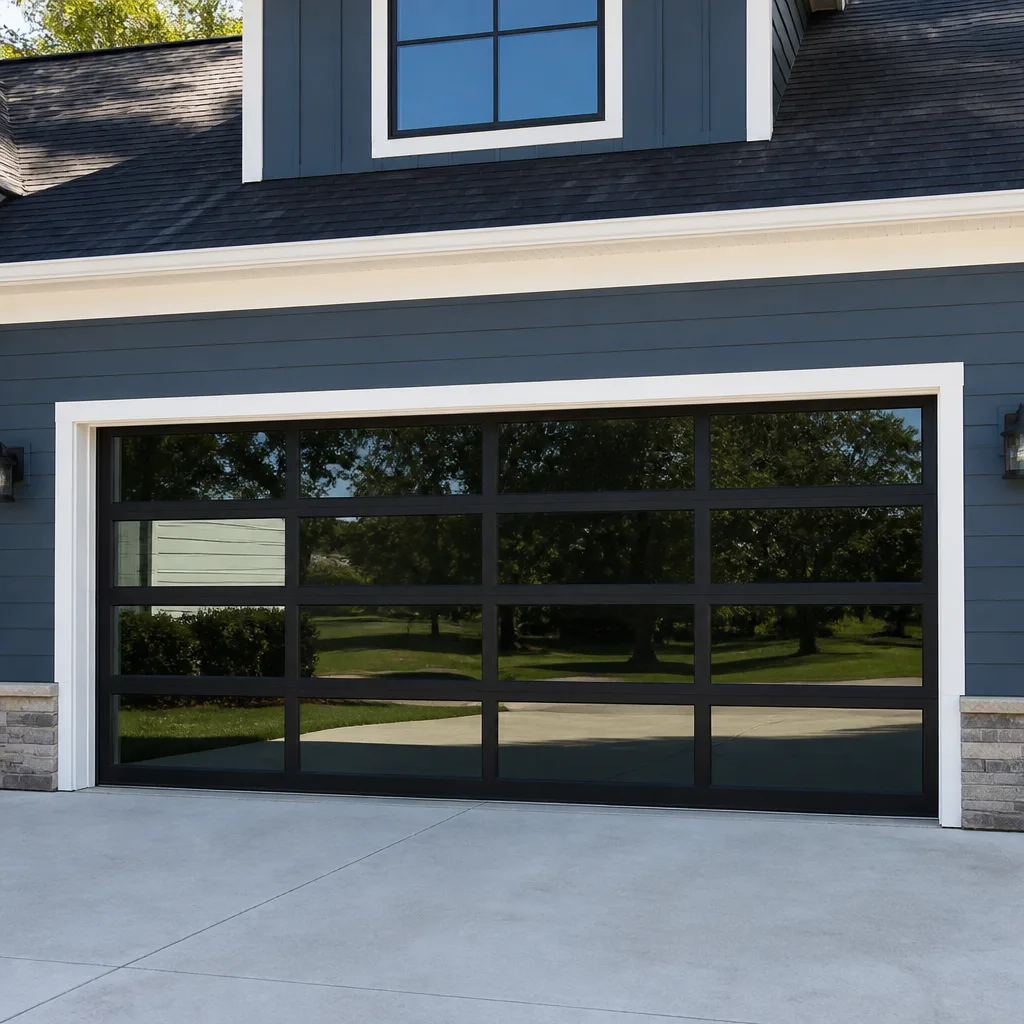 Full-view glass
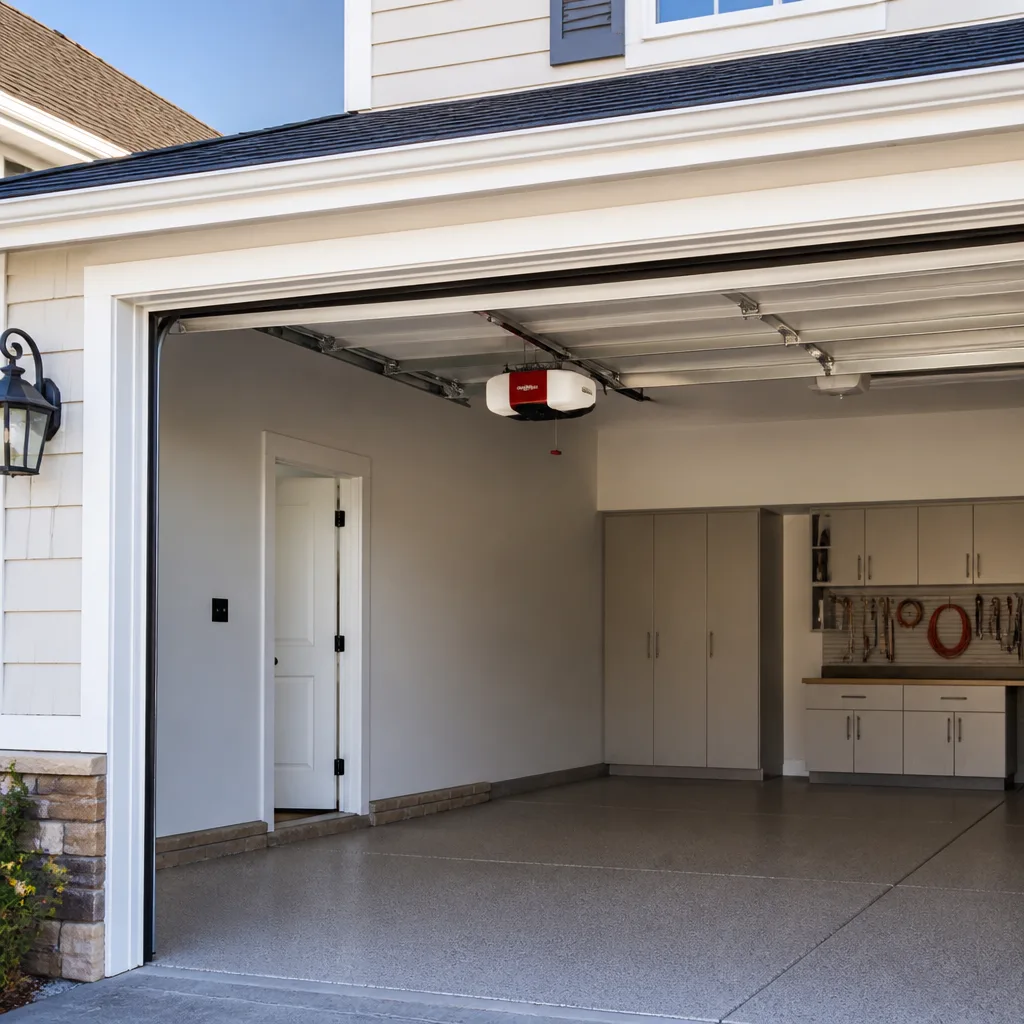 LiftMaster openers
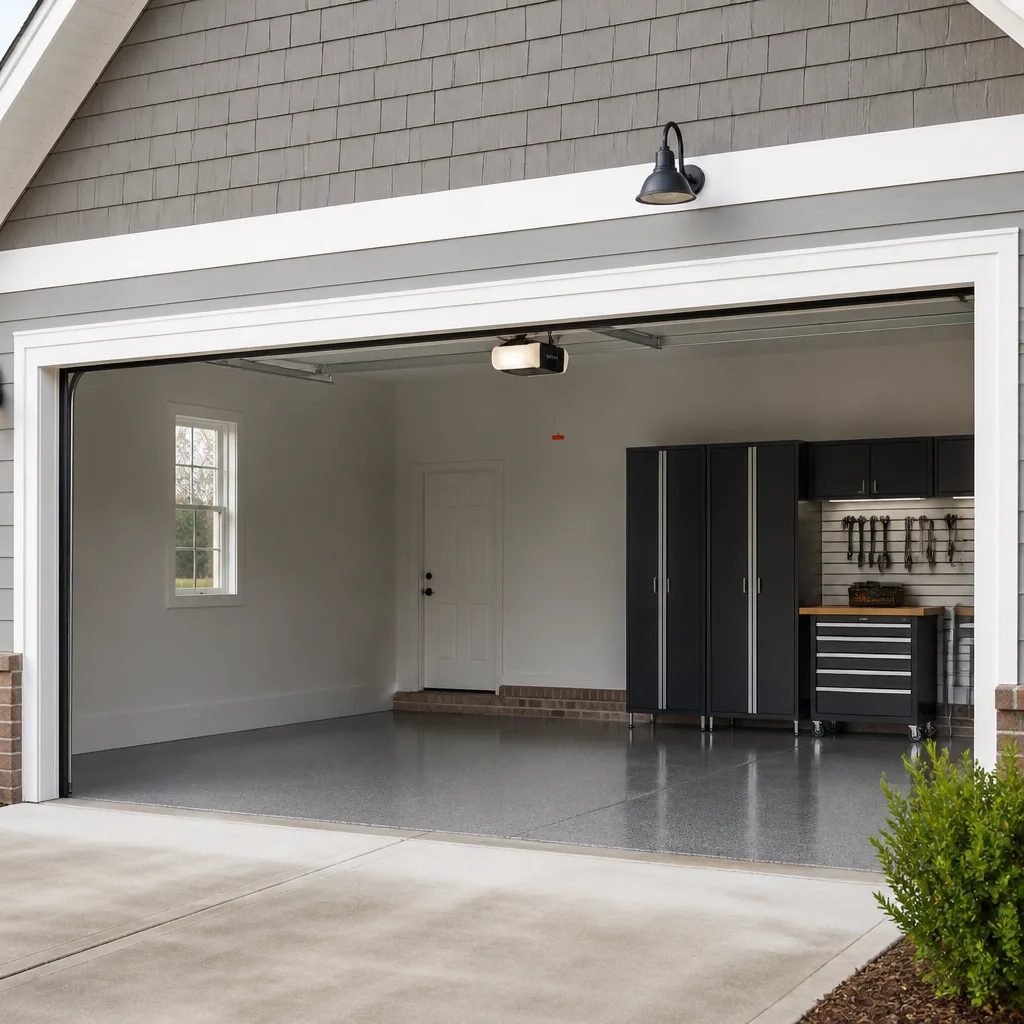 Chamberlain openers
Full 25-point door and opener safety check with every visit - springs, cables, rollers, tracks, and your LiftMaster or Chamberlain opener included
You get a price before we start. It does not change when the pro arrives.
Get your free estimateGarage Door Emergency Preparedness Guide for Missouri City Homes
Most homeowners in Missouri City think of their garage door as a convenience, something that opens when they press a button. The reality is that it’s the largest moving structure on your house, and during a high-wind event it can be the weakest link in the entire building envelope. A garage door that fails under pressure can let wind-driven rain pour in, compromise the walls around it, and create a pressure differential that pushes up on the roof structure itself. We’ve also seen plenty of doors fail on a perfectly calm Tuesday: a snapped spring, an opener that quits, a panel knocked off its track. This guide covers both kinds of emergencies, the weather-driven and the mechanical, so you know what to do before, during, and after. Everything here is written for Missouri City homes and the specific conditions we live with.
Quick Answer
A garage door emergency in Missouri City usually means one of three things: a door that won’t close and leaves your home unsecured, a mechanical failure that traps a car inside, or wind damage from a storm. Start by determining whether the door can be safely operated by hand using the manual release, and never force a door with a broken spring. For anything involving high-tension springs, bent tracks, or a door that has come off its rollers, call a trained technician. If a storm is coming, reinforcing or bracing the door before landfall is far cheaper than repairing a failed system after.
Styles & brands we work with
- Raised-panel steel
- Carriage house
- Modern flush
- Full-view glass
- LiftMaster openers
- Chamberlain openers
Table of Contents
- Pre-Storm Protocol: Assessing Your Door’s Wind Readiness in Fort Bend County
- How the Manual Release Works When the Power Is Out
- The First 30 Minutes of a Mechanical Failure
- Post-Storm Damage Assessment: What to Inspect and What Can Wait
- Documenting Storm Damage for Texas Insurance Claims
- Reinforcement Options and Wind-Load Basics for Missouri City
- Preparedness Maintenance You Can Actually Keep Up With
- Why Brand Knowledge Matters in a Storm Emergency
Pre-Storm Protocol: Assessing Your Door’s Wind Readiness in Fort Bend County
Missouri City sits in Fort Bend County, a stretch of suburban Houston that has taken direct hits and near-misses from major storms. The wind-load rating of your garage door is the single most important number to know before hurricane season, and it’s usually stamped on a label on the inside of the door or in the paperwork that came with the house. A door rated for a lower wind speed than your area’s design pressure is a liability, no matter how good it looks from the street.
Here’s how we walk a homeowner through a pre-season check:
- Find the wind-load label. Look on the inside face of a door panel for a sticker or stamp that lists a design pressure rating. If you can’t find one, the manufacturer or a technician can help you identify what you have.
- Check the door’s balance. Disconnect the opener and lift the door halfway by hand. It should stay roughly in place. A door that slams down or drifts up has a spring or balance problem that makes it weaker under load.
- Inspect the hinges, rollers, and track. Loose hinges and worn rollers let panels flex and rattle, which is exactly what you don’t want when wind pushes against the door.
- Look at the reinforcement hardware. Many doors can be fitted with a horizontal or vertical bracing kit that distributes wind pressure across the panels. Ask whether your specific door model supports one.
- Confirm the tracks are anchored. The door frame and track mounting should be solid. In older Missouri City homes, we sometimes find fasteners that have loosened over the years.
None of this is DIY territory once you get past a visual check. A garage door that’s supposed to hold up under wind load needs to be installed and adjusted correctly, and the reinforcement kits only work if they’re the right one for your door. That’s a conversation worth having with a specialist before the forecast turns. Our Missouri City Garage Door Repair overview is a good starting point if you’re not sure what kind of door you’re dealing with.
How the Manual Release Works When the Power Is Out
When the power goes out during a storm, your garage door becomes a heavy object suspended on springs, and the manual release is how you get it open or closed by hand. Almost every residential opener has one, and most homeowners have never touched it. Knowing how it works before an outage is the difference between a calm ten minutes and a stressful hour.
The standard manual release is a red pull cord, or sometimes a red lever, hanging from the opener rail above the door. When you pull it, the door disconnects from the opener’s carriage and moves freely on its springs and tracks. Here’s the sequence that matters:
- Make sure the door is fully closed before you pull the cord. Disconnecting a door that’s halfway up can let it drop fast.
- Pull the red cord down and toward you until it clicks. You should feel the carriage release.
- Lift the door slowly by hand. It will feel heavier than you expect because you’re now working against the springs directly. Lift with your legs, not your back.
- If the door won’t stay up when you let go, the springs aren’t holding their share of the weight. That’s a spring problem, not a technique problem, and it needs a technician. Never prop the door with a chair or a ladder and walk away.
- To re-engage the opener, close the door fully, then pull the cord again or flip the lever back so the carriage clicks into the trolley. Test with a short open-and-close.
One caveat: some openers with a built-in battery backup will still lift the door during an outage without a manual release. LiftMaster and Chamberlain MyQ-compatible models are common examples. If you have one, the manual release is a backup for when the battery runs down or the opener fails outright. This is also a good moment to mention that if you’re calling us after a storm and the problem turns out to be the opener rather than the door, we handle garage door opener repair on those same brands.
The First 30 Minutes of a Mechanical Failure
A mechanical failure at 7 a.m. when you need to get out of the driveway has its own kind of urgency. The instinct is to force the door, and that’s the one thing that turns a repairable problem into a much bigger one. Track damage, panel damage, and opener damage all get worse when a stuck door is pushed and pulled by someone understandably in a hurry.
Here’s the order we suggest working through when a door won’t open, won’t close, or makes a terrible noise:
- Stop pressing the button. If the opener runs but the door doesn’t move, or the door moves unevenly, continuing to cycle it can strip the opener gear or twist the tracks.
- Look and listen for the obvious. Is the door off its track on one side? Is a roller out of the channel? Is the opener light flashing? Is there a broken spring visible above the door (a gap in a torsion spring, or a stretched section on an extension spring)?
- Decide: manual or call. If the door is balanced and on its tracks, and the only issue is the opener, use the manual release to open or close it safely. If the door is off-track, crooked, or has a visible spring break, leave it where it is and call.
- If the car is trapped and you need it, use the manual release with the door fully closed, lift it by hand, hold it up, and drive the car out slowly. Then lower the door carefully. Don’t leave a door propped open overnight.
- If the garage is unsecured, that’s an emergency in its own right. A door that won’t close is a security gap. If you can’t get it down by hand, block access from the inside and call for emergency service.
We treat a garage door that won’t close as genuinely urgent, not a next-week appointment. A snapped spring, in particular, is one of the most injury-prone repairs in home maintenance because the springs are under high tension. If your door has a broken spring, don’t touch the spring itself. Our garage door spring repair page covers what the repair involves and why it’s not a DIY project.
Post-Storm Damage Assessment: What to Inspect and What Can Wait
After a storm passes through Missouri City, the first hour is when most homeowners can gather useful information, before the adrenaline wears off and before you start moving things around. What you document and how you document it matters for both safety and insurance. Here’s what to check, in order.
- Panels: Look for dents, creases, or panels that are pushed in or bowed. A panel that’s visibly deformed has reduced its wind resistance and may need replacement rather than repair.
- Tracks: Check that the vertical and horizontal tracks are still plumb and parallel. A track that’s been bent out of alignment will make the door bind, and running it that way wears out the rollers and hinges.
- Springs and cables: A broken spring is visually obvious (a gap in the coil). Cables should be tight and seated in their drums. Never handle a cable under tension.
- Hinges and rollers: Missing, loose, or bent hinges and rollers are common after wind events. These are usually repairable without replacing the door.
- The opening and frame: Look for gaps between the door and the frame, or any sign the wall around the opening has shifted. That’s a structural question, not a garage door question, and needs a different professional.
- The opener: If the opener housing looks shifted or the rail is bent, don’t run it. The opener was aligned to the door, and a shifted door makes the opener work harder.
What can wait: cosmetic dents that don’t affect the door’s operation, a scuffed panel, a noisy roller. What can’t wait: a door that won’t close and lock, a door that’s off its tracks, any visible structural deformation, and a spring or cable that’s failed. If the door is unsafe, keep vehicles and people out of the garage until a technician has looked at it. And keep the opener disconnected if the door isn’t running smoothly. We’ve seen more than one Missouri City homeowner turn a small storm repair into a full opener replacement by running a misaligned door.
Documenting Storm Damage for Texas Insurance Claims
Texas homeowners’ policies generally cover wind damage to a garage door, but the claim is only as strong as the documentation behind it. Adjusters are trained to look for evidence that the damage is storm-related and consistent with the event, not pre-existing wear. The single biggest reason a garage door claim gets denied is a lack of clear, timestamped documentation showing the door’s condition before and after.
What an adjuster typically wants to see:
- Photos of the door before the storm. This is why a quick annual photo of your door and its label is worth keeping. If you don’t have one, take one now for next season.
- Photos of the damage from multiple angles, with something for scale (a tape measure or a hand works).
- Photos of the surrounding area, showing fallen limbs, debris, or moisture that helps establish the cause.
- A written description of when you noticed the damage and what you observed, kept in a notebook or email to yourself with a date.
- The door’s wind-load label and model information, which helps confirm the door was code-compliant and properly rated.
- Any repair estimate or inspection report from a garage door company, which shows the scope of the damage.
What gets denied: claims where the damage was clearly progressive (a spring worn out over years, not broken in a storm), claims where the homeowner repaired or replaced the door before an adjuster saw it, and claims where the “damage” was really cosmetic and unrelated to the event. If you’re not sure whether your damage is storm-related, get an inspection and a written estimate before you touch anything. A careful repair estimate is also useful evidence if there’s a dispute. For general repairs after a storm, our garage door repair service is set up to document what we find.
Reinforcement Options and Wind-Load Basics for Missouri City
Not every door can be reinforced, and not every reinforcement is right for every door. The key distinction is between a door that was built to a certain wind rating and one that can be upgraded to meet a higher one. If you live in a Missouri City neighborhood where new construction has been held to a design pressure standard, the builder may have installed a rated door already. If you’re in an older home, the door may predate any wind-load requirement at all.
Reinforcement options we see most often in this area:
- Horizontal bracing kits. A set of steel struts that run across the door panels and distribute wind pressure across the door’s width. Common on steel and some aluminum doors.
- Vertical reinforcement. Struts that run top to bottom, used where a door’s design calls for it.
- Heavier-gauge tracks and hinges. The door is only as strong as the hardware holding it. Standard-gauge hardware can flex under wind load.
- Upgraded rollers. Nylon or sealed-bearing rollers handle the extra load better than the basic plastic or steel rollers that come on many builder-grade doors.
- A proper wind-load-rated door replacement. If the existing door wasn’t built for the load, no amount of bracing makes it equivalent to a rated door. A replacement may be the honest answer.
Most cities require a permit for structural changes to a garage door’s wind rating, and reinforcement kits need to be installed to the manufacturer’s spec to actually do their job. That means the right kit for the right door, installed correctly, and that’s a conversation to have before hurricane season rather than the week before landfall. A free measure and a written price is where we’d start; it’s not work that gets rushed or scheduled the same day.
Preparedness Maintenance You Can Actually Keep Up With
Emergency preparedness for a garage door isn’t a once-a-year project; it’s a handful of habits that take minutes and pay off when things go wrong. None of this involves touching a spring or a cable, which is where the danger lies.
What we suggest homeowners do, and what we handle when we’re on site:
- Monthly: Look at the door. Listen to it. A new rattle, a hesitation at the halfway point, or a light that flashes a code is an early warning. Note it and get it checked before it becomes a failure.
- Seasonally: Test the opener’s safety reversal. Put a small object under the door and run it down; the door should reverse on contact. If it doesn’t, that’s an opener adjustment and a safety issue.
- Before hurricane season: Find the wind-load label, check the reinforcement hardware, and take photos of the door for your records.
- During an outage: Practice the manual release with the door closed. It’s the one skill worth rehearsing before you need it.
- After a storm: Do a walk-around check, keep a written note of what you see, and don’t run the door if anything looks off.
The reason we keep repeating that springs and cables are a call-a-professional repair is simple: they’re under high tension, and a mistake can seriously hurt you. Everything else on this list is safe for a homeowner to check visually or by hand. We’d rather you know what you’re looking at than guess.
Why Brand Knowledge Matters in a Storm Emergency
The garage door industry has a handful of brands that show up on most homes, and knowing those systems cold matters when you’re diagnosing a problem fast. We service the eight brands most often installed on residential homes: LiftMaster and Chamberlain openers (including MyQ-compatible systems), Genie openers, and Clopay, Amarr, Wayne Dalton, Craftsman, and Raynor doors. The reason this matters in an emergency is that the right diagnosis is usually brand-specific. A Wayne Dalton door’s torsion system, a Raynor panel profile, a Craftsman opener’s travel-limit adjustment, a LiftMaster’s battery backup behavior: these are different systems, and a technician who knows them can often tell from the door’s behavior what’s wrong before they even open a panel.
It also means we’re less likely to tell you a part has to be special-ordered if it doesn’t. A trained technician can recognize the door model, its rating, and its reinforcement options on sight. If your home has a door that predates wind-load requirements, the brand and model tell the story of what it will and won’t handle. That’s the kind of thing worth knowing before a storm rather than after.
A garage door system is one integrated machine: the door, the springs, the tracks, the hardware, and the opener. When one part fails, the others are affected. That’s why we handle the whole system rather than passing you to a different trade for each piece.
Common Mistakes to Avoid
- Trying to lift a door with a broken spring by hand and hold it up. A door with a failed spring is much heavier than a balanced one, and letting go can bring it down fast. Keep people and pets clear and call a technician.
- Pulling the manual release while the door is halfway up. The door needs to be fully closed before you disengage the opener. Disconnecting a raised door can slam it.
- Running the opener on a misaligned door after a storm. This is how a small track problem becomes a burned-out opener motor or a cracked panel. Stop cycling the door until it’s been inspected.
- Leaving the garage unsecured when the door won’t close. A door stuck open is a security gap, and in a storm it’s also a wind entry point. Secure it from the inside and call for emergency service rather than waiting.
- Cleaning up or replacing the door before documenting the damage. An insurance claim is only as good as its photos. Take pictures before you touch anything.
- Assuming a reinforcement kit you bought online fits your door. Kits are model-specific and need to be installed to spec to actually increase wind resistance. The wrong one does nothing.
- Waiting until the forecast to check your wind-load label. In Missouri City, the week before a storm is the worst time to discover the door isn’t rated for the wind. Check now.
See the difference
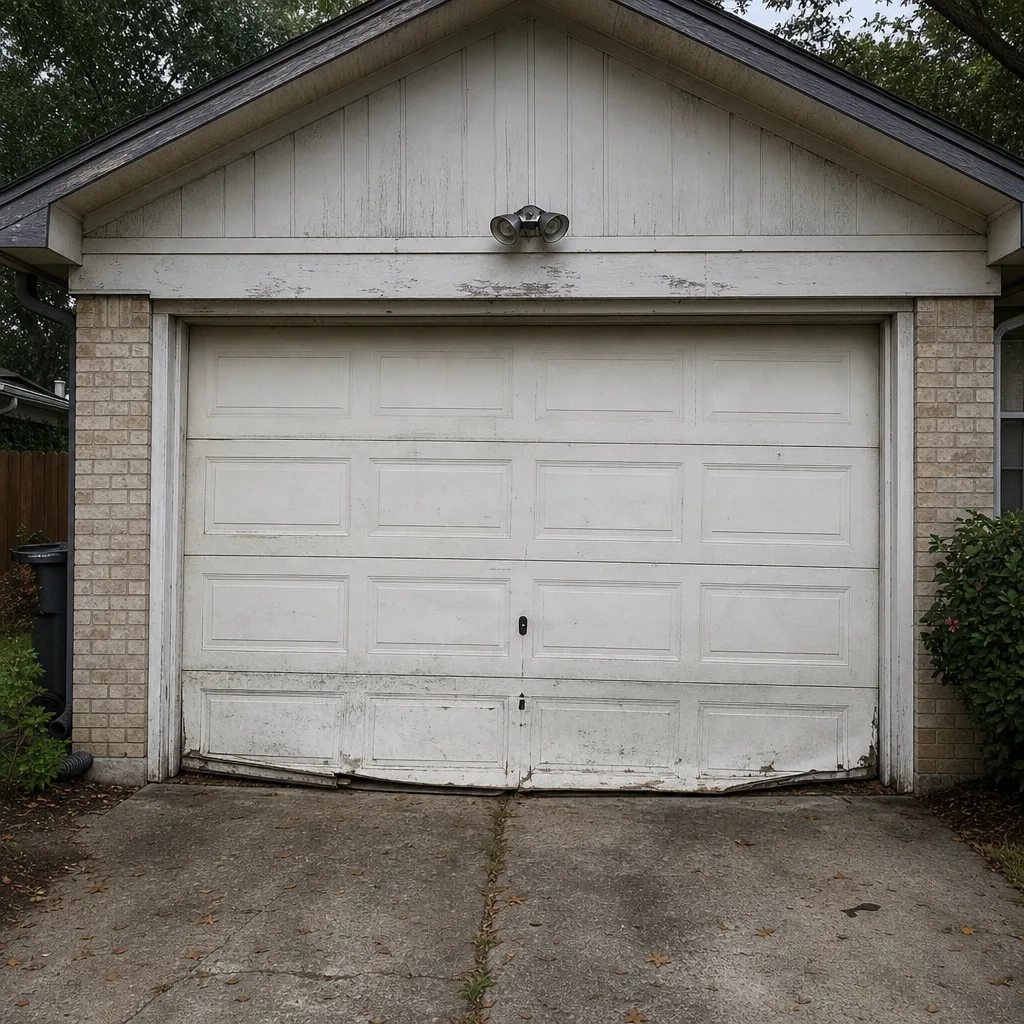 Before
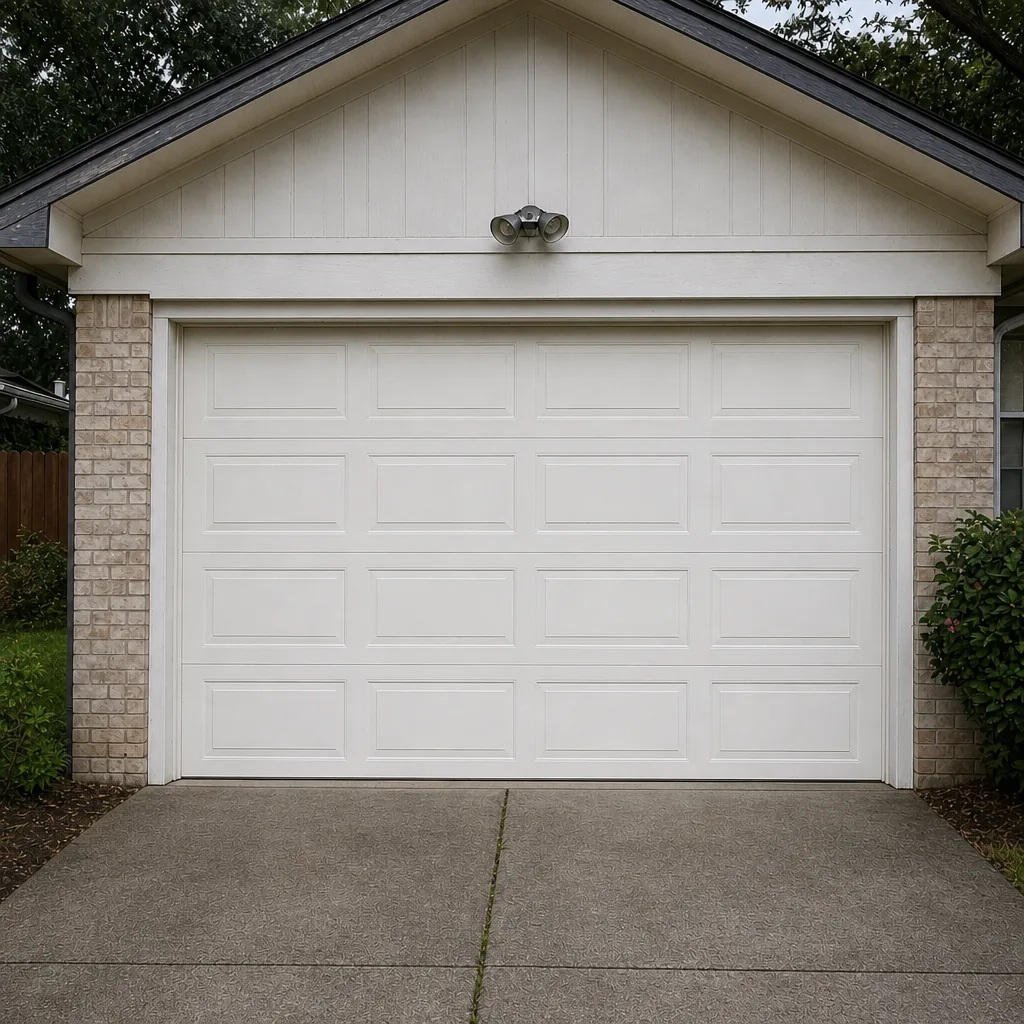 After
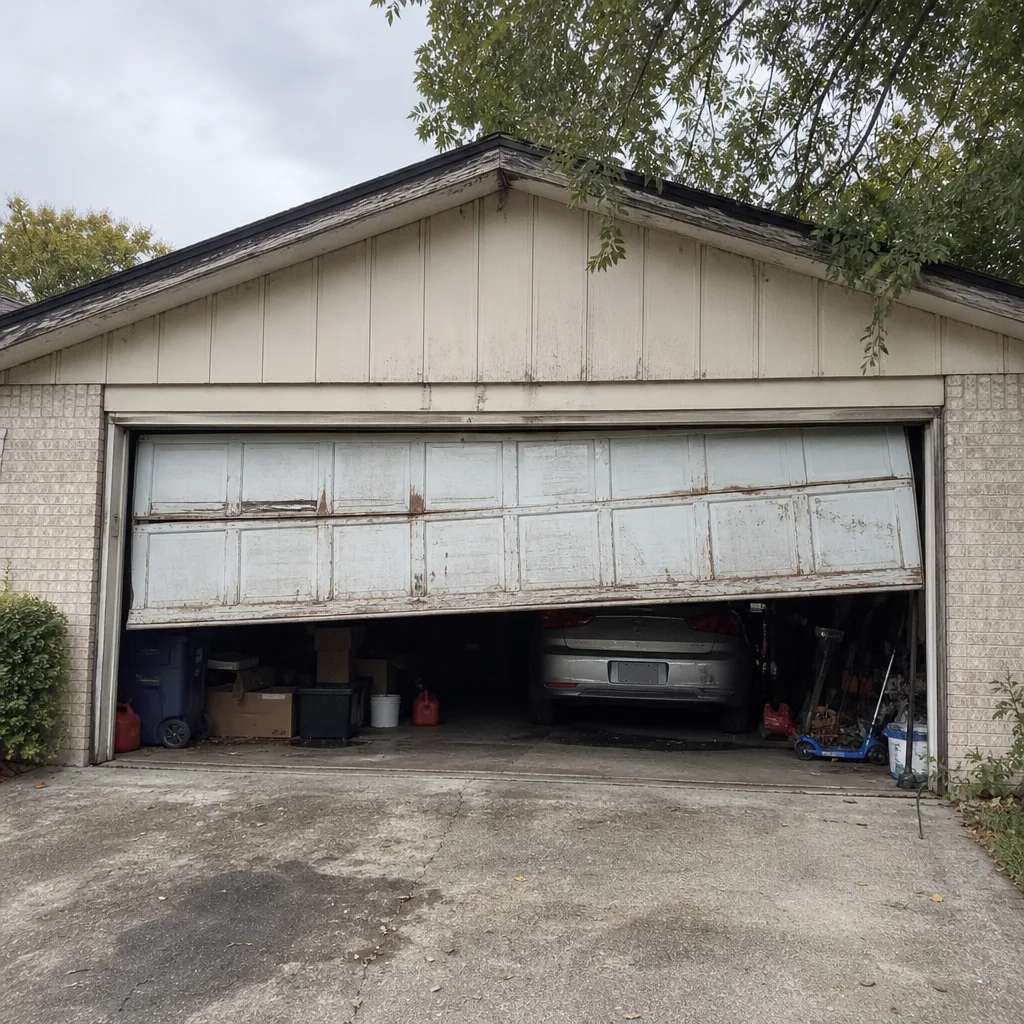 Before
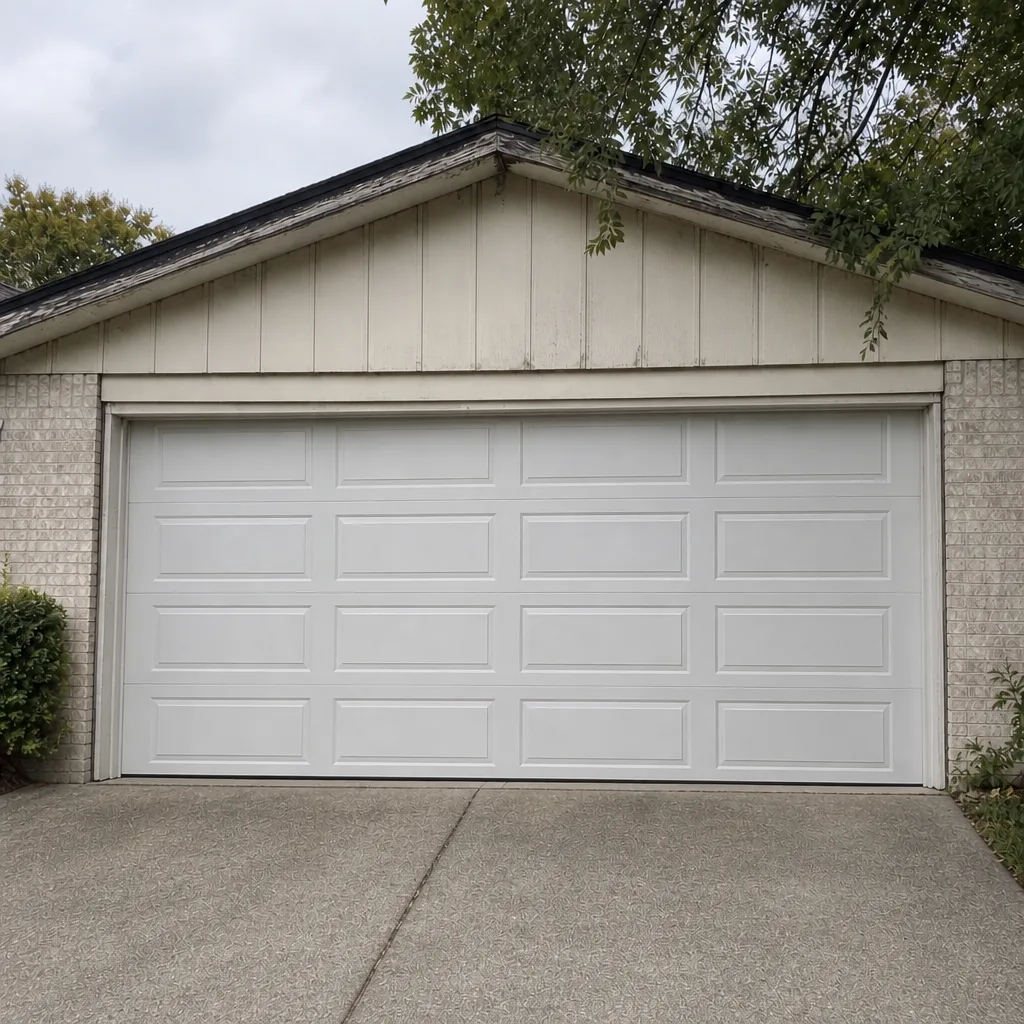 After
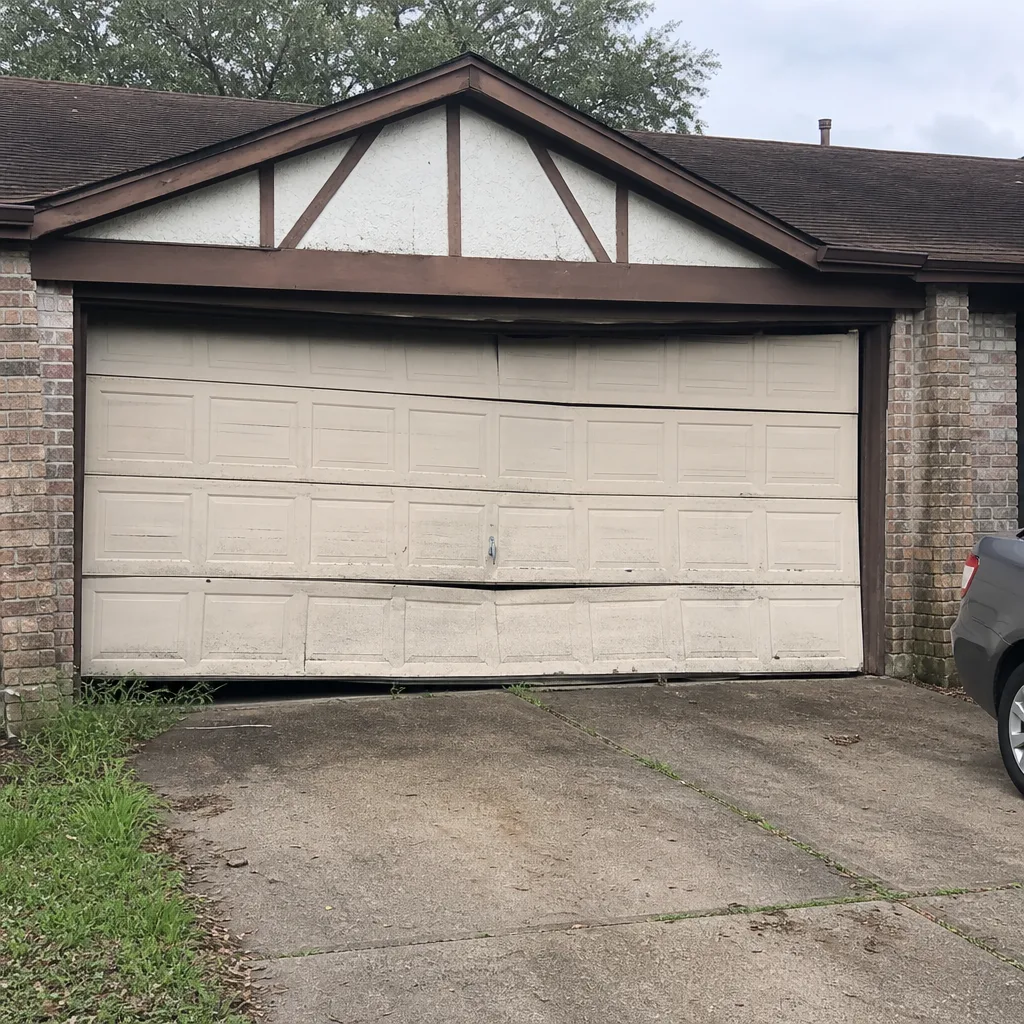 Before
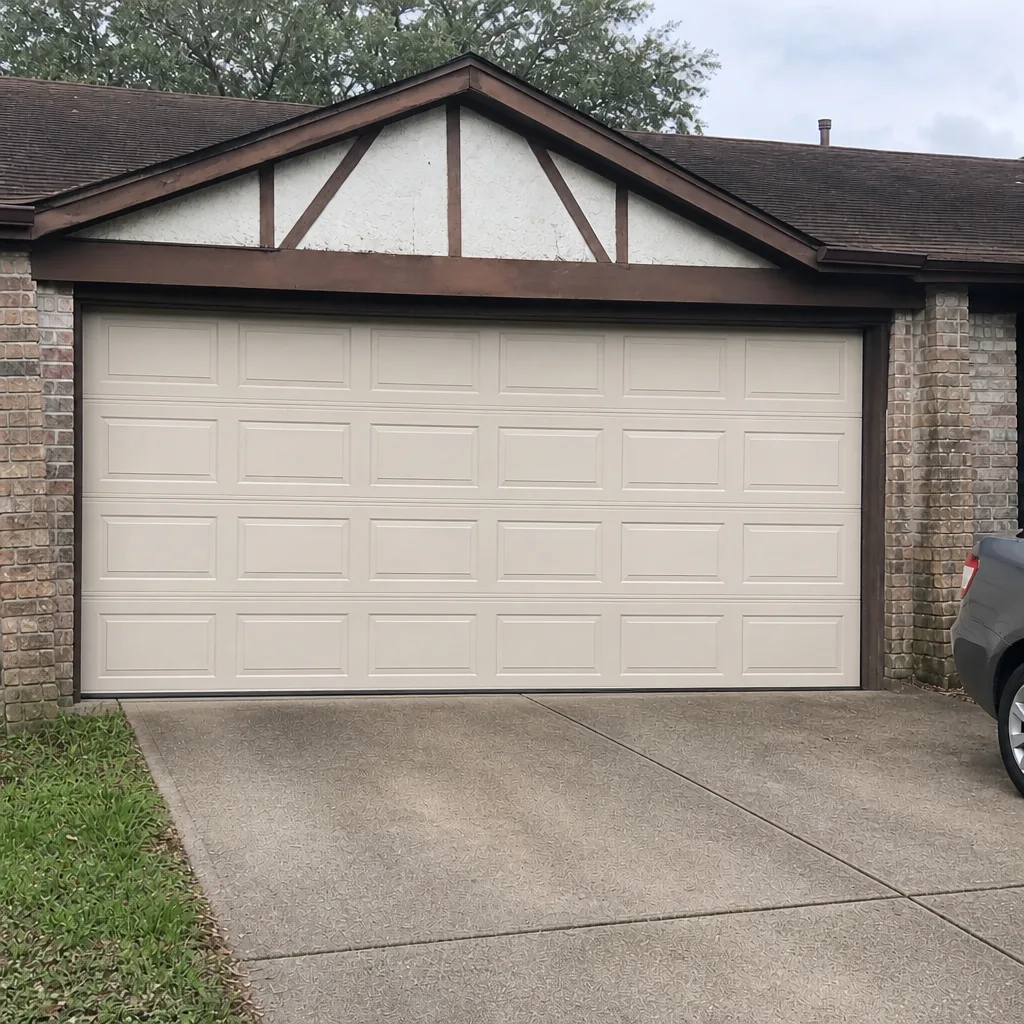 After
When to Call a Professional
Call a professional when the door has a broken spring, a cable that’s come off or looks slack, a door that’s jumped its track, a panel that’s visibly deformed, or any structural shift around the door opening. Call when the door won’t close and lock and you can’t get it down by hand. Call when the opener runs but the door doesn’t move, or when the door binds at the halfway point. And call, rather than guess, if you’re not sure whether the problem is safe to operate. Basic visual checks and the manual release are homeowner territory; spring, cable, and track work isn’t. Our technicians have up to 8 years of experience and are trained on the brands most Missouri City homes already have. Missouri City Garage Door Repair offers free estimates in Missouri City, so call (855) 765-7303 and we’ll tell you what you’re looking at and what it takes to fix it.
Frequently Asked Questions
Get the door down by hand using the manual release if the door is balanced and on its tracks, or block access from the inside if it won’t close at all, then call for emergency service. A door stuck open is a security gap and a wind entry point. Don’t force a door that’s off-track or has a broken spring. Call (855) 765-7303, and we’ll help you sort out whether it’s safe to operate.
Yes, almost every residential opener has a manual release, usually a red cord hanging from the opener rail. With the door fully closed, pull the cord until it clicks to disconnect the opener, then lift the door by hand. If the door won’t stay up on its own, the springs aren’t holding their share of the weight and it needs a technician. Call (855) 765-7303 if you’re not sure.
Look for a wind-load label or design pressure stamp on the inside of the door, or in the paperwork that came with the home. If you can’t find it, a technician can identify the door model and its rating. Fort Bend County homes vary widely by age and builder, so the label is the reliable source. Call (855) 765-7303 for a free estimate if you’d like us to take a look before storm season.
Generally, wind damage to a garage door is covered under a standard Texas homeowners policy, but only if you can show the damage is storm-related and not wear. Take dated photos before and after, keep the door’s wind-load label and model info, and get a written repair estimate from a garage door company. Don’t repair or replace the door before documenting it. Call (855) 765-7303 if you need an inspection and estimate for your claim.
A mechanical failure is a broken spring, a failed opener, or a door off its track on a calm day; a storm emergency is wind or debris damage, or a door that won’t close in the middle of severe weather. The response is similar (don’t force the door, secure it, call a technician), but the insurance angle only applies to storm damage. Both get treated as urgent when the home is left unsecured. Call (855) 765-7303 for emergency service.
Sometimes. Many doors can be fitted with a horizontal or vertical bracing kit, and heavier hardware can help, but the kit has to be the right one for your door model and installed to spec. If the door itself wasn’t built for your area’s wind load, bracing won’t make it equivalent to a rated door. Call (855) 765-7303 for a free measure and a written price, and we’ll tell you which option makes sense.
The Bottom Line
Garage door emergencies in Missouri City come in two forms: the storm-driven and the mechanical, and the preparation for both is similar. Know your door’s wind-load rating before hurricane season. Learn the manual release before you need it. Don’t force a door that’s off-track or has a broken spring. Document storm damage before you repair anything, and treat a door that won’t close as the security issue it is. Most of this takes minutes and costs nothing. When something does fail, a trained technician on the brands your home already has is the fastest route back to normal.
If your door is stuck, damaged, or you’re not sure whether it’s safe to operate, call Missouri City Garage Door Repair at (855) 765-7303 for a free estimate. We service springs, openers, panels, tracks, and complete installations across LiftMaster, Chamberlain, Genie, Clopay, Amarr, Wayne Dalton, Craftsman, and Raynor systems, and we offer emergency service for the situations that can’t wait.
Written by the team at Missouri City Garage Door Repair.