Last updated November 21, 2026
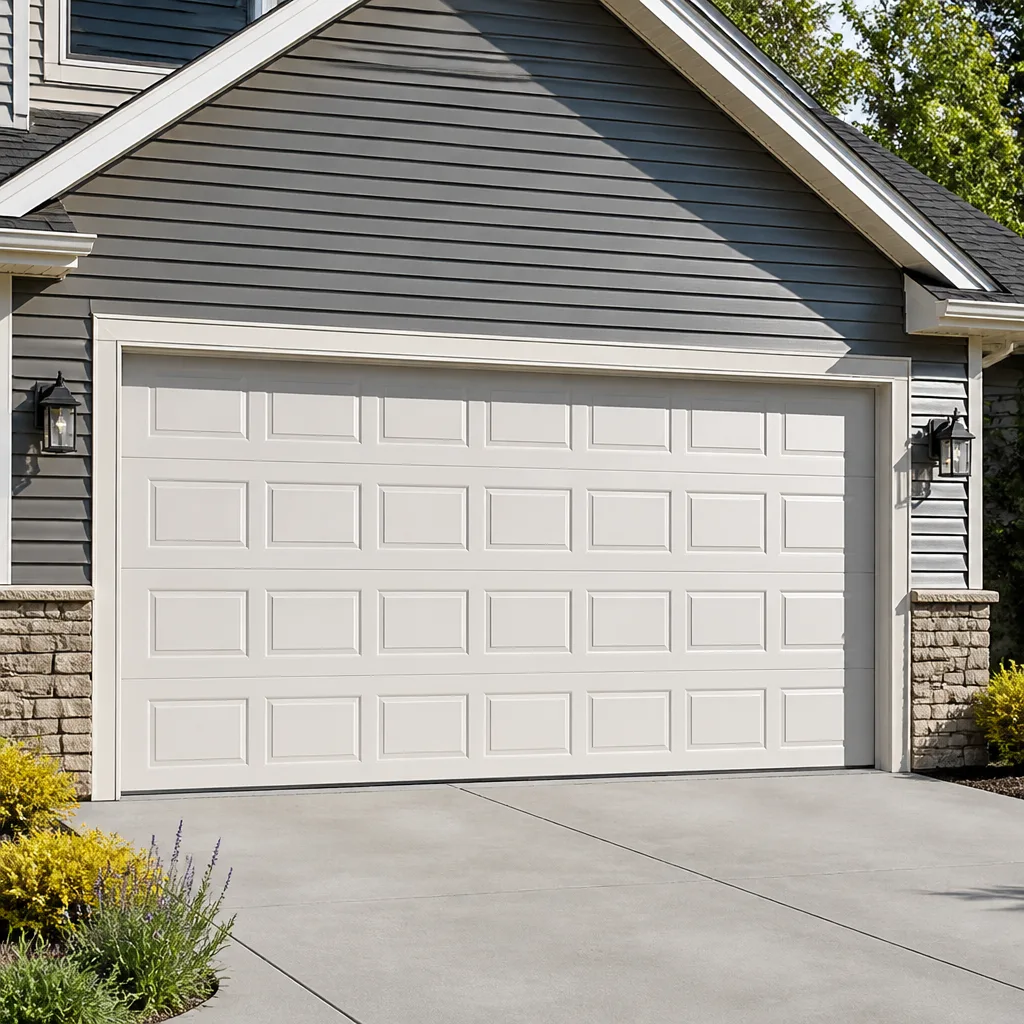 Raised-panel steel
 Carriage house
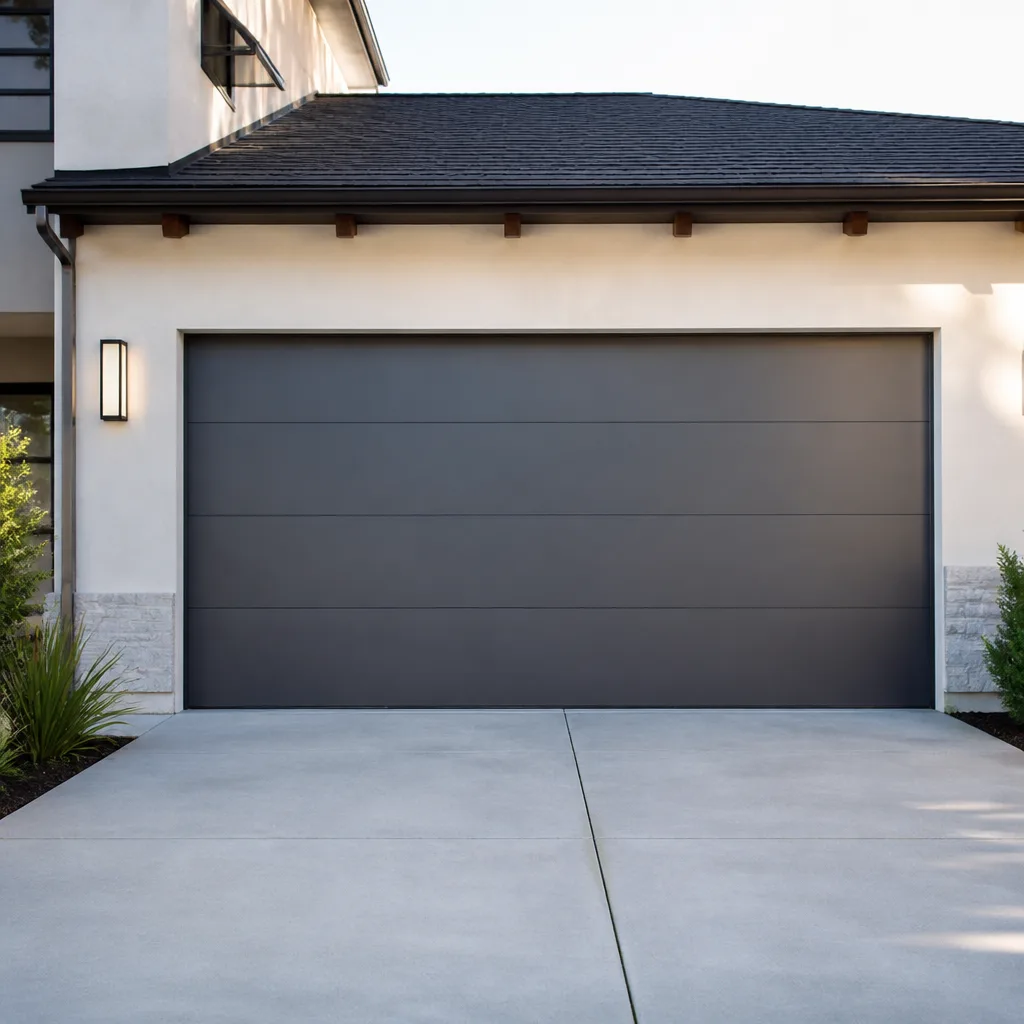 Modern flush
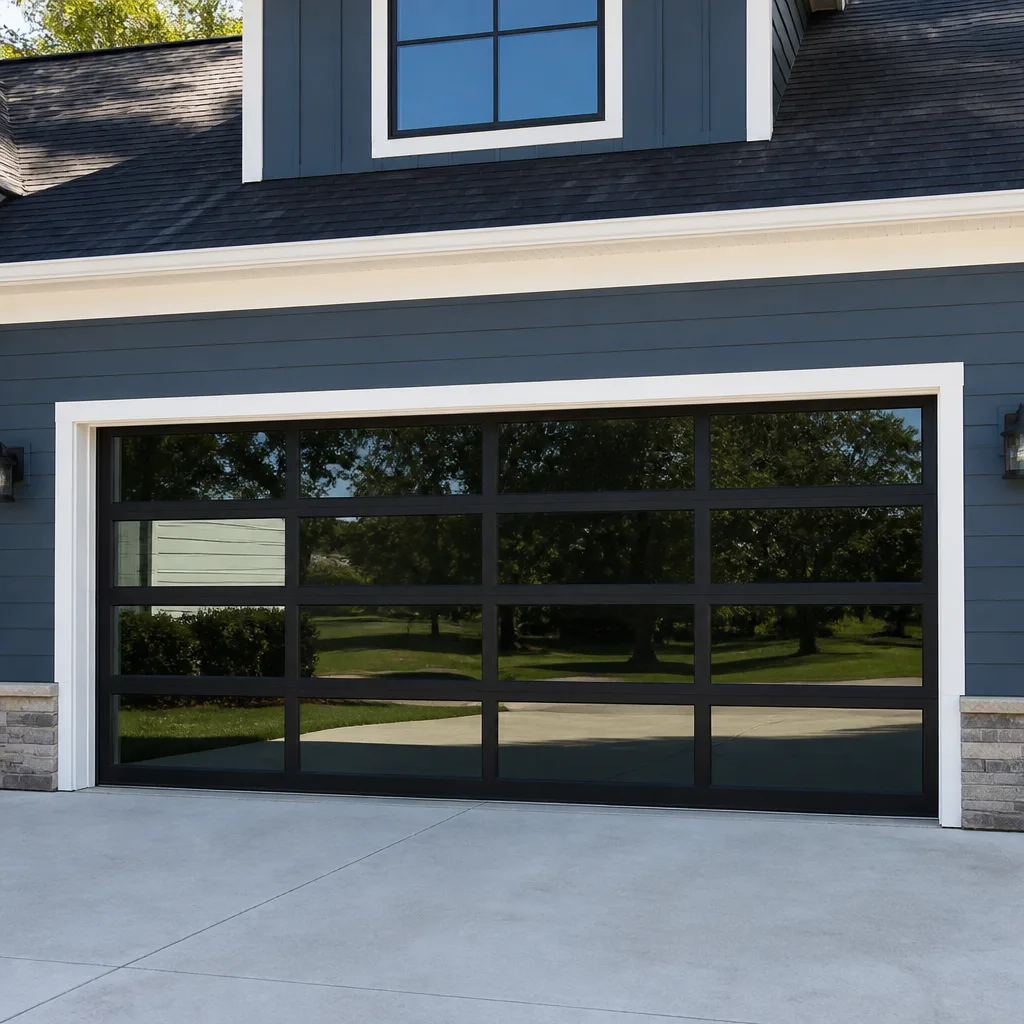 Full-view glass
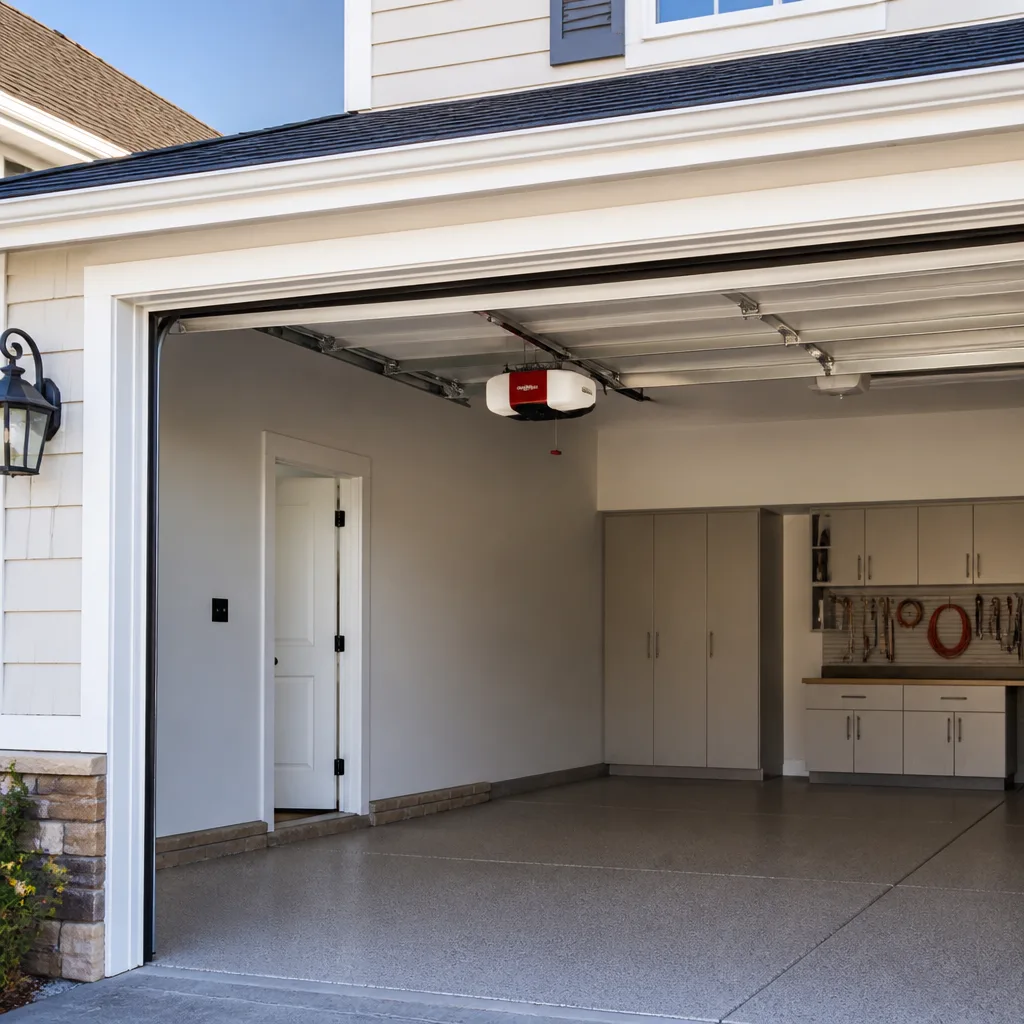 LiftMaster openers
 Chamberlain openers
Full 25-point door and opener safety check with every visit - springs, cables, rollers, tracks, and your LiftMaster or Chamberlain opener included
You get a price before we start. It does not change when the pro arrives.
Get your free estimateDIY vs Professional Garage Door: The Missouri City Homeowner’s Decision Guide
Most homeowners assume the DIY-or-pro decision comes down to skill. It doesn’t. It comes down to stored energy. A torsion spring under tension holds enough force to injure you badly in the fraction of a second a winding bar slips, and no video can teach your hands to respect that in real time. But unbolting a frayed bottom weatherstrip or resetting a remote is a twenty-minute job any Missouri City homeowner can handle. This guide draws that line honestly: the tasks worth doing yourself, the ones that can hurt you, and where a free estimate saves more than it costs.
Quick Answer
For garage door work in Missouri City, treating every task the same way is the mistake. Weatherstrip, lubrication, sensor alignment, remote programming and lock adjustment are safe DIY jobs. Torsion springs, cables, track realignment and opener gear assemblies are not: the stored force and load make them genuinely dangerous, and a botched attempt usually costs more to fix than the original repair. If your door is noisy, unbalanced, or the spring has failed, call Missouri City Garage Door Repair at (855) 765-7303 for a free estimate before you touch anything.
Styles & brands we work with
- Raised-panel steel
- Carriage house
- Modern flush
- Full-view glass
- LiftMaster openers
- Chamberlain openers
Table of Contents
- Where the Line Actually Sits
- DIY-Safe Garage Door Tasks in Missouri City
- Tasks You Should Never Do Yourself
- The Honest Cost Comparison
- What a Failed DIY Attempt Looks Like
- How to Assist a Professional and Cut Labor
- Why Missouri City Doors Age the Way They Do
- When to Call a Professional
Where the Line Actually Sits
The garage door is the largest moving object in your house. It’s also one of the few home systems that combines dead weight, powered motion, and a spring holding hundreds of pounds of tension. That combination is why the DIY question splits so cleanly.
Think of every task on your door as falling into one of three zones.
- Surface tasks. No stored force, no overhead weight, no power source live. You can safely handle these.
- Load-bearing tasks. The door’s weight or the spring’s tension is involved. These need tools and knowledge you probably don’t have in a suburban garage toolbox.
- Energy-release tasks. The torsion spring, tension cables, and opener’s internal spring all store force that releases in a fraction of a second. These carry injury risk that no video transmits.
Zone 1 is where you can save real money and feel good about it. Zone 2 and Zone 3 are where our garage door repair technicians earn their keep. That’s not a marketing line; it’s the honest division of labor. A trained tech has the winding bars, cable clamps, and door-specific knowledge to release tension safely. That’s the difference between a repair and an emergency room visit.
The history of your specific door matters too. A 1990s home in Quail Valley or a newer build in Sienna will have very different hardware under the same vinyl siding. Knowing which is which before you touch a bolt is the whole game.
DIY-Safe Garage Door Tasks in Missouri City
These are tasks where the risk is measured in scraped knuckles, not serious injury. If you’re reasonably handy, they’re worth doing yourself. If not, they’re cheap to have done during any service visit.
1. Bottom Weatherstrip Replacement
The rubber or vinyl seal at the bottom of the door takes the most wear of any part on your system. Missouri City summers push 100 degrees routinely, and that heat bakes the seal until it cracks or flattens. Replacement is straightforward: measure the door width, buy a matching seal, slide or screw it into the track on the bottom panel. Most doors take 20 to 30 minutes. You’ll need a tape measure, a utility knife, and sometimes a screwdriver. The payoff is real: a good seal keeps out the summer heat, the mosquitoes, and the occasional flash-flood wash that backs up against the door during a heavy spring storm.
2. Lubrication
A noisy door is usually a dry door. Use a garage-door-specific lubricant (not WD-40; not motor oil) on the hinges, rollers, and the torsion spring coils. Do this every six months. If you’ve ever wondered why your door sounds like a lawnmower in July, this is it. Fifteen minutes and a $10 can.
3. Sensor Realignment
If your door reverses immediately after closing, the two safety sensors near the floor have drifted out of line. Look for a blinking LED on either unit. Nudge it until the light goes solid. That’s it. You don’t need tools. You need to know what “aligned” looks like.
4. Remote and Keypad Programming
Reprogramming a remote or wireless keypad is a matter of pressing the right buttons in sequence. The steps vary by brand: LiftMaster and Chamberlain use similar programming buttons on the motor head, while Genie and Craftsman units have their own patterns. If you’ve lost the manual, it’s often printed inside the light lens cover. Ten minutes, no tools.
5. Manual Lock Repair
Older doors have a slide-bolt lock at the bottom or side. If it’s sticking, a few drops of lubricant and a gentle wiggle usually free it. If the bolt is bent, replacement is a hardware-store part and a screwdriver job.
None of these require a service call. All of them are things we’d rather you handle than pay us for.
Tasks You Should Never Do Yourself
This is where the DIY conversation changes. The following tasks are not “harder.” They carry injury risk that no amount of YouTube viewing prepares you for. Here’s the mechanical reason for each.
Torsion Spring Replacement
A torsion spring holds hundreds of pounds of tension. It does the counterbalancing work that lets you lift a 150-pound door with one hand. Winding or unwinding it takes two properly sized winding bars, a knowledge of how many turns to apply, and a healthy respect for the fact that if a bar slips, it becomes a projectile. The stored energy releases in a fraction of a second. This is one of the most injury-prone DIY jobs in home maintenance, which is why our garage door spring repair is performed by trained technicians with the right tools. Do not attempt this yourself.
Cable Replacement
The two cables running from the bottom corners of the door up to the drums at the top are under tension from the spring. They can snap. A cable under load is a whip. Replacing it requires releasing the spring first, which returns you to the previous task.
Track Realignment Under Load
The vertical and horizontal tracks carry the entire weight of the door. If a roller has jumped the track or a bracket has bent, the door is resting on the track with stored force behind it. Loosening a bracket in that condition can drop the door or send the track swinging. You can adjust a visibly bent track section on a door that is fully down and settled. You should not attempt it with the door in any kind of tension.
Opener Gear Assembly
The plastic or steel gear assembly inside your opener rides a chain or belt under tension. When the gear wears out, the motor runs but the door doesn’t move. Replacement means opening the unit, removing the chain or belt, and getting the gear seated exactly right. On a LiftMaster or Chamberlain unit, the gear and sprocket kit is available and the job is doable once you know the sequence. On a Raynor or Wayne Dalton unit with proprietary parts, the sequence differs. Get it wrong and you’re replacing the whole opener. Our garage door opener repair covers every major brand for this reason.
If your door is stuck open, half-lifted, or in any state when the spring has failed, leave it exactly as it is and call. The door is now a hazard sitting over your car.
The Honest Cost Comparison
Where DIY actually saves money, and where it quietly costs more. This is the part that generic “always call a pro” advice refuses to say plainly.
| Task | DIY Cost | Pro Cost (typical estimate) | Verdict |
|---|---|---|---|
| Bottom weatherstrip | $15-$40 (material) | $80-$150 installed | DIY wins if you’re comfortable with a utility knife |
| Lubrication | $10 (one can) | $60-$100 as part of a tune-up | DIY wins |
| Remote/keypad programming | $0 | $0 (usually done free during any visit) | DIY wins on independence |
| Sensor realignment | $0 | $60-$120 service call | DIY wins |
| Single torsion spring | N/A – do not attempt | $180-$340 | Pro only |
| Torsion spring pair | N/A – do not attempt | $360-$680 | Pro only |
| Cable replacement | N/A – do not attempt | $150-$280 per cable | Pro only |
| Track realignment | N/A | $120-$250 | Pro only |
| Opener gear assembly | N/A for most brands | $180-$320 | Pro recommended |
Notice that the DIY savings on the surface tasks are modest: a few dollars here, an hour there. But the same tasks done during a spring or opener repair often come free, because the technician is already on site. So the real math isn’t “DIY $80 vs pro $150.” It’s “did this task need to happen anyway during a repair I was already paying for?”
Where DIY costs you money is when a failed attempt requires follow-up work. Springs that break during a botched adjustment, tracks that bend when a door drops, opener gears that strip from being reseated wrong: each of those turns a $200 repair into a $400 or $600 one. Our opener specialists see this regularly.
What a Failed DIY Attempt Looks Like
The three most common calls we get after a homeowner has had a go at their door. All three share a pattern: the DIY task was reasonable, but the final step wasn’t.
1. “The spring broke while I was adjusting it”
The homeowner watched a video, bought a pair of winding bars, and tried to add tension to a spring that had already lost some. The spring snapped mid-winding. Sometimes the door dropped. Sometimes it didn’t. Either way, the call to us now includes a spring replacement plus the worry about a door hanging out of square. The lesson: a spring at partial tension is not safer than a spring at full tension. It’s less predictable.
2. “The door won’t close and the sensor light isn’t on”
The homeowner moved a sensor to fix an unrelated issue and disconnected a wire in the process. Now the door reverses mid-travel and the opener reports an error code. The fix is quick for a technician, but the diagnosis takes longer than the original sensor alignment would have. If you’re not sure which wire goes where, don’t unplug it.
3. “The opener runs but nothing moves”
A worn gear inside the opener was the actual problem, but the homeowner tried to adjust the travel limit instead. The result: the carriage got jammed against the limit switch and the opener’s circuit board is now faulting out. Fixing the gear was a $200-ish job before the limit was touched; now it’s gear replacement plus opener recalibration.
In our experience, all three of these calls arrive on the same day the DIY attempt happened. The homeowner is frustrated, and rightly so. None of these are skill issues. They’re “the video left out the last step” issues.
How to Assist a Professional and Cut Labor
You don’t have to be passive during a repair. There are safe ways to participate that genuinely reduce the labor time, and therefore the cost, without putting your hands near anything under load.
- Clear the bay fully. Move the car, the bikes, the stacked boxes, the recycling bin. A technician who has to spend five minutes clearing the door area before starting is billing you for those five minutes. A clear bay is the single biggest thing you can do to shorten the visit.
- Have your door model and opener brand written down. If you own a LiftMaster or Chamberlain opener, jot the model number off the motor-head sticker. For a Wayne Dalton or Craftsman door, note the tag on the bottom panel. This saves diagnostic time and prevents the wrong part being ordered.
- Test and report symptoms in detail. “It clunks twice, opens two feet, then reverses” is more useful to a technician than “it’s broken.” The more accurate the description, the faster the diagnosis. Talk through it before the technician arrives.
- Be the second set of eyes, not the second set of hands. Stand outside and watch the door travel. If a technician asks “does this panel look level to you?” your answer from the driveway is useful. Don’t touch anything under tension.
- Hold the flashlight, run the remote, take the notes. These are genuinely useful jobs a helper can do safely. On a spring adjustment, the tech needs both hands, and having you available to trigger the opener from the wall button saves time.
What you should not do: lift or support a door with the spring disconnected, touch a winding bar while a technician is working, or attempt to reattach a cable. Those are the tasks that turn a repair into a call to the emergency room.
The best way to be a smart assistant is simply to have the information ready and then get out of the way. On a typical Missouri City repair, a prepared homeowner can shave 15 to 20 minutes off the visit just by having the details organized.
Why Missouri City Doors Age the Way They Do
The climate here matters to this decision more than most guides admit. Missouri City sits in the Gulf Coastal Plain southwest of Houston, and the local conditions shape which parts of your door fail first. That changes the DIY calculation.
Summers hit the upper 90s with humidity that climbs past 90 percent for weeks. That combination attacks the seals, the paint, and the lubricants on your system in specific ways:
- Bottom weatherstrip goes first. UV exposure plus heat bakes the rubber until it cracks and crumbles. Expect to replace it far more often than a homeowner in a dry climate would. That’s the single most frequent DIY-safe task in Missouri City.
- Lubricants dry out faster. The grease that keeps your rollers quiet in cooler climates breaks down quicker here. Twice-a-year lubrication is the right frequency, not once.
- Wood and steel panels expand and contract daily. The temperature swing between a 2 AM low and a 2 PM high in July is real, and it works panel seams and hinge screws over time. That’s why a door that was silent in November starts to groan in June.
- Springs fatigue from use, not from cold. Because we don’t have hard freezes to stress the metal, the spring’s lifespan here is mostly a function of how many times you open the door. A two-car household that runs the door six times a day will reach spring failure sooner than a one-driver home, regardless of the calendar.
- Flash storms and heavy rain test the seal. When a Gulf storm pushes water across a driveway, the bottom seal is doing real work. A worn seal lets water and insects in, and in a Missouri City garage that becomes a humid, musty space fast.
Neighborhood age plays a role too. Homes in established communities like Quail Valley or Riverstone often have doors that are older than their openers, so the mechanical parts have been replaced once or twice while the panels and hardware are original. Newer construction in Sienna or the far southwest suburbs usually means matched components that fail on the same schedule. Knowing which situation you’re dealing with tells you whether you’re looking at one repair or a set of them.
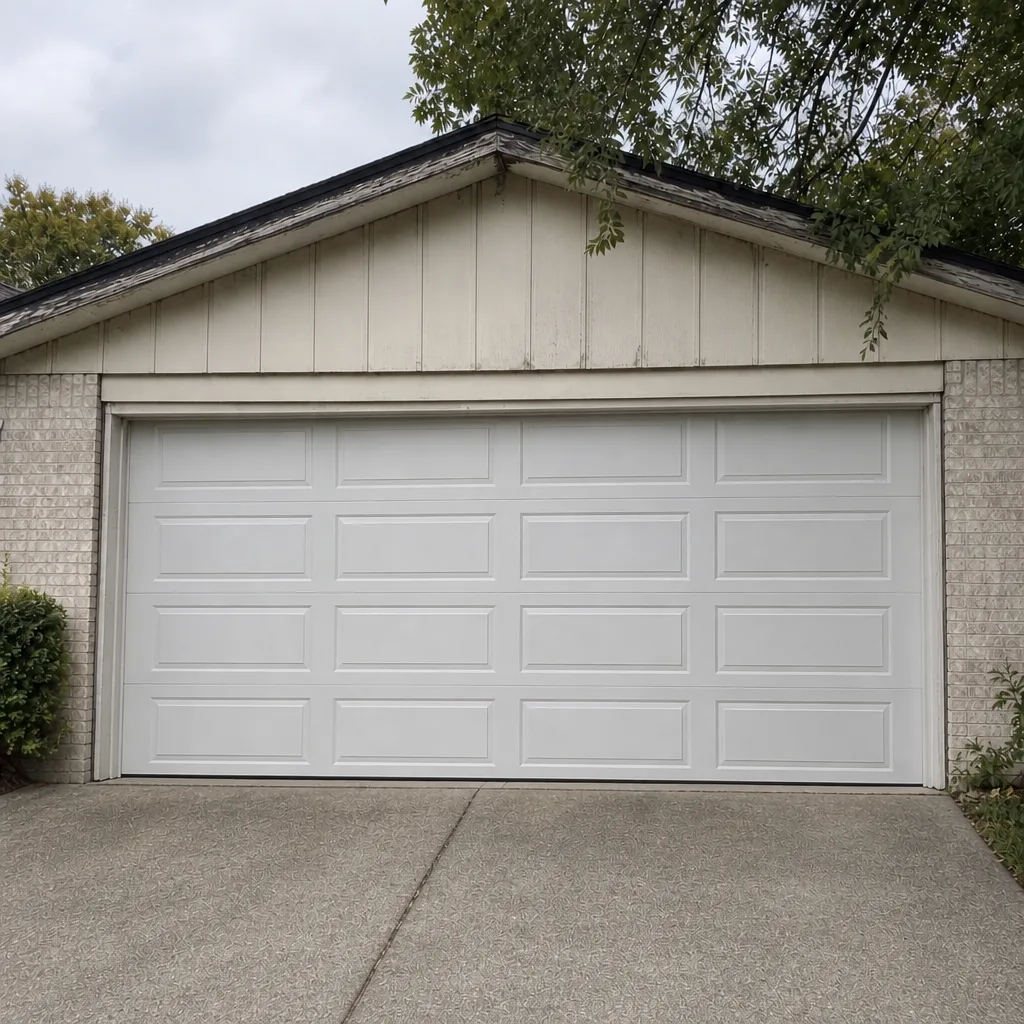
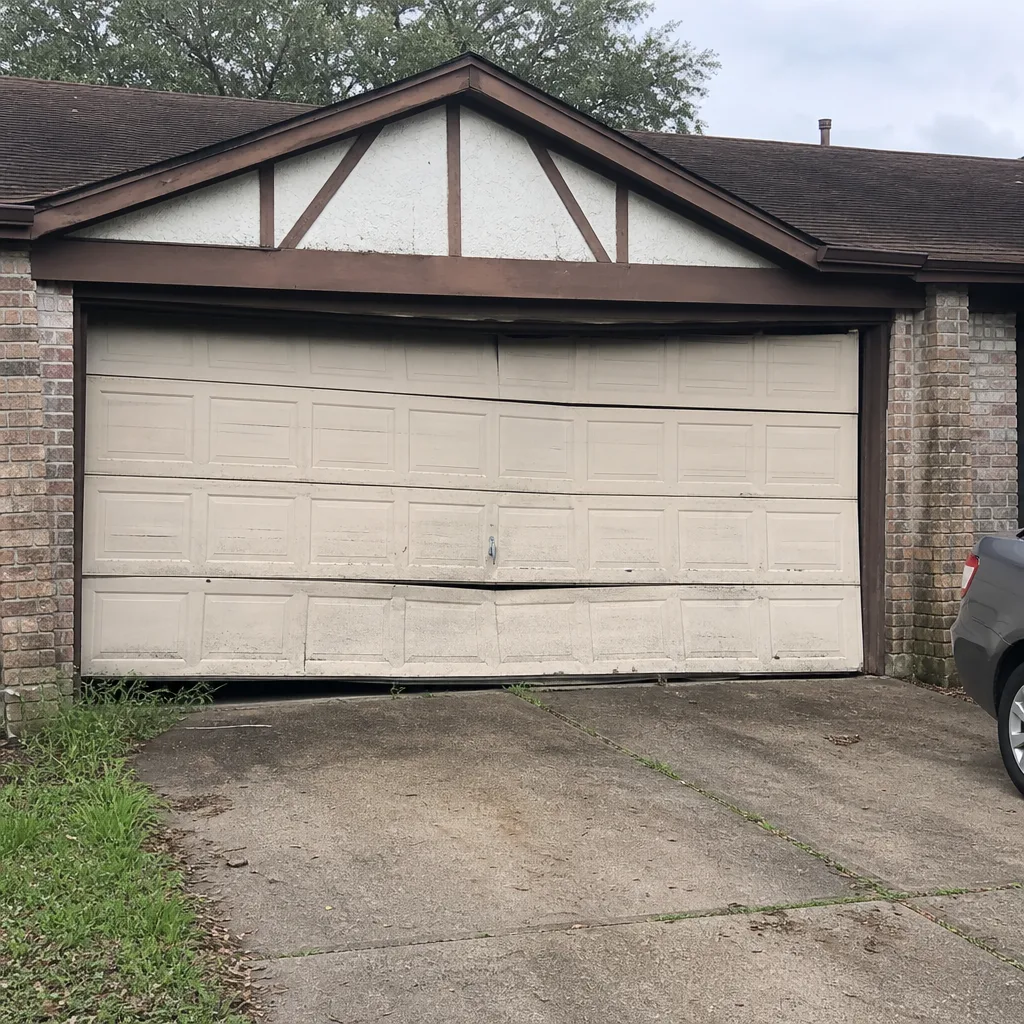
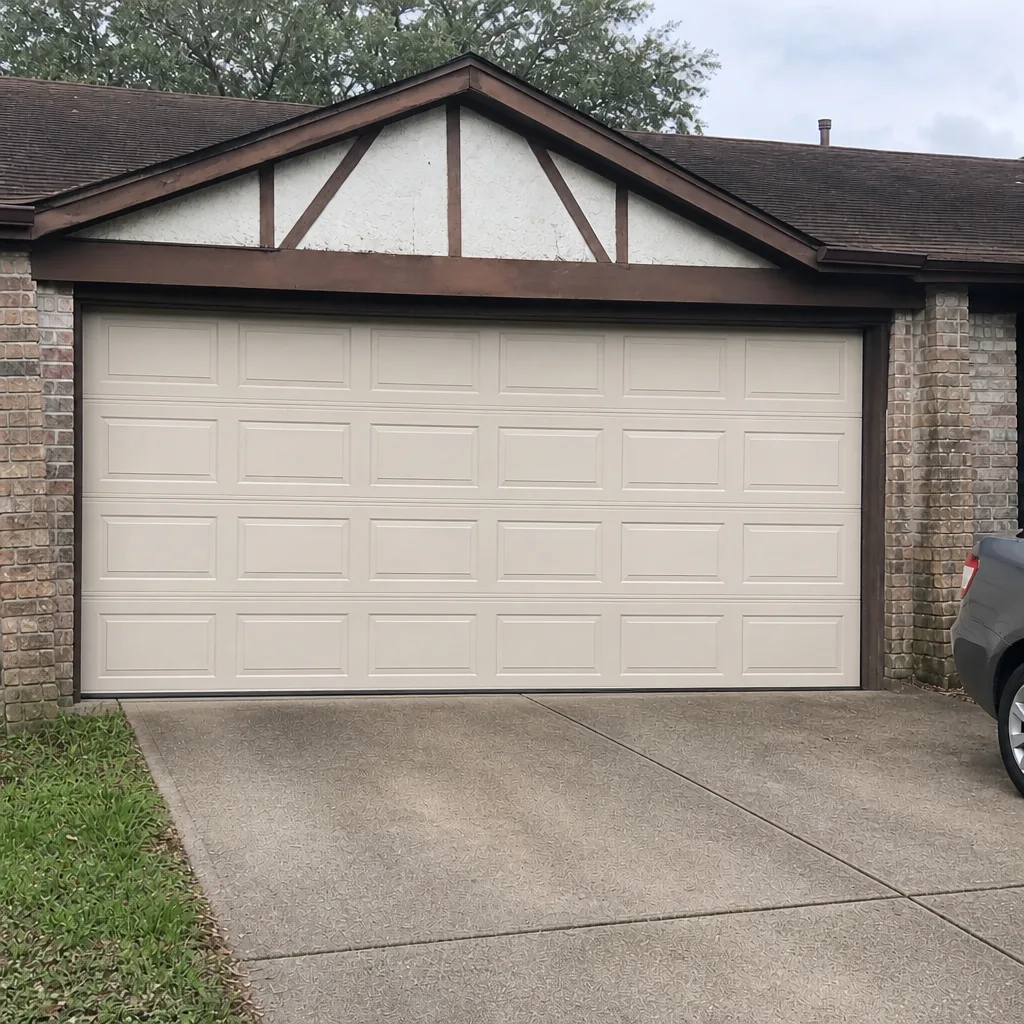
See the difference
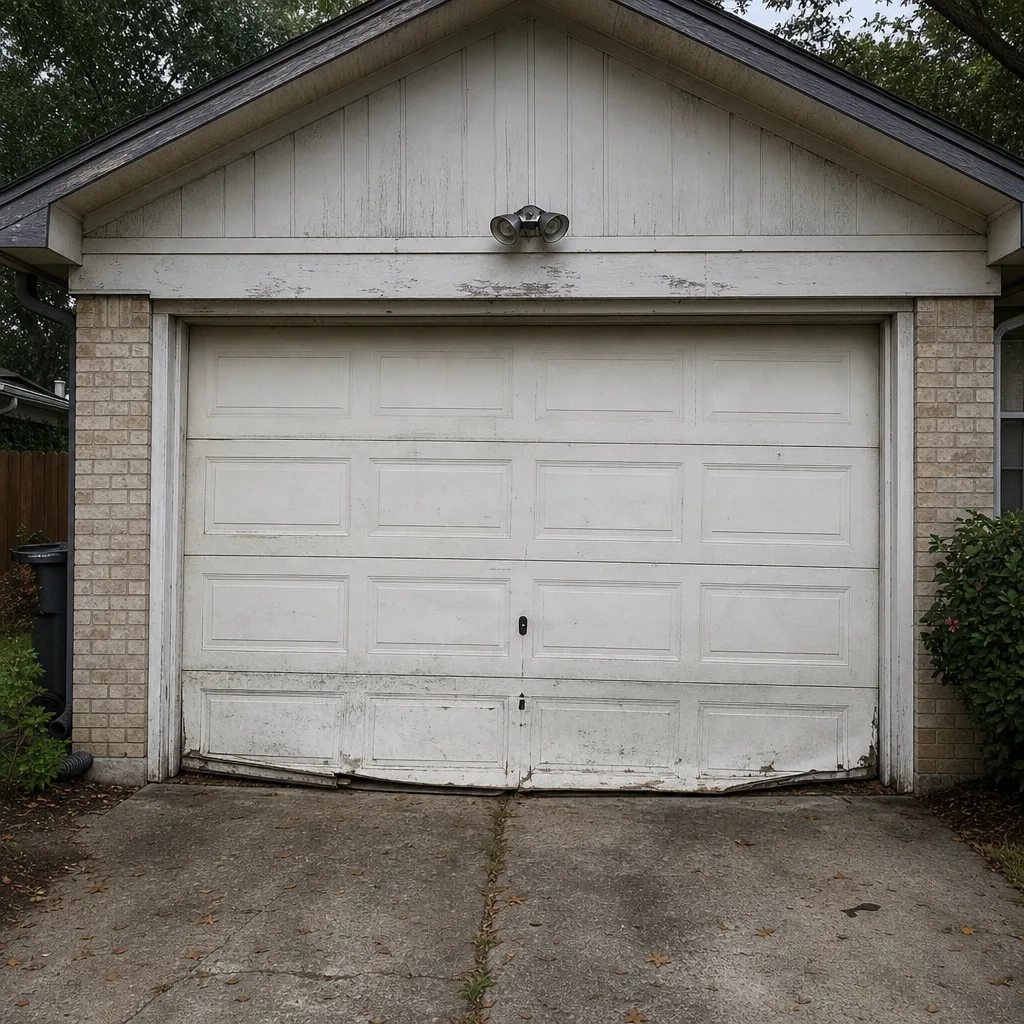 Before
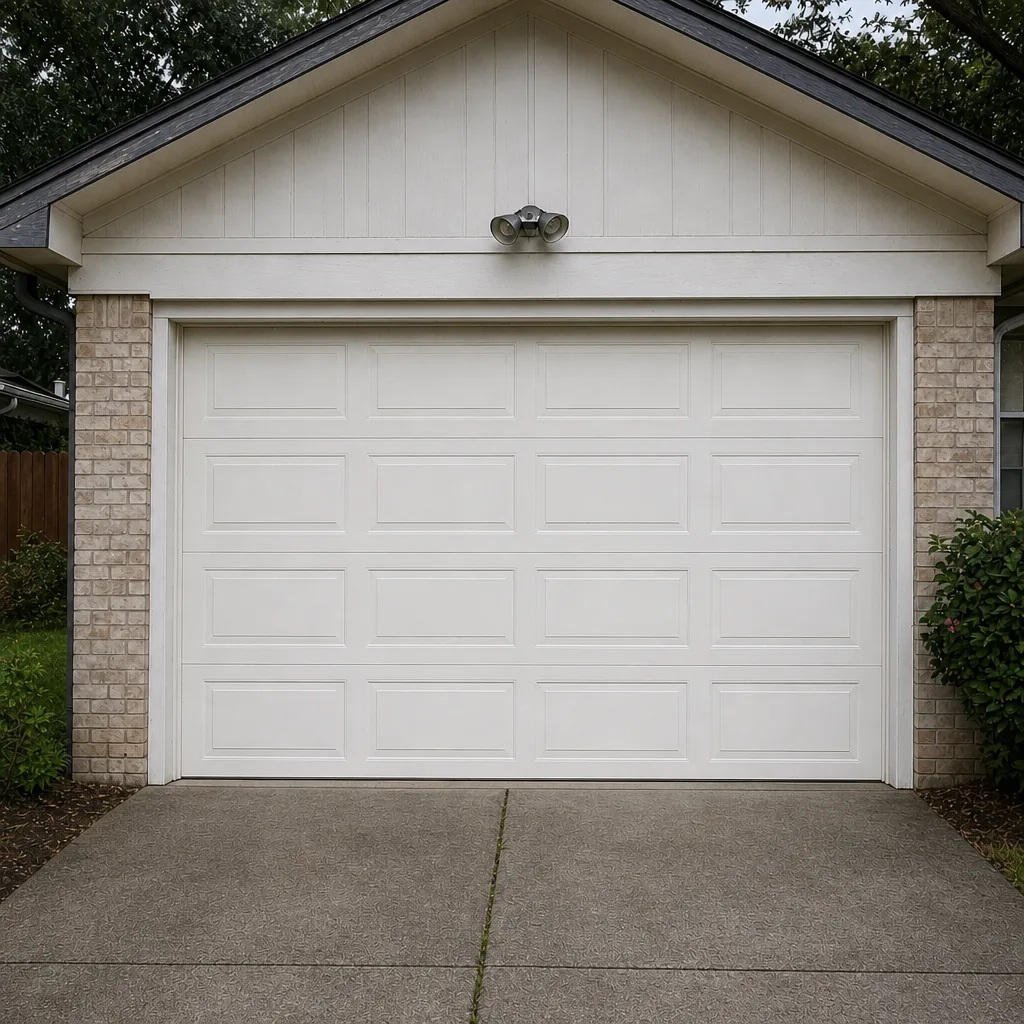 After
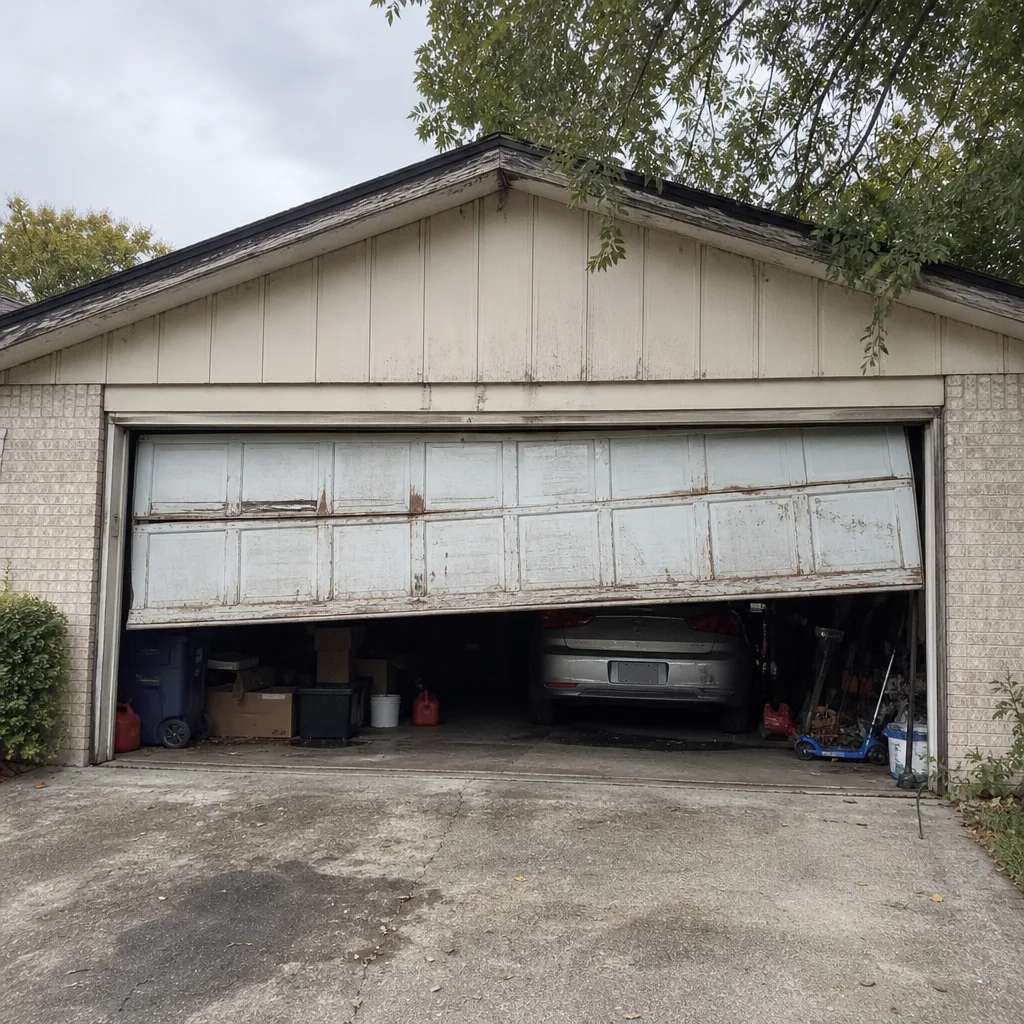 Before
 After
 Before
 After
Common Mistakes to Avoid
- Treating all garage door repairs as equal risk. Weatherstrip and springs are not the same job. Assuming “if it’s on YouTube it must be safe” is how homeowners overestimate their comfort zone. Match the task to the mechanical risk before you decide.
- Using WD-40 or motor oil on hinges and rollers. Both attract dust and dry out quickly, especially in our summer heat. Use a garage-door-specific lubricant. This is a small choice with outsized effect on how loud your door gets.
- Buying a spring without matching the door’s weight. Torsion springs are sized to the door, not to the brand of opener. A spring for a 90-pound door on a 150-pound panel is a hazard waiting to fail again. This is exactly why we don’t recommend buying your own part and asking a technician to install it.
- Adjusting the opener’s travel limits to hide a mechanical problem. If the door is not fully closing, the limit switch is usually not the culprit: the actual door is out of balance. Adjusting limits just moves the symptom.
- Ignoring a door that won’t close. A garage door that won’t close is a security gap, not a minor inconvenience. In a Missouri City summer evening, an open garage is an open invitation to pests, water, and worse. Don’t wait for a convenient time.
- Calling a general handyman for a spring or opener job. A handyman may have the tools for the job but not the specific training. Garage doors are the one home system where single-trade focus matters most. We work on the brand you already own, whether that’s Raynor, Wayne Dalton, or anything in between.
- Waiting for the noise to go away. A grinding or shrieking door is telling you something. Ignoring it until it fails turns a small repair into a system replacement. The best time to call is before the noise becomes a refusal to move.
When to Call a Professional
Call Missouri City Garage Door Repair when the task involves the spring, the cables, a loaded track, or an opener gear assembly. Call when the door is stuck open, half-closed, or visibly out of square. Call when a probe or a thud turned into a refusal to move at all. And yes, call when the door won’t close at 7 AM and you need it fixed today: emergency garage door service is part of what we do, not a next-day appointment window.
The rest of the guide gives you permission to handle the small stuff yourself. Weatherstrip, lubrication, sensor alignment, remote programming: those are yours. The parts that can hurt you are the ones worth the call. For anything that leaves you unsure, our Missouri City Garage Door Repair team can work through it with you on the phone.
Missouri City Garage Door Repair offers free estimates in Missouri City. Call (855) 765-7303 for an exact quote, and estimates are free.
Frequently Asked Questions
No. A torsion spring stores enough force to cause serious injury if it slips during winding, and the risk is highest for homeowners attempting it without the correct winding bars and knowledge. Call (855) 765-7303 for a free estimate instead. Estimates are free, and the written quote is the price.
No. Pricing on a garage door repair in Missouri City depends on the failed part, not the season. A single torsion spring is typically $180 to $340, and a matched pair is about double that since they’re usually replaced together. A cable is typically $150 to $280 per cable, and track realignment typically runs $120 to $250. The final price is set by the written estimate before any work starts. Call (855) 765-7303 for an exact quote.
Bottom weatherstrip is a genuinely DIY-safe task if you’re comfortable with a utility knife and a tape measure. The material runs $15 to $40 and takes 20 to 30 minutes on most doors. If it’s due along with a spring or opener repair, it usually gets bundled into the same visit at no extra labor charge, so it’s worth asking about. Call (855) 765-7303 to schedule.
What usually happens is a snapped spring, a door that won’t open, or a call to us with the door in a state we then have to safely stabilize before repair. The fix is almost always possible, but the job is bigger and the risk to the homeowner in the moment is real. If your door is stuck after a failed attempt, call (855) 765-7303. Estimates are free and we can schedule an urgent visit.
Yes. We work on LiftMaster, Chamberlain, Genie, Clopay, Amarr, Wayne Dalton, Craftsman, and Raynor systems, including MyQ-compatible LiftMaster and Chamberlain units. That means most Missouri City homeowners have a brand we already know. Our garage door opener repair covers both legacy and modern smart openers. Call (855) 765-7303 for a free estimate.
Sensor realignment is DIY-safe: look for a blinking LED, nudge the sensor, wait for a solid light. But if the door still won’t close, or the sensor light won’t go solid, the problem is likely the wiring or the opener, not the sensor. At that point, stop and call (855) 765-7303. A garage door that won’t close is a security issue, and it’s worth the call.
The Bottom Line
Torsion springs, cables, loaded tracks, and opener gear assemblies carry real injury risk and belong with a trained technician. Weatherstrip, lubrication, sensors, remotes, and locks are safe for any reasonably handy Missouri City homeowner. The cost math isn’t “DIY $80 vs pro $150”; it’s whether the task is even safe to attempt. Do the safe tasks, call for the rest, and clear the bay before anyone arrives. Our technicians have up to 8 years of experience across the eight major brands most homes actually have. Free estimates, upfront pricing, and the written quote is the price. For an exact estimate on your Missouri City door, call Missouri City Garage Door Repair today: (855) 765-7303.
Written by the team at Missouri City Garage Door Repair.