Last updated November 21, 2026
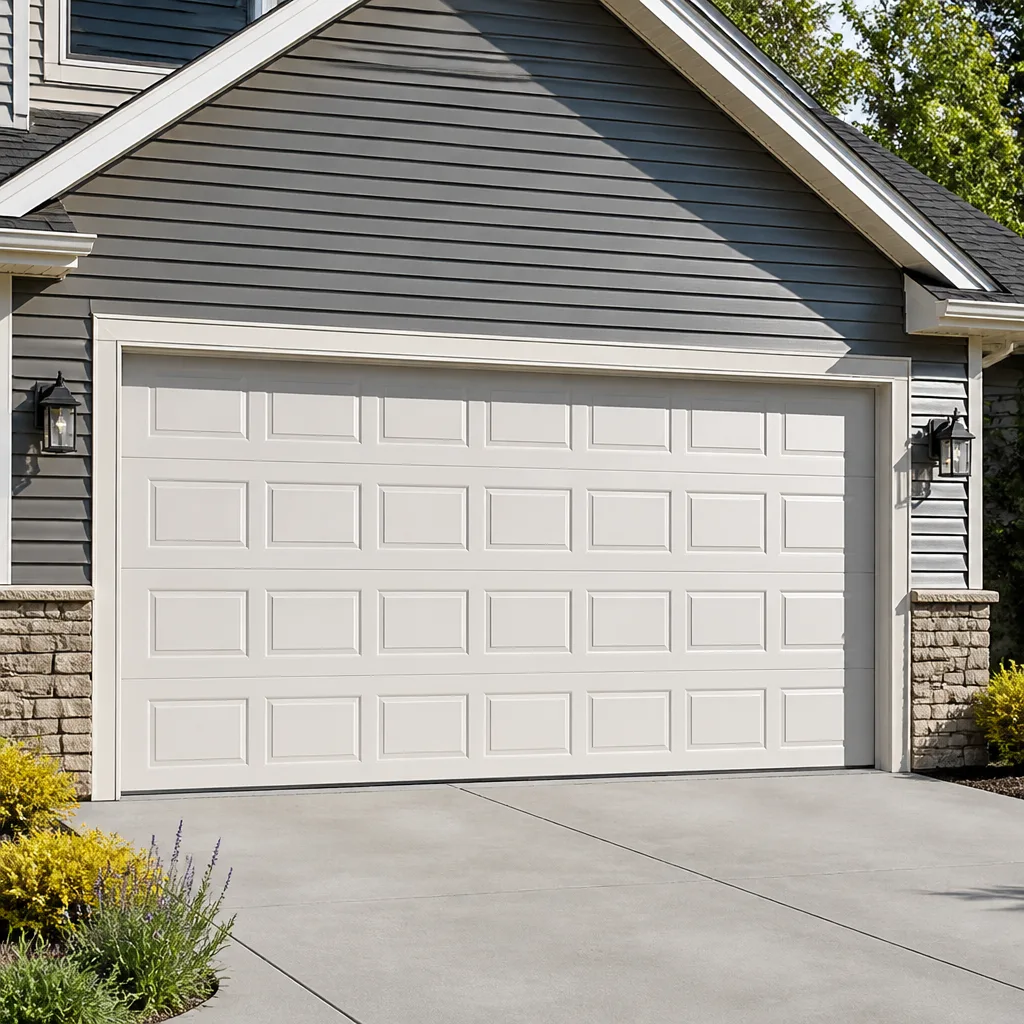 Raised-panel steel
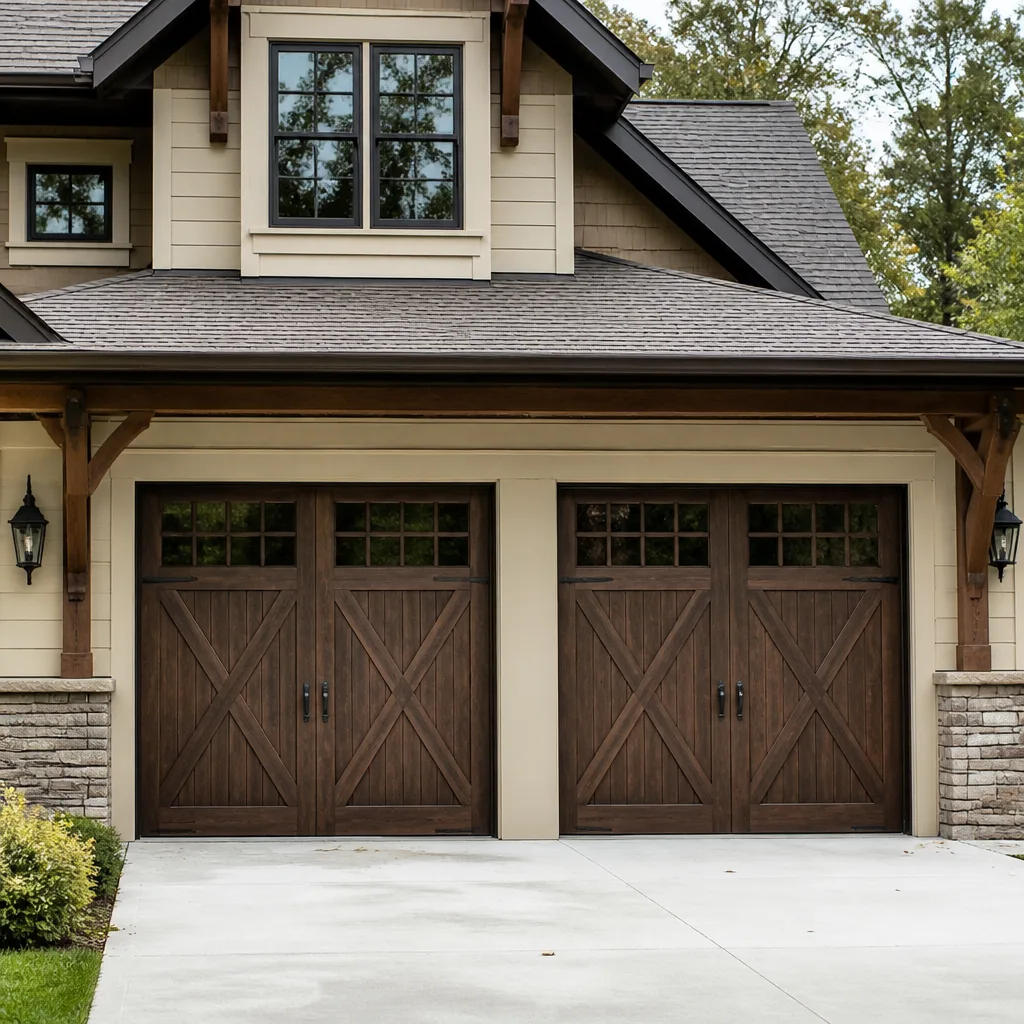 Carriage house
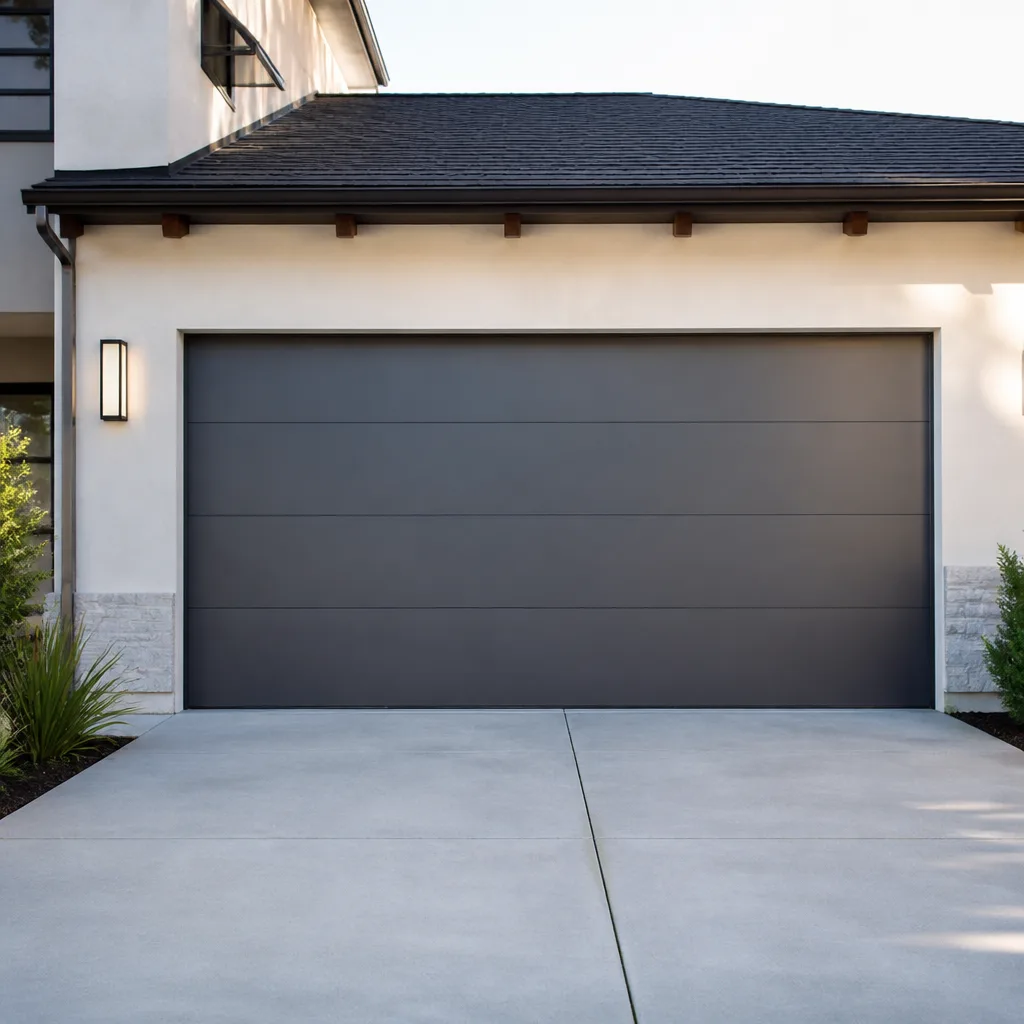 Modern flush
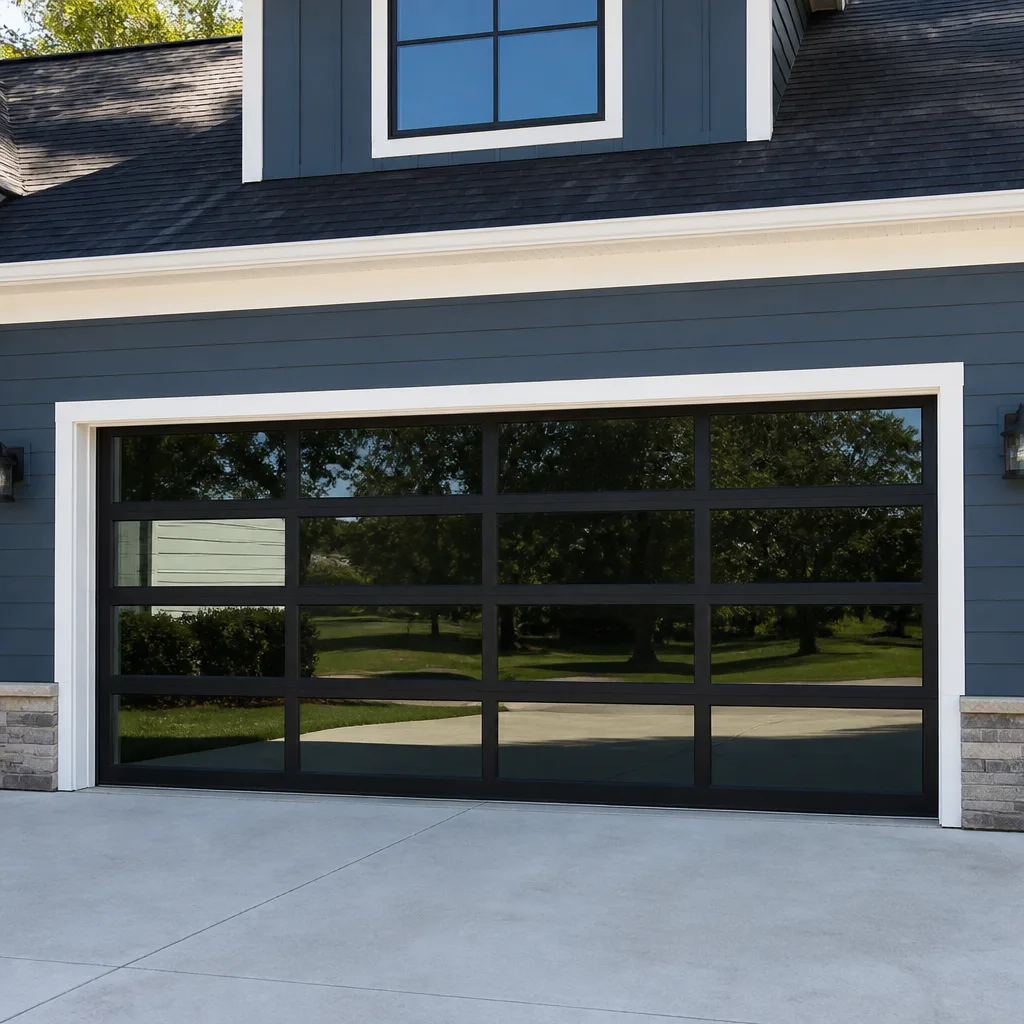 Full-view glass
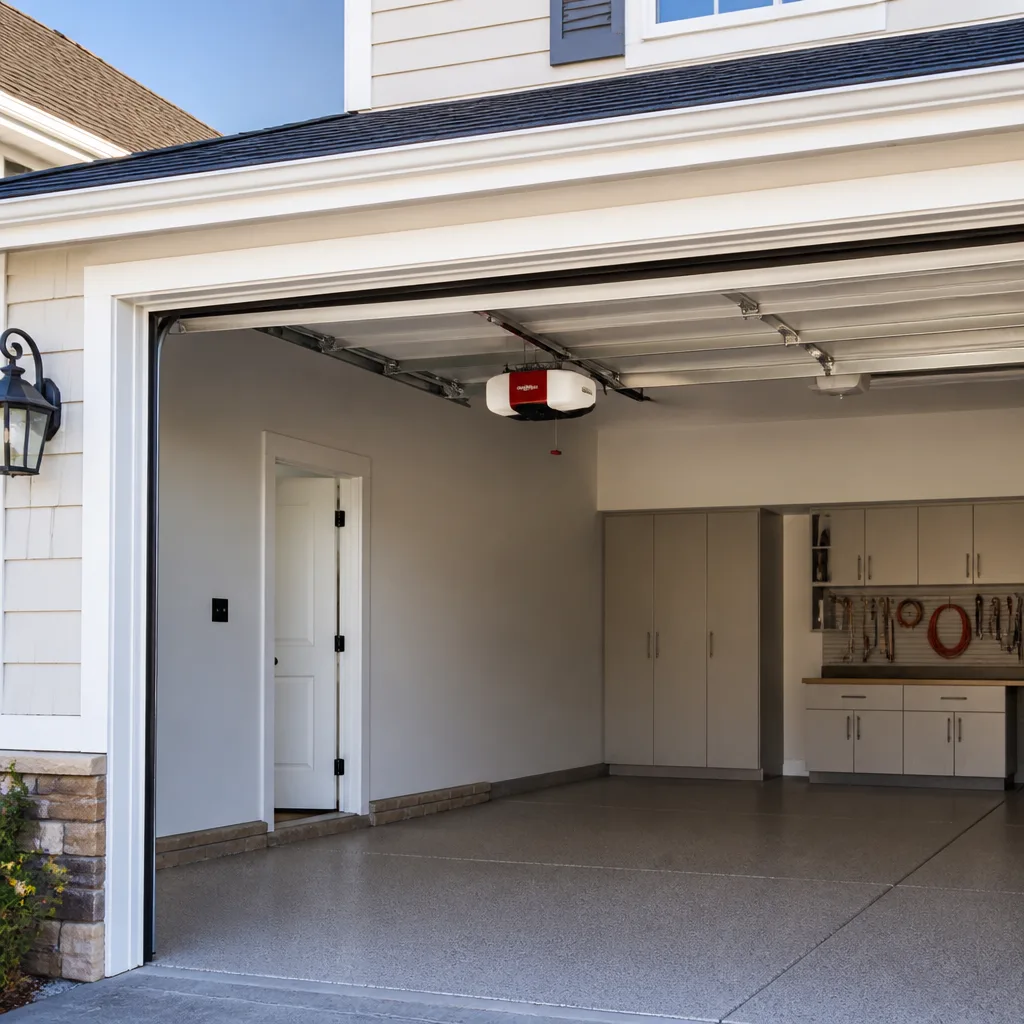 LiftMaster openers
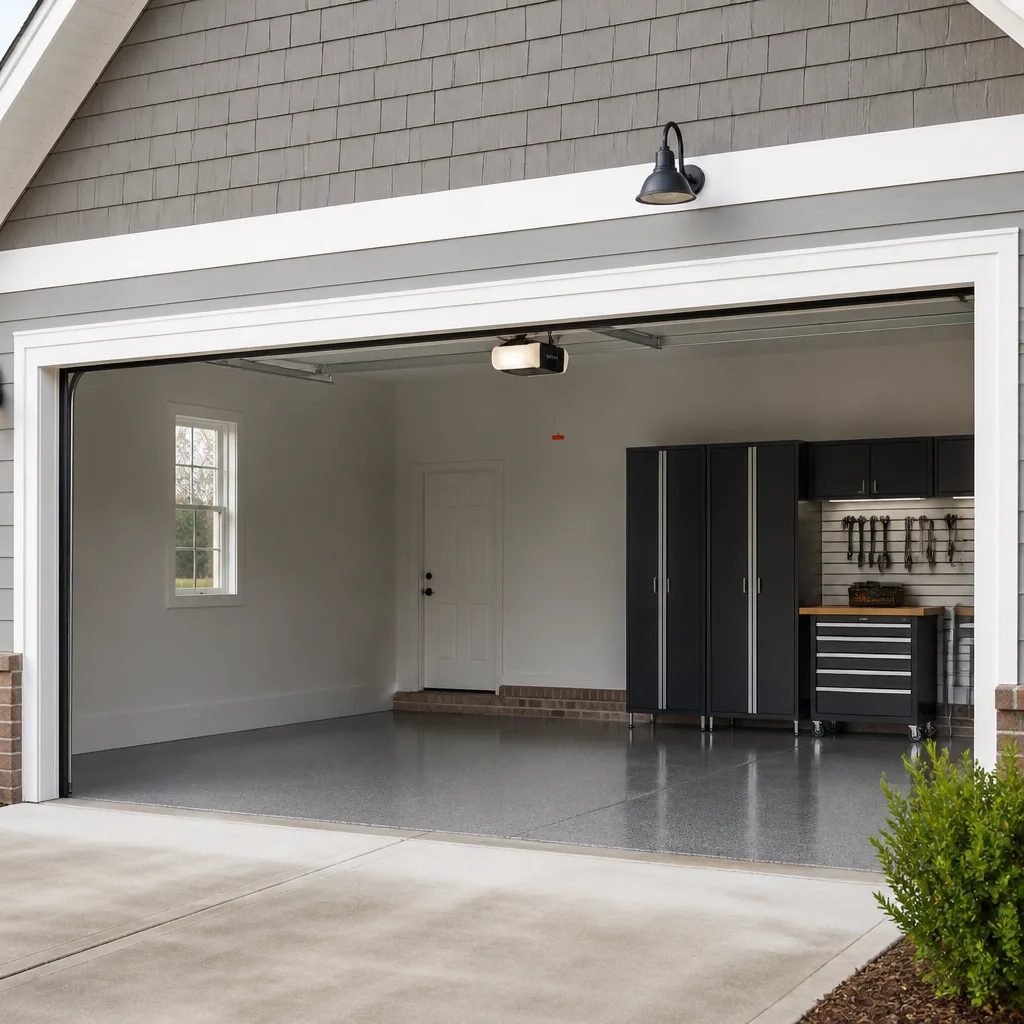 Chamberlain openers
Full 25-point door and opener safety check with every visit - springs, cables, rollers, tracks, and your LiftMaster or Chamberlain opener included
You get a price before we start. It does not change when the pro arrives.
Get your free estimateGarage Door Repair Maintenance Checklist for Missouri City Homeowners
A torsion spring snaps without warning, but it almost never fails without first giving you six months of signals that a generic maintenance checklist would have you ignore. Most checklists floating around online are written for the national average homeowner, so they tell you to “check balance” and “listen for noise” without a single number attached. That’s not much help when your door is grinding at 7 AM on a Monday. This checklist is built around what actually fails first on Missouri City doors: the humidity, the UV, the builder-grade hardware in area subdivisions, and the way Gulf Coast homeowners run their garages year-round. By the end, you’ll know what to check monthly, quarterly, and annually, which lubricants survive a Texas summer, and which tasks belong to a technician.
Quick Answer
Lubricate hinges, rollers, and the torsion spring once a month with a silicone-based spray, not WD-40. Do a full visual and balance check every quarter, and book a professional service annually for spring tension, cable condition, and opener calibration. In Missouri City, the humidity and UV exposure mean weatherstripping and bottom brackets wear faster than the national average, so inspect the bottom seal every three months.
Styles & brands we work with
- Raised-panel steel
- Carriage house
- Modern flush
- Full-view glass
- LiftMaster openers
- Chamberlain openers
Table of Contents
- Why Missouri City Doors Fail Differently
- Monthly Checklist: What to Look At Every Month
- Quarterly Checklist: Weatherstripping, Rust, and Balance
- Annual Checklist: The Full System Inspection
- The Right Lubricants for Texas Heat and Humidity
- Spotting Rust Before It Costs You
- DIY vs. Professional: Where the Line Is
- Warning Signs That Mean Call Now
- Frequently Asked Questions
Why Missouri City Doors Fail Differently
Missouri City sits in a stretch of Southeast Texas where summer heat indexes climb into triple digits and the humidity stays thick from May through September. That combination does specific things to garage door hardware. Steel panels expand and contract with temperature swings and can warp along the seams. Lubricants thin out and either drip off or gum up with dust. And any moisture that gets into a hinge pin or roller bearing stays there, because the humidity gives it no reason to evaporate.
The housing stock matters too. Subdivisions across Missouri City, from the older neighborhoods near Cartwright Road to the newer builds off Highway 6, most often came with builder-grade doors in Clopay, Amarr, or Wayne Dalton. Those are solid doors, but the factory weatherstripping and the lighter-duty hinges are the first things to go. We’ve seen five-year-old doors in Missouri City where the bottom seal had already hardened and split because the builder used a basic vinyl strip not rated for Texas UV.
Then there’s how people here use their garages. In much of the country, the garage is storage. In Missouri City, it’s a second living space for a good chunk of the year: workshop, laundry overflow, gym, and the main entry point into the house. That means the door cycles more times per day, the opener works harder, and the whole system wears faster than the manufacturer’s cycle rating assumes. A door rated for 10,000 cycles can hit that number quicker than you’d think.
Add in storm season. Spring thunderstorms and the occasional hurricane threat mean wind ratings and door reinforcement actually matter here, and a door that’s out of balance or has a loose track is more vulnerable to wind damage. So the checklist below isn’t just about longevity. It’s about keeping the door safe when the weather turns.
Monthly Checklist: What to Look At Every Month
Fifteen minutes once a month catches most of the problems that turn into expensive repairs. Grab a flashlight, work the door by hand with the opener disconnected, and go through these in order.
- Listen first. Open and close the door and listen for grinding, squealing, or popping. A healthy door makes a low, even hum. A rhythmic squeak usually means dry rollers or hinges. A pop or snap means stop and call.
- Lubricate hinges and rollers. Two short sprays per hinge, one on each roller stem. Wipe off the excess so it doesn’t collect dust.
- Lubricate the torsion spring. A light coat along the coil reduces friction and slows corrosion. Don’t spray the cables.
- Look at the springs. A broken torsion spring shows a visible gap in the coil. Never try to close a door with a broken spring, and never touch the spring to “test” it. That’s a trained-technician job.
- Check the safety reverse. Put a two-by-four flat on the floor under the door and close it. The door should reverse on contact. If it doesn’t, the opener needs adjustment before anyone gets hurt.
- Check the photo-eye sensors. Wipe the lenses. Break the beam with your hand and confirm the door reverses.
- Run your hand along the bottom seal. If it’s stiff, cracked, or leaving a gap, it needs replacing before it lets water and pests in.
For a door that’s already making noise or failing the safety reverse test, you’re past the maintenance stage. That’s garage door repair, and it’s worth getting it looked at before the opener motor burns itself out trying to compensate.
Quarterly Checklist: Weatherstripping, Rust, and Balance
Every three months, add a deeper inspection. This is where Missouri City’s climate shows up most clearly.
Weatherstripping
UV exposure is the main killer of door seals in this part of Texas. Look for these signs and replace the seal when you find them:
- Visible cracking or a chalky, faded surface on the vinyl or rubber seal along the bottom of the door
- A seal that’s flattened and no longer makes contact with the floor when the door is closed
- Daylight visible under the door, or water getting in after a hard rain
- Hardened, brittle material that cracks when you flex it (fresh weatherstripping should bend easily)
- Peeling or gaps along the sides and top of the frame where the door meets the jamb
Storm season accelerates this. Wind-driven rain and the pressure changes of a big thunderstorm can push a tired seal out of alignment. A door that won’t seal properly isn’t just a comfort problem; it’s an open invitation to insects and water.
Rust Check
Humidity in Missouri City makes rust a slow but steady threat, especially on the bottom brackets, hinges, and the track hardware closest to the floor. Look for:
- Orange or brown discoloration on hinges and bracket bolts
- Rough patches on the bottom section of the door where moisture collects
- Pitting or flaking paint on the track near the ground
- Rollers that won’t spin freely and feel gritty
A little surface rust can be cleaned and treated. A hinge that’s seized or a bracket that’s rusted through needs replacing. If the rust has reached the spring or the bottom fixture, stop and call us.
Balance Test
Disconnect the opener. Lift the door to about waist height and let go. A properly balanced door stays put. A door that drops or rises on its own is out of balance and the spring or cable tension is off. This is not a DIY fix; an unbalanced door puts dangerous load on the springs and can drop unexpectedly.
Annual Checklist: The Full System Inspection
Once a year, go beyond the basics and look at the whole system, or have a technician do it. A thorough annual check covers:
- Spring tension and condition. Torsion springs lose tension over time even before they break. A technician can measure it and tell you how much life is left.
- Cables and drums. Inspect for fraying, corrosion, or cable that’s jumped the drum. A snapped cable is a serious safety hazard and always needs a pro.
- Track alignment. Tracks should be straight, plumb, and evenly spaced. Gaps or bends cause the door to bind.
- Roller wear. Replace rollers that are flat-spotted, noisy, or worn. Sealed nylon bearings outlast steel rollers in this climate.
- Panel and section check. Look for dents, cracks, or separation between panels. On a Clopay or Wayne Dalton door, panel damage can affect the whole door’s alignment.
- Opener calibration. Test the force and travel limits, and check the battery in the wall button if it has one. Smart openers like LiftMaster and Chamberlain MyQ systems need firmware updates occasionally and the app reconnected.
- Hardware torque. Loose bolts on hinges, brackets, and the opener carriage cause vibration and premature wear. Check and tighten.
The annual inspection is where we catch the problems that a monthly visual scan misses. Cables, springs, and opener internals don’t fail loudly until they fail completely. For opener-specific issues, our garage door opener repair team can diagnose and fix the electronics and mechanical calibration together.
The Right Lubricants for Texas Heat and Humidity
Here’s where most generic checklists go wrong. They say “lubricate the moving parts” and leave it at that. In Missouri City, the choice of lubricant matters more than the frequency.
What works
- Silicone-based spray lubricant. It holds up well in the heat, doesn’t attract dust the way oil does, and won’t gum up in humidity. Best for hinges, rollers, and the spring.
- White lithium grease. Good for heavier components like the opener’s drive screw or a chain drive on older lift systems. It’s thicker and lasts longer but picks up debris faster.
- Dry PTFE spray. Good for tracks and areas where you don’t want any sticky residue. It’s cleaner than oil in humid conditions.
What to avoid
- WD-40 as a long-term lubricant. It’s a solvent first, not a lasting lubricant. It’ll quiet a squeak for a few days and then dry out, leaving the part unprotected. It also breaks down rubber seals faster.
- Heavy motor oil or engine grease. Too thick for most garage door hardware and a magnet for dust. In high humidity it can turn into a sticky paste.
- Any oil-based spray on the weatherstripping. It softens and eventually degrades the rubber. Use a silicone spray or talcum powder on seals instead.
The heat also changes how often you need to reapply. A lubricant that lasts three months in a northern climate may last half that in a Missouri City summer. If your hinges start squeaking again after four or five weeks, reapply rather than wait for the next month.
Spotting Rust Before It Costs You
Rust on garage door hardware doesn’t happen overnight. It starts as a dull haze on a hinge pin or a faint orange tint on a bracket bolt and works its way into the metal. Left alone, it seizes the part. A seized hinge puts extra stress on the door panel. A rusted-through bottom bracket can fail under load, and that’s a safety problem, not just cosmetic.
Check these spots each quarter:
- Bottom brackets and the bottom section. These sit closest to the floor, where moisture pools and humidity is highest. Wipe them down and look for orange.
- Hinge pins and knuckles. A pin that won’t turn freely is a pin that’s rusting internally.
- Track fasteners. The bolts and screws that hold the track to the jamb, especially the lower set.
- Roller stems. A rusty stem causes squealing and uneven motion.
- Opener rail and chain. The rail brackets can rust if moisture reaches them. On a chain drive, rust on the chain links is a warning.
Light surface rust can be cleaned with a wire brush and treated with a rust inhibitor. Replace any part that’s pitted or seized. Don’t ignore a rusted bottom bracket; that’s a call-it-in item, because the bottom fixture is under spring tension and is genuinely dangerous to remove yourself.
DIY vs. Professional: Where the Line Is
We like homeowners who want to understand their door. But not every task belongs in your hands. Here’s the honest split.
Safe to do yourself
- Lubricating hinges, rollers, springs, and the opener drive
- Wiping down corrosion and treating surface rust
- Replacing weatherstripping along the bottom, sides, and top
- Realigning the photo-eye sensors and wiping the lenses
- Tightening loose bolts on the hinge plates and opener carriage
- Replacing a remote battery or reconnecting the smart app
Call a technician
- Any spring work. Torsion springs are under extreme tension, and one wrong move with a winding bar can cause serious injury. This is one of the most injury-prone DIY repairs in home maintenance. Even a visual tension check that involves touching the spring is a line you shouldn’t cross.
- Cable replacement. Cables are the other high-tension component. Never touch them.
- Track adjustment. A misaligned track can send the door off its rollers, which is a genuinely dangerous event.
- Bottom bracket and roller fixture. These hold the cable under tension even when the door is down.
- Opener motor, logic board, or gear replacement. Not worth the risk on smart systems especially.
If you’re not sure which category a task falls into, that’s itself a sign to call. Our technicians have up to 8 years of experience, and we work on the brand you already own, from Craftsman to Raynor. For spring-specific concerns, our garage door spring repair service is built around doing this safely.
Warning Signs That Mean Call Now
Some things can wait for the next maintenance window. These can’t:
- The door won’t close or won’t open at all. A door that won’t close is a security gap, not a next-week problem. It’s worth treating that day.
- A visible gap in the torsion spring or a snapped spring. The door is now unsupported. Don’t run the opener.
- A loud pop, bang, or metallic snap followed by a door that won’t move.
- The door comes down unevenly or looks crooked. A cable has likely slipped or broken.
- The opener runs but the door doesn’t move, or the door reverses on its own.
- The door has come off the track or is hanging on one side. Don’t force it.
- Any injury risk from a loose panel or a door that slams.
For these situations we offer true emergency garage door service, not just a next-day appointment window. If your door fails on a Saturday, call and we’ll book you for Sunday.
See the difference
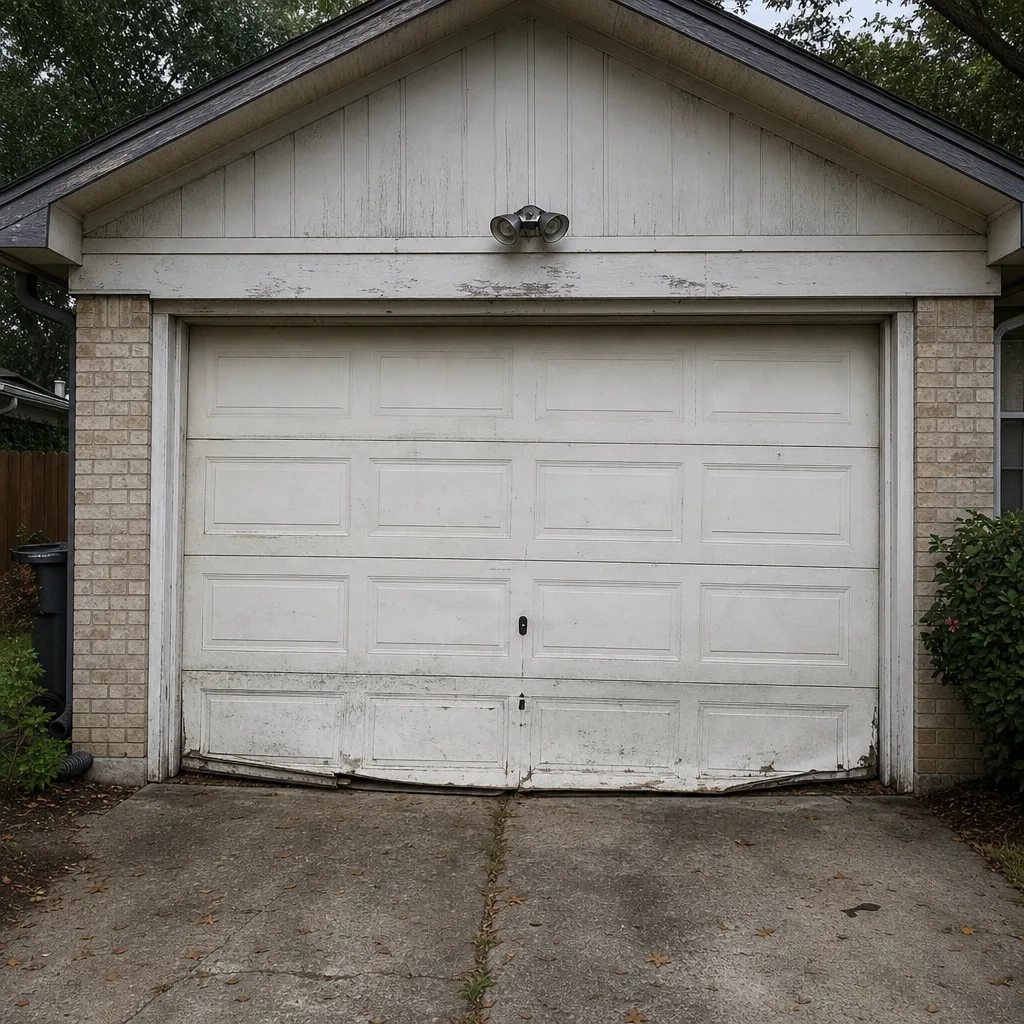 Before
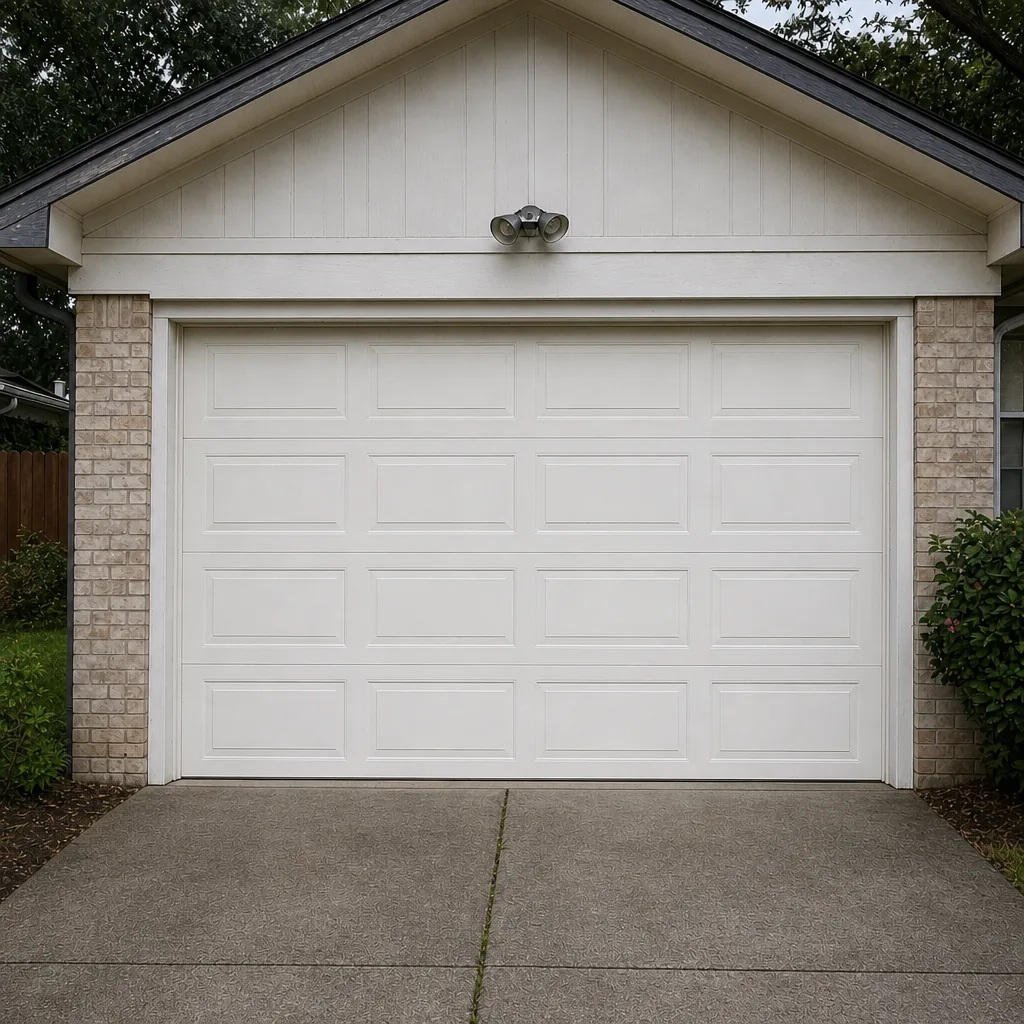 After
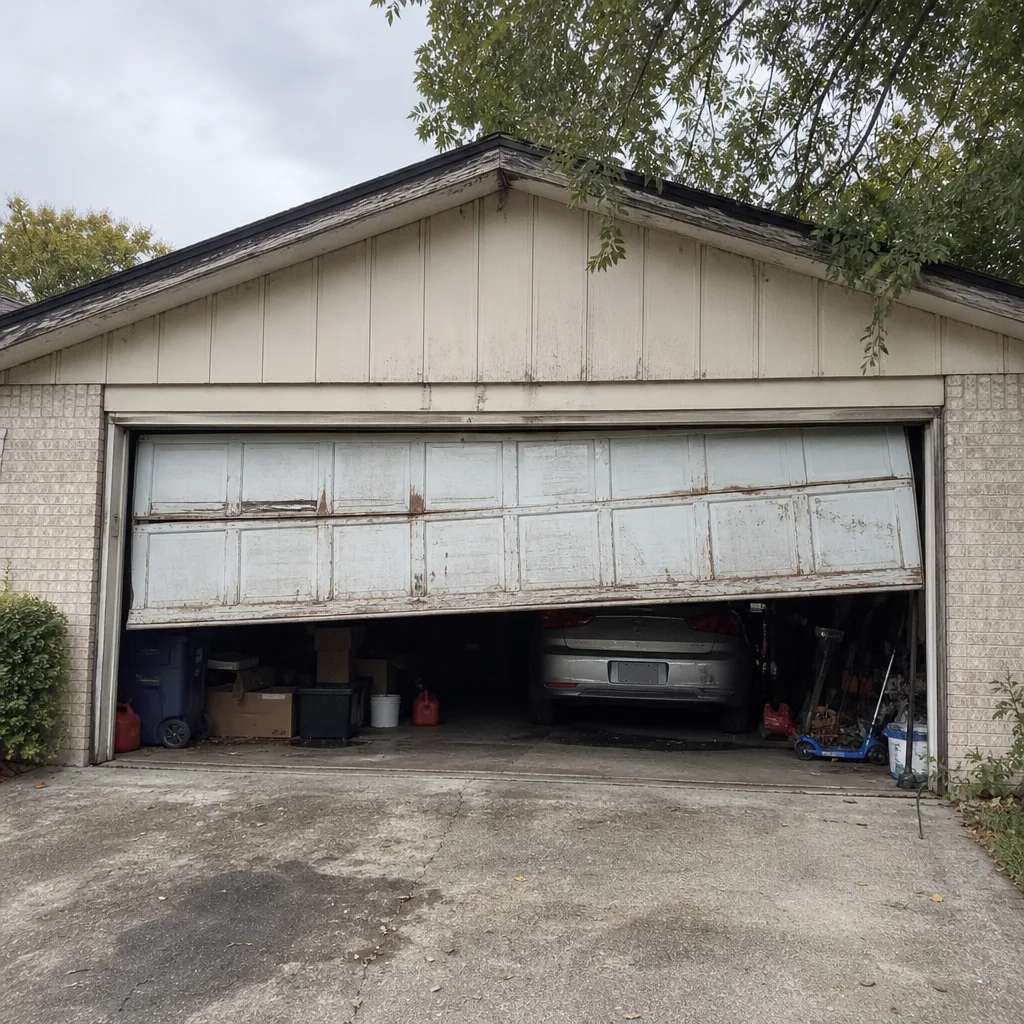 Before
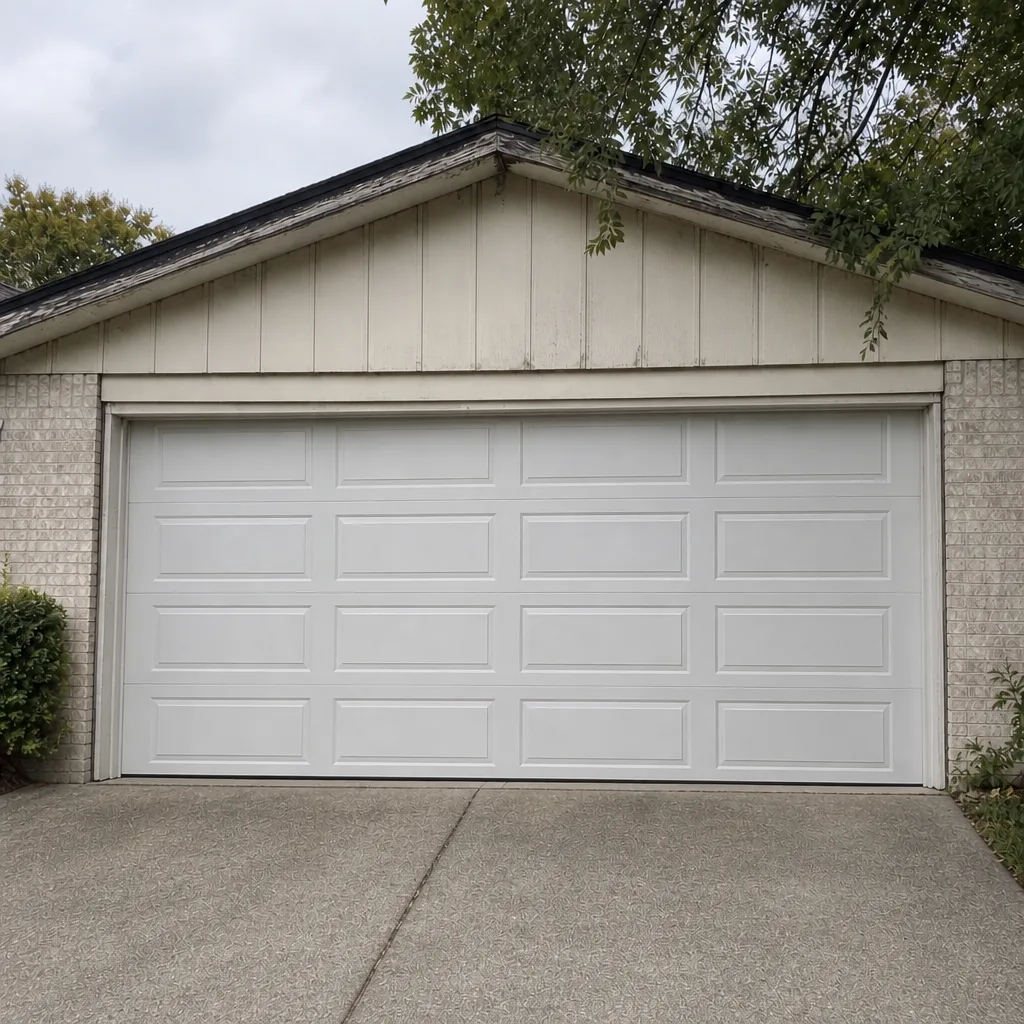 After
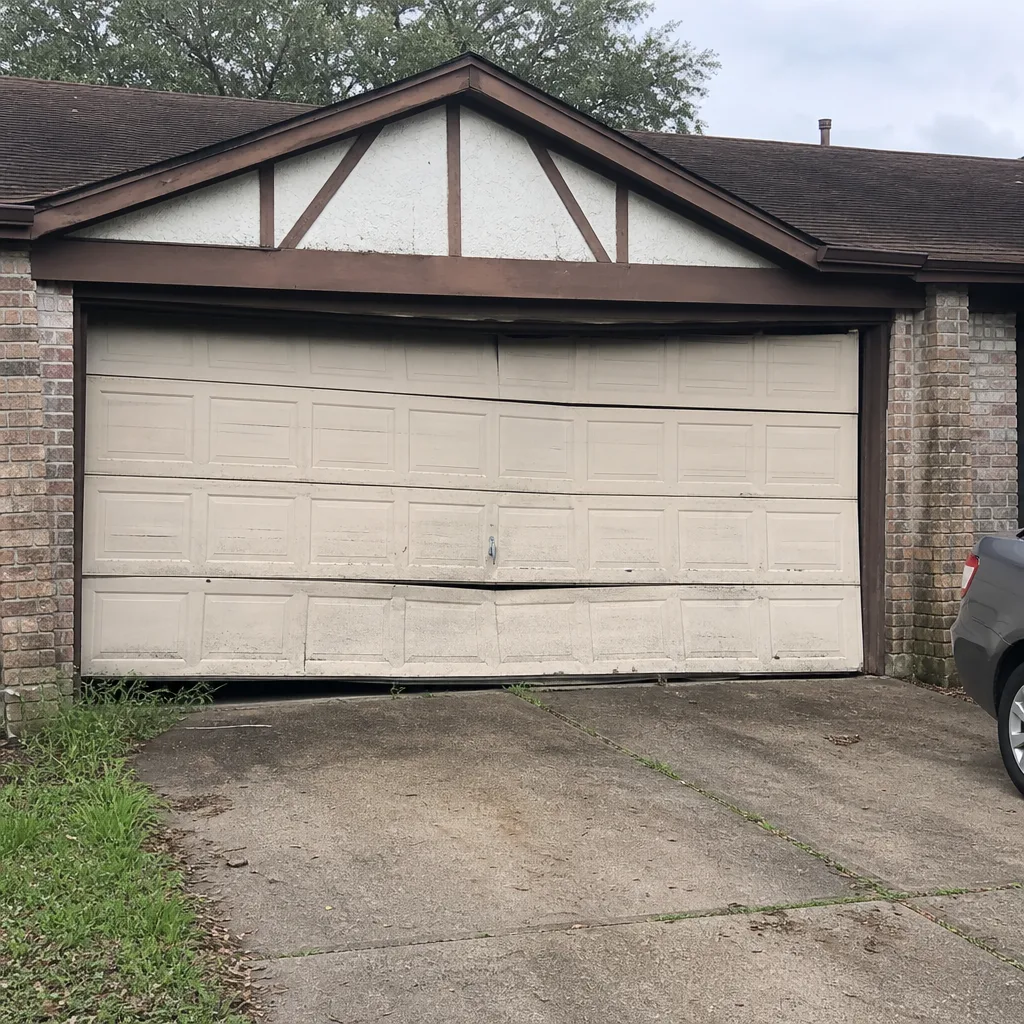 Before
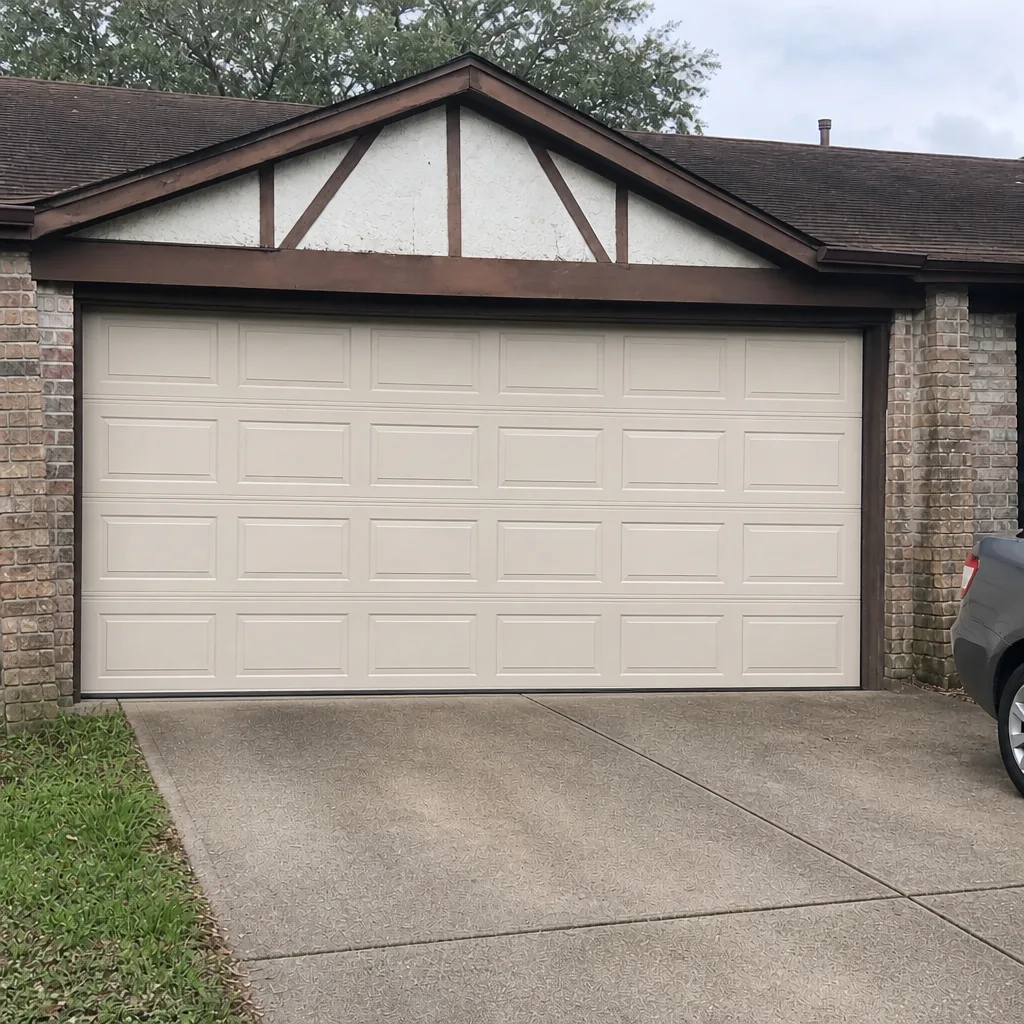 After
Common Mistakes to Avoid
- Spraying WD-40 and calling it lubrication. It quiets things for a day or two and leaves the parts dry. In a Missouri City summer, that cycle repeats until the hardware wears out.
- Ignoring weatherstripping because the door still opens. A cracked seal is the first thing the climate attacks and the cheapest thing to replace. Waiting lets water reach the door’s bottom section.
- Trying to “adjust” the spring tension. This is the single most dangerous garage door repair there is. Even a visual check that involves holding the spring is a technician’s job.
- Replacing a single hinge but reusing the old rollers. Mismatched hardware causes uneven motion and premature wear on the whole system.
- Heavy grease on all the moving parts. It works for the opener screw, not for hinges, rollers, or tracks in a humid climate. It gums up and attracts dust.
- Skipping the safety reverse test. It takes two minutes and it’s the difference between a safe door and an injury waiting to happen.
- Waiting for a loud noise before booking a service. Springs and cables fail quietly until they fail completely. A broken spring is always more expensive than a worn one you replace on schedule.
When to Call a Professional
Here’s the honest rule: if the task involves the springs, the cables, the bottom brackets, or the door coming off its track, call a professional. Those components carry stored energy that can injure even a careful homeowner, and no lubricant or advice makes them safe to handle. The rest of the list, you can do yourself. When in doubt, or when a routine check turns up rust, a cracked seal, or a noisy hinge that won’t settle, get an expert opinion before a small issue becomes a large one. Missouri City Garage Door Repair offers free estimates in Missouri City, and we work on the systems most homes already have. Call (855) 765-7303 to book a maintenance check or ask about a specific symptom.
Frequently Asked Questions
Once a month during the summer and every six to eight weeks in cooler months is a good rhythm here. The heat and humidity break down lubricant faster than in drier climates, so hinges start squeaking sooner if you stretch the interval. Call (855) 765-7303 if you’re not sure your door is properly lubricated or want a technician to check it.
Continuous humidity in the Southeast Texas air keeps moisture on the metal and slows evaporation, so any bare spot on a hinge or bracket has time to rust. Bottom brackets, hinge pins, and lower track hardware are the usual first casualties. Cleaning and treating surface rust early prevents it from spreading. Call us for a free estimate on replacing any rusted hardware.
You can look at the spring and note a visible gap, but you should not touch or adjust the tension yourself. Torsion springs are under extreme load, and improper handling causes serious injury. If you suspect a spring problem, call (855) 765-7303 and let a trained technician check it safely.
If the seal is cracked, chalky, flattened, or lets daylight through at the bottom of the door, it’s due. UV exposure in Missouri City makes this happen faster than most homeowners expect, especially on doors facing south or west. Replacing it is a straightforward job, and it’s one of the best things you can do to protect the door’s edges. Call (855) 765-7303 for a quick estimate.
Yes, an annual inspection catches spring wear, cable fraying, and opener calibration problems before they turn into a no-door morning. A door that works fine in March can be two weeks from a snapped spring in July, and the annual check is how you find out. Free estimates are available from Missouri City Garage Door Repair, so call (855) 765-7303 to set one up.
Check the photo-eye sensors first and clear anything blocking them, then try the wall button and remote. If the door still won’t close, it’s often a spring, cable, or opener issue that needs a pro. A door that won’t close is a security gap rather than a minor inconvenience, so don’t leave it. Call (855) 765-7303 for emergency service.
The Bottom Line
Most garage door failures aren’t sudden; they’re the end of a slow decline that a good checklist catches early. In Missouri City, the humidity, UV, and heavy daily use put specific wear on springs, weatherstripping, and hardware that a generic national checklist won’t address. Keep the monthly lubrication simple and silicone-based, do the quarterly weatherstripping and rust check, and book an annual professional inspection for the spring, cable, and opener internals. For the dangerous parts, use a trained technician and skip the DIY attempts. For a full service on your whole door system, one call covers it. Reach us at (855) 765-7303 for a free estimate and get your door back to quiet, reliable operation.
Written by the team at Missouri City Garage Door Repair.